Botswana Okavango Delta
8DFrom ₹3,65,000
A 6-day mid-range trip to Tunis, Tunisia, taking in Sidi Bou Said village, Carthage ruins, Bardo National Museum and Medina of Tunis souks.
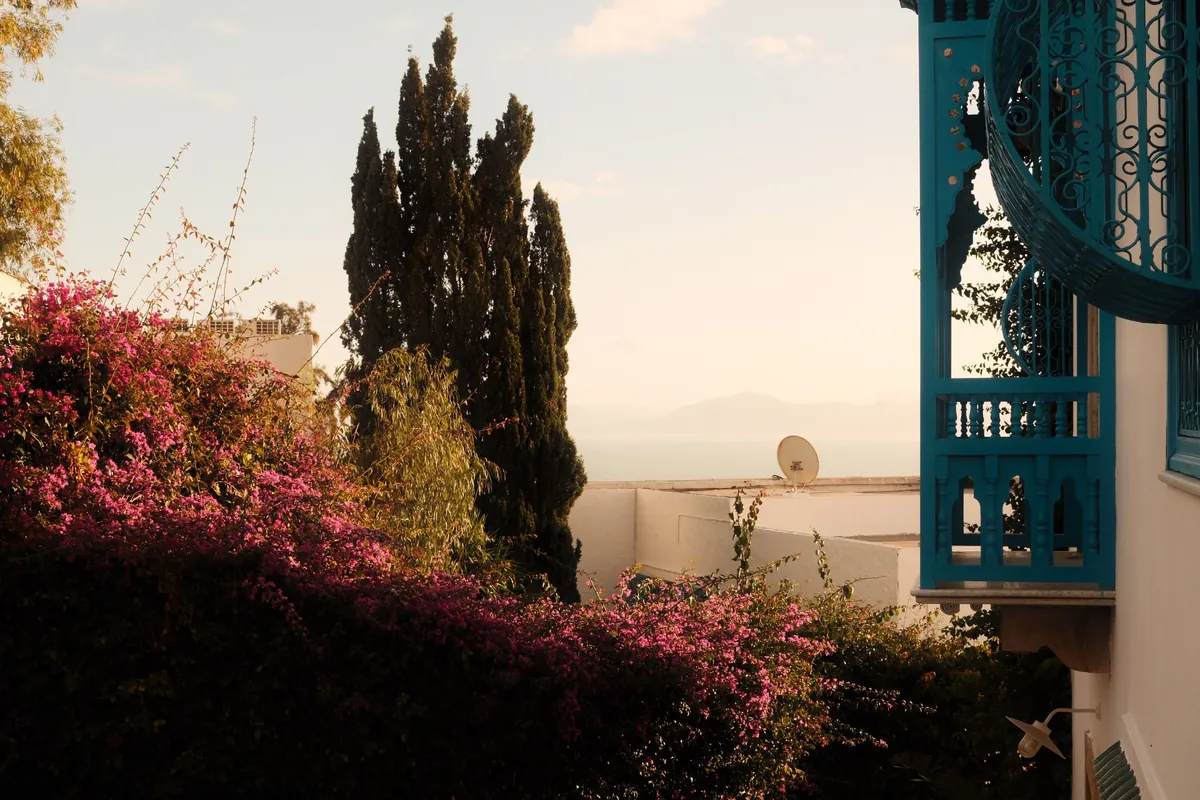
Tunis & Sidi Bou Said opens in the hilltop village of Sidi Bou Said, some 20 kilometres north-east of the capital and named for the religious figure Abu Said al-Baji, who established a sanctuary here in the 12th or 13th century and was buried at the site after his death in 1231; the village was formerly known as Jbel el-Menar. Wealthy citizens of the Beylik of Tunis built residences here from the 18th century, but it was the French musicologist Rodolphe d'Erlanger who, in the 1920s, popularised the blue-and-white colour scheme now inseparable from the village's image — his former residence, Ennejma Ezzahra, survives today as a museum of musical instruments. The village's architectural harmony and Mediterranean setting drew a long list of artists and writers, including the painters Paul Klee and August Macke and, later, the philosopher Michel Foucault while he taught at Tunis University.
From the coast the route reaches Carthage, founded on the eastern shore of the Lake of Tunis by the legendary Phoenician queen Dido and grown, according to tradition, from a colony of Tyre into the capital of a Punic empire that dominated much of the south-west Mediterranean during the first millennium BC. Its position on the narrow sea passage between Sicily and the Tunisian coast gave Carthage command of Mediterranean shipping, protected by two artificial harbours — one built for a navy of 220 warships, the other for merchant trade — and by walls that ran some 33 kilometres around the city, rising in places more than 13 metres. At the city's centre stood the fortified height of the Byrsa, the last part of Carthage to fall to Rome in 146 BC.
The trip continues to the Bardo National Museum, housed since 1888 in a 15th-century Hafsid palace in the Tunis suburb of Le Bardo and ranked as the second-largest museum on the African continent after Cairo's Egyptian Museum. First proposed in the 1860s by Muhammad Khaznadar, son of the country's prime minister, and originally named the Alaoui Museum after the ruling bey, it took its current name after independence and today holds one of the region's major collections of Roman mosaics alongside antiquities from Ancient Greece, Carthage and the Islamic period.
The route ends in the Medina of Tunis, a UNESCO World Heritage Site since 1979 and home to some 700 monuments — palaces, mosques, mausoleums, madrasas and fountains — within its 270 hectares. Founded in 698 around the core of the Zitouna Mosque, the medina grew along an axis running from the mosque to the seat of government at the kasbah, expanding under Almohad rule when Tunis became capital of Ifriqiya and flourishing further under the Hafsids; much of its surviving architecture, including the Hammouda Pacha Mosque with its octagonal minaret, dates from the later building programme of the Muradid dynasty in the 17th century.
Across six days the pack moves from the blue-and-white village above the bay, through the ruins of ancient Carthage, into the palace galleries of the Bardo, and finally through the walled lanes of the Tunis medina — a route spanning more than two and a half thousand years of settlement around the Gulf of Tunis.
Text adapted from the linked articles under CC BY-SA 4.0; edited for length.
Every dimension the Taro team tags this pack with — filter by any of these on the packs page.
Share your travel month, group size, budget comfort, and must-do experiences. The Taro team will shape the right route before any payment conversation.