
Botswana Okavango Delta
8DFrom ₹3,65,000
Lalibela rock churches, Simien Mountains, Danakil Depression option.
Ethiopia Lalibela + Rock Churches begins in Addis Ababa, Ethiopia's capital and largest city, home to an estimated 6,287,000 people as of 2025 and, at an elevation of 2,355 metres, the fourth-highest capital city in the world. DNA evidence gathered from almost 1,000 people worldwide suggests early humans first travelled out of Africa from a location close to modern Addis Ababa around 100,000 years ago, and centuries later Mount Entoto, a tableland just north of the present city, is one of several sites proposed as the location of Barara, a fortified medieval imperial capital established in the early to mid-15th century. Over 8 days the pack moves north to a town of rock-cut churches, into a mountain range, across a lake, and into the city built along its shore.
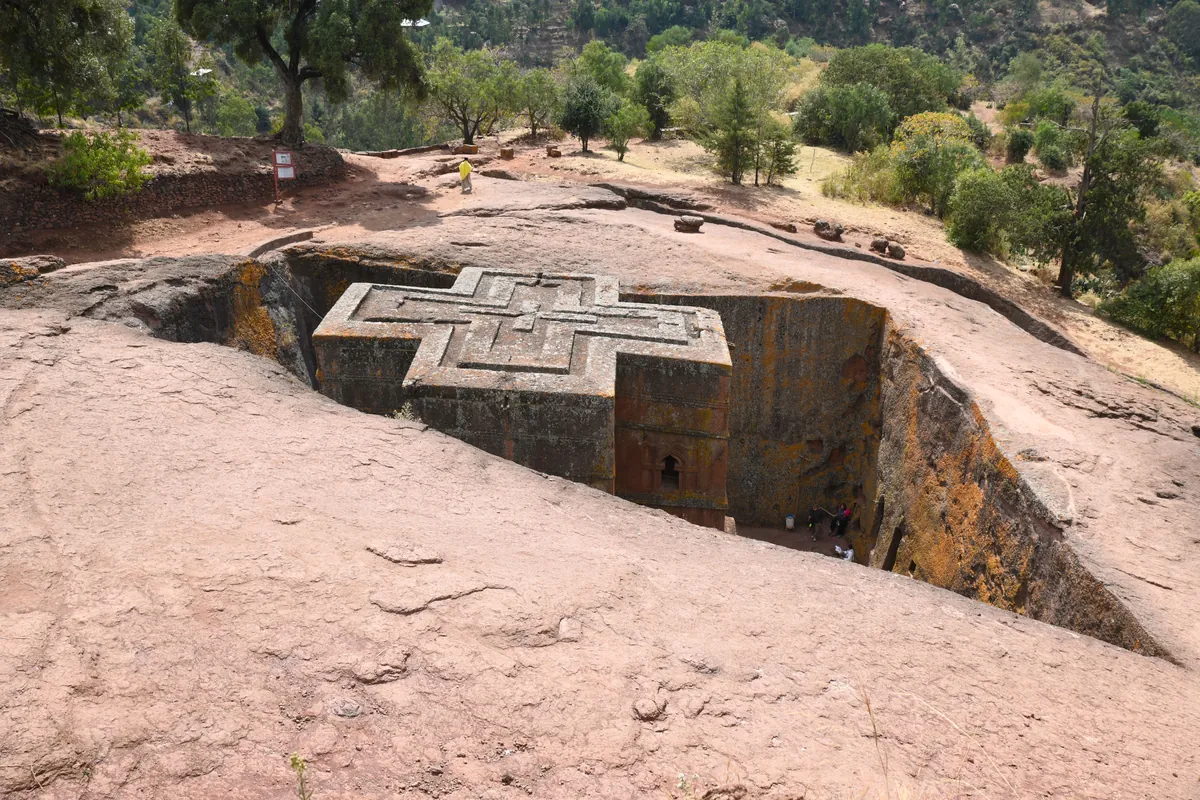
Lalibela, the town in Ethiopia's Amhara Region behind the pack's rock churches, is known for monolithic churches carved in a style distinct from earlier Ethiopian rock-cut architecture. Local tradition holds that King Gebre Meskel Lalibela, before taking the throne, was guided by Jesus on a tour of Jerusalem and instructed to build a "second Jerusalem" in response, and the town, traditionally known as Roha, is said to have been founded under his rule during the Zagwe dynasty, which historians place at roughly 1181 to 1221, though the churches themselves most likely evolved into their present form over a longer span. The town's name first appeared in a European publication on the Fra Mauro map, made in Venice between 1457 and 1459, where it was recorded as Lalabeda.
The Simien Mountains, part of the Ethiopian Highlands north-east of Gondar, are a UNESCO World Heritage Site and the core of Simien Mountains National Park, made up of plateaus separated by valleys and rising to sharp pinnacles. The mountains formed from lava outpourings between 40 and 25 million years ago, during the Oligocene period, before the Rift Valley itself existed, and their name, Semien, means "north" in Amharic today — though the historian Richard Pankhurst notes the word originally meant "south" in Ge'ez, describing the mountains' position relative to the ancient city of Axum, before centuries of shifting political geography flipped its meaning.
Lake Tana, Ethiopia's largest lake and the source of the Blue Nile, sits in the north-western Ethiopian Highlands, roughly 84 kilometres long and 66 kilometres wide with a maximum depth of 15 metres. It formed in the early Pleistocene, about 5 million years ago, when volcanic activity blocked the rivers that once flowed freely through the area, and though it was originally considerably larger than it is today, seven major permanent rivers and around forty smaller streams still feed it.
The trip closes in Bahir Dar, the capital of Amhara Region and one of Ethiopia's leading tourist destinations thanks to its position beside Lake Tana and the Blue Nile. Originally known as Bahir Giyorgis and home to only 1,200 to 2,000 people between 1810 and 1900, the settlement grew up around a monastery and a trading hub, drawing Belgian, French and British visitors as early as the 19th century — well before the wide, palm-lined avenues that give the modern city its character were laid out.
Text adapted from the linked articles under CC BY-SA 4.0; edited for length.
On documentation, this trip is in the e-visa band, generally sorted online before travel — treat that as a planning signal only, and verify exact, current requirements with the relevant embassy or consulate before booking. It runs 8 days, from ₹1,45,000 per person.
Every dimension the Taro team tags this pack with — filter by any of these on the packs page.
8 days across Ethiopia, starting from ₹1,45,000 per person.
Suited to Couples and Friends, with a suitable option for families and a moderate activity level.
This trip sits in the e-visa complexity band — usually arranged online ahead of travel. Always confirm exact, current requirements with the relevant embassy or consulate before booking — this is a planning signal, not a legal statement.
Share your travel month, group size, budget comfort, and must-do experiences. The Taro team will shape the right route before any payment conversation.