city
Paris
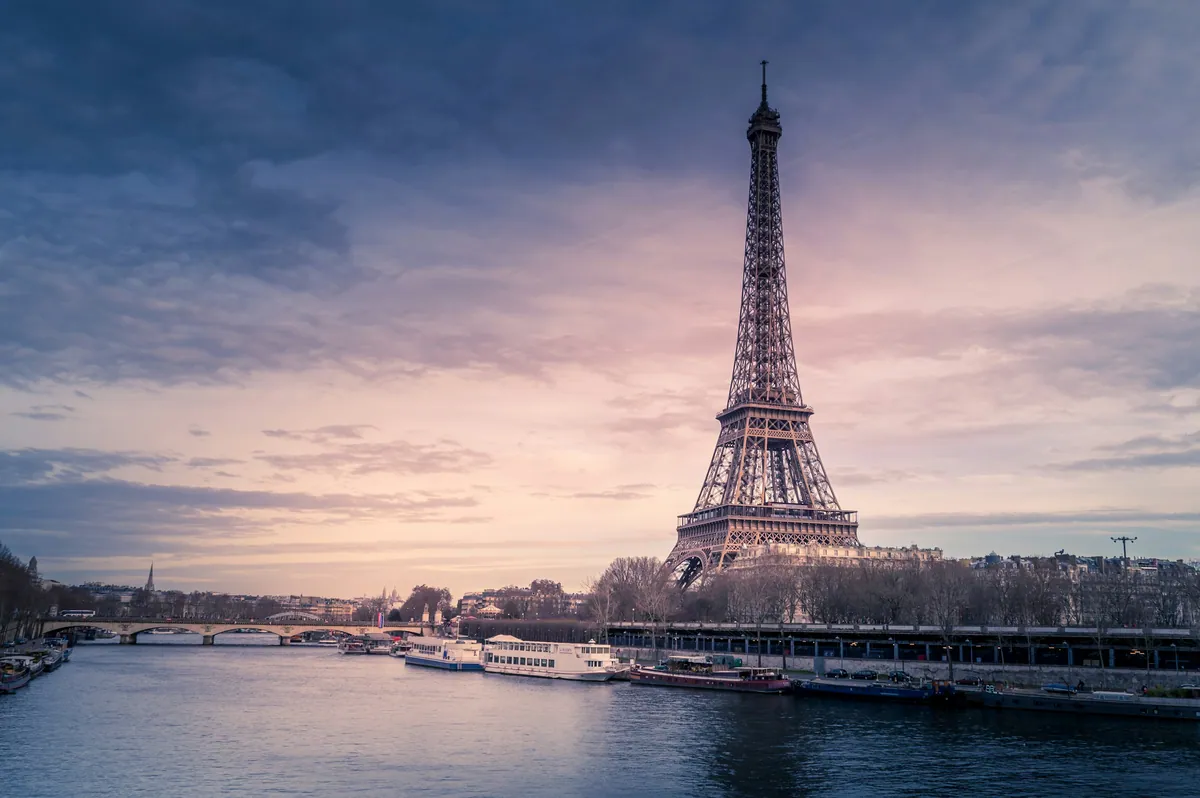
Eiffel Tower, Louvre, Champs-Élysées, Montmartre, Notre-Dame, and the world's most romantic city streets.
France, officially the French Republic, is a country primarily located in Western Europe, with overseas regions and territories that include French Guiana in South America, Saint Pierre and Miquelon in the North Atlantic, the French West Indies, and islands across Oceania and the Indian Ocean. Metropolitan France shares borders with Belgium and Luxembourg to the north, Germany to the northeast, Switzerland to the east, Italy and Monaco to the southeast, Andorra and Spain to the south, and a maritime border with the United Kingdom to the northwest. Its 18 integral regions, five of them overseas, span a combined area of 632,702 square kilometres with a total population estimated at over 69.1 million in 2026, and its capital, largest city, and main cultural and economic centre is Paris, with a metropolitan population of over 13 million.
The French Revolution, a period of political and societal change running from the Estates General of 1789 to the coup of 18 Brumaire in 1799 that formed the French Consulate, produced ideas that remain fundamental principles of liberal democracy. A financial crisis and social distress led in May 1789 to the convocation of the Estates General, converted into a National Assembly that June, and the Storming of the Bastille on 14 July triggered radical measures including the abolition of feudalism, state control over the Catholic Church in France, and a declaration of rights. The following years were dominated by a struggle for political control before Napoleon Bonaparte's rise reshaped France once again through the Napoleonic era.
Medieval French nobles built fortified castles to mark their power, and several survive today, including Chinon, Château d'Angers, Château de Vincennes, and the Cathar castles, constructed during an era when France, like most of Western Europe, built in the Romanesque style. Gothic architecture, originally called Opus Francigenum, or "French work," was born in Île-de-France and became the first French architectural style imitated across Europe; northern France holds some of its most significant cathedrals and basilicas, beginning with the Saint Denis Basilica, used as the royal necropolis, and continuing through Notre-Dame de Chartres and Notre-Dame d'Amiens, while French kings were crowned at another major Gothic church, Notre-Dame de Reims.
Metropolitan France sits at the western edge of Europe, bordered by the North Sea to the north, the English Channel to the northwest, the Atlantic Ocean to the west, and the Mediterranean Sea to the southeast. Away from its northeastern land borders, most of the country's frontiers follow natural features: the Pyrenees and the Alps to the south, the Jura Mountains to the southeast, and the Rhine river to the east. Through its overseas territories, France also borders Suriname and Brazil by way of French Guiana in South America and the Netherlands by way of Saint Martin in the Caribbean.
French cuisine varies by region: butter and cream dominate in the north, while olive oil is more common in the south, and each region carries its own specialities, from cassoulet in the southwest and choucroute in Alsace to quiche in Lorraine and beef bourguignon in Burgundy. Wines and cheeses, frequently named for the territory where they are produced under the AOC system, are closely associated with French cuisine, and a typical meal runs to three courses — entrée, plat principal, and either fromage or dessert, sometimes with a salad served beforehand. The Michelin Guide, a French publication, awards Michelin stars to a select number of establishments, and the gain or loss of a star can significantly affect a restaurant's standing.
Text adapted from the linked articles under CC BY-SA 4.0; edited for length.
Paris Museum Pass saves hours of queuing and money on entry
A quick visual sense of the landscapes, stays, and atmosphere your itinerary can be built around.
Eiffel Tower, Louvre, Champs-Élysées, Montmartre, Notre-Dame, and the world's most romantic city streets.
Azure Mediterranean coast, glamorous beaches, seaside promenades, and the jet-set lifestyle of Côte d'Azur.
Endless lavender fields, hilltop villages, Luberon markets, rosé wine, and golden afternoon light.
A medieval abbey rising from tidal flats — one of Europe's most recognizable and magical silhouettes.
UNESCO wine capital — Cité du Vin museum, château tours, river cruises, and 10,000+ wine-producing estates.
Over 300 fairy-tale châteaux — Chambord, Chenonceau, Villandry gardens, and France's garden of kings.
April to June, September to October
Schengen Visa required. Visa rules change without notice — confirm current requirements with the destination's embassy or consulate before you book.
Euro (EUR)
French, English in tourist areas
Share your travel month, group size, budget comfort, and must-do experiences. The Taro team will shape the right route before any payment conversation.