city
Tokyo
Neon-lit Shibuya crossing, Akihabara electronics, Tsukiji fish market, Meiji Shrine, and robot restaurants.
Japan is an island country in East Asia, located in the Pacific Ocean off the northeast coast of the Asian mainland and bordered by the Sea of Japan to the west, the Sea of Okhotsk to the north, and the East China Sea to the south. The Japanese archipelago comprises 14,125 islands, of which four are major, and the country divides into 47 administrative prefectures and eight traditional regions; around 75% of its terrain is mountainous and heavily forested, concentrating agriculture and its highly urbanized population along its eastern coastal plains. With a population of almost 123 million as of 2026, Japan is the world's 11th most populous country, and Tokyo is its capital and largest city.
Japan's feudal era was defined by the rise of the samurai warrior class. In 1185, following the Minamoto clan's defeat of the Taira clan in the Genpei War, Minamoto no Yoritomo established a military government at Kamakura, and after his death the Hōjō clan governed as regents for the shōgun; the Zen school of Buddhism, introduced from China during the Kamakura period between 1185 and 1333, gained particular popularity among the samurai. The Kamakura shogunate repelled Mongol invasions in 1274 and 1281 but was later overthrown by Emperor Go-Daigo, who was in turn defeated by Ashikaga Takauji in 1336, beginning the Muromachi period; the Ashikaga shogunate that followed struggled to control the feudal warlords, or daimyō, and a civil war beginning in 1467 opened the century-long Sengoku, or Warring States, period.
Japan stretches more than 3,000 kilometres from the Sea of Okhotsk to the East China Sea, with its five main islands, from north to south, being Hokkaido, Honshu, Shikoku, Kyushu, and Okinawa, alongside the Ryukyu Islands south of Kyushu and the Nanpō Islands further south and east. As of 2019 Japan's territory covers 377,975.24 square kilometres, with the sixth-longest coastline in the world at 29,751 kilometres, and its far-flung outlying islands give it the eighth-largest exclusive economic zone in the world, covering 4,470,000 square kilometres. The archipelago is 67% forest and 14% agricultural land, its rugged, mountainous terrain shaping where people and farmland concentrate.
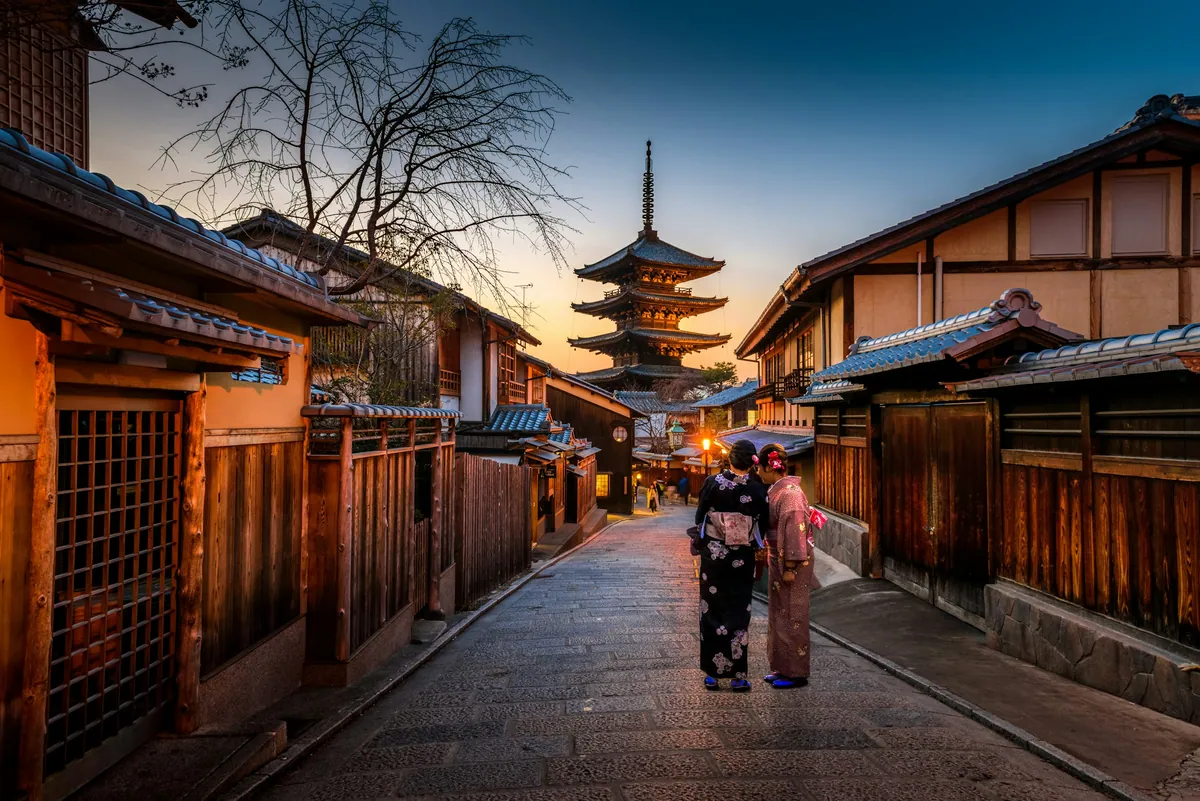
Japanese painting reflects an ongoing synthesis between native aesthetics and imported ideas, and the exchange has run both directions: ukiyo-e prints exported in the 19th-century Japonism movement significantly influenced the development of modern Western art, particularly post-Impressionism. Japanese architecture likewise blends local and outside influences, traditionally built from wood or mud-plaster structures raised slightly off the ground with tiled or thatched roofs, using tatami mats and sliding doors in housing and many temple buildings to soften the boundary between rooms and between indoor and outdoor space; since the 19th century, Japan has also incorporated much of Western modern architecture into its building and design.
Japanese cuisine spans a wide range of regional specialities built on traditional recipes and local ingredients, with seafood and rice or noodles as traditional staples; Japanese curry, introduced from British India, is eaten widely enough to be considered a national dish alongside ramen and sushi. Traditional sweets, known as wagashi, use ingredients such as red bean paste and mochi, while more contemporary tastes include green tea ice cream. Sake, a brewed rice beverage typically 14 to 17% alcohol made through multiple fermentation of rice, is a popular beverage alongside beer, brewed in Japan since the late 17th century, and green tea, produced domestically and prepared in forms including matcha for the Japanese tea ceremony.
Text adapted from the linked articles under CC BY-SA 4.0; edited for length.
Get a 7-day Japan Rail Pass before arrival — saves 60% on trains
A quick visual sense of the landscapes, stays, and atmosphere your itinerary can be built around.
Neon-lit Shibuya crossing, Akihabara electronics, Tsukiji fish market, Meiji Shrine, and robot restaurants.
1,600+ temples including Fushimi Inari's thousand torii gates, bamboo groves, and geisha district Gion.
Japan's kitchen — Dotonbori street food, Osaka Castle, Universal Studios, and the friendliest locals.
Japan's iconic volcano, hot spring resorts, Lake Ashi pirate ships, and Owakudani's volcanic valley.
Peace Memorial Park, the Atomic Bomb Dome, and nearby Miyajima Island with its floating torii gate.
Over 1,000 friendly bowing deer roaming free among ancient temples, including the world's largest wooden building.
March to May, September to November
Temperate, varies by region
e-Visa required for Indian nationals. Visa rules change without notice — confirm current requirements with the destination's embassy or consulate before you book.
Japanese Yen (JPY)
Japanese, limited English
Share your travel month, group size, budget comfort, and must-do experiences. The Taro team will shape the right route before any payment conversation.