beach
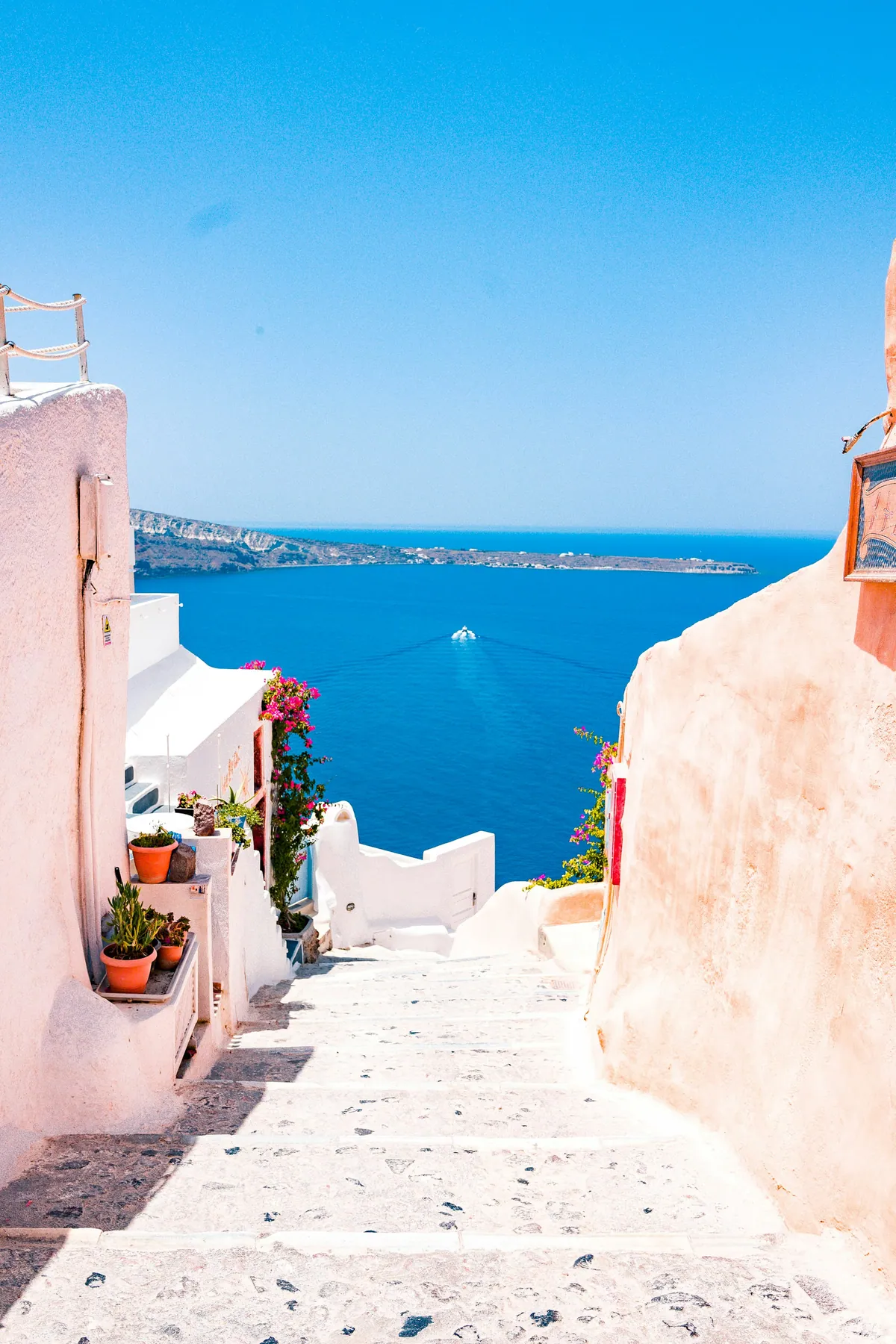
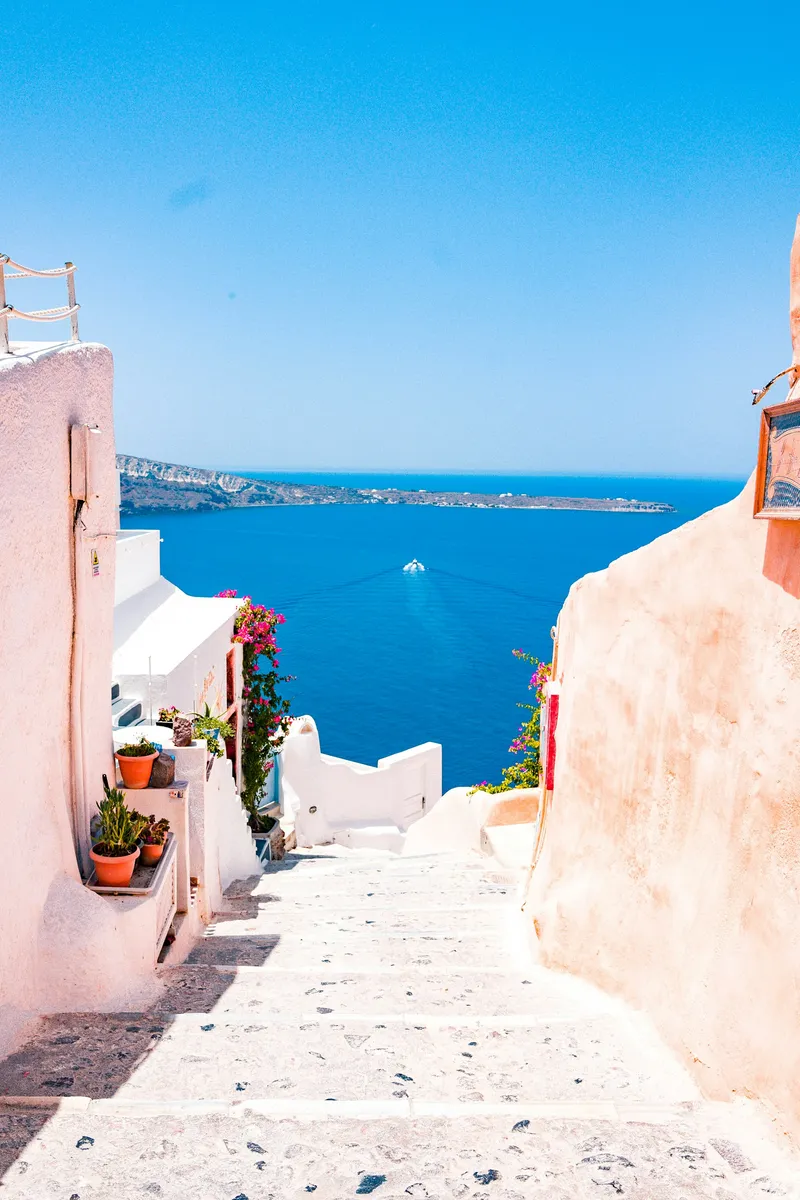
Santorini
Iconic white-washed villages, caldera sunsets from Oia, volcanic beaches, and wine from ancient Assyrtiko grapes.
Greece, officially the Hellenic Republic, is a country in Southeastern Europe occupying the southern tip of the Balkan peninsula, with a population of around 10 million spread across nine regions and thousands of islands. It has the longest coastline on the Mediterranean, bordered by the Ionian Sea to the west, Albania to the northwest, North Macedonia and Bulgaria to the north, and Turkey to the east both by land and across the Aegean Sea. The capital, Athens, is the largest Greek city, followed by Thessaloniki and Patras.
The collapse of Mycenaean civilisation ushered in the Greek Dark Ages, a period from which written records are largely absent, traditionally dated to end in 776 BC, the year of the first Olympic Games. The Iliad and the Odyssey, the foundational texts of Western literature, are believed to have been composed by Homer in the 7th or 8th centuries BC, at a time when many kingdoms and city-states were emerging across the Greek peninsula and establishing colonies in Asia Minor, along the Black Sea, and in southern Italy, a region known as Magna Grecia. Those city-states reached a level of prosperity that produced the cultural flowering of classical Greece, expressed through architecture, drama, science, mathematics, and philosophy. Centuries later, in the 18th century, Greek merchants came to dominate trade within the Ottoman Empire and used their wealth to fund educational activity that connected younger generations with Western ideas, fuelling the Modern Greek Enlightenment and, among Westernised Greek-speaking elites, the notion of a Greek nation. A secret organisation formed in this milieu, the Filiki Eteria, founded in 1814, engaged traditional strata of the Greek Orthodox world in a liberal nationalist cause; the first revolt began on 6 March 1821 in the Danubian Principalities and, though put down, spurred the Greeks of the Peloponnese, with the Maniots declaring war on the Ottomans on 17 March, and by October 1821 the Greeks had captured Tripolitsa.
Greece counts between 1,200 and 6,000 islands depending on definition, of which 227 are inhabited. Crete is the largest and most populous island, followed by Euboea, separated from the mainland by the 60-metre-wide Euripus Strait, then Lesbos and Rhodes. The islands are traditionally grouped into clusters: the Argo-Saronic Islands near Athens, the Cyclades occupying the central Aegean, the North Aegean islands off Turkey's west coast, the Dodecanese between Crete and Turkey, the Sporades off northeast Euboea, and the Ionian Islands west of the mainland.
Greek cuisine is characteristic of the Mediterranean diet, epitomised by the dishes of Crete, and built around fresh ingredients in dishes such as moussaka, pastitsio, Greek salad, fasolada, spanakopita, and souvlaki. Some dishes trace back to ancient Greece, including skordalia, a thick purée of walnuts, almonds, crushed garlic, and olive oil, along with lentil soup, retsina, a white or rosé wine sealed with pine resin, and pasteli, a sesame and honey candy bar. Meze-style small dishes are common too, with dips such as tzatziki served alongside grilled octopus, small fish, feta cheese, dolmades made of rice, currants, and pine kernels wrapped in vine leaves, and various pulses, olives, and cheeses, with olive oil used throughout.
Sweet Greek desserts include melomakarona, diples, and galaktoboureko, paired with drinks such as ouzo, metaxa, and retsina, and cuisine varies noticeably between the mainland and different islands, drawing on local flavourings shaped by each region's landscape and history. That variation across the mainland and thousands of islands mirrors the geographic range visible in Greece's coastline and island clusters, from the volcanic terrain of the Cyclades to the greener landscapes of the Ionian Islands further west.
Text adapted from the linked articles under CC BY-SA 4.0; edited for length.
Island-hop by ferry — book Blue Star Ferries for best routes
A quick visual sense of the landscapes, stays, and atmosphere your itinerary can be built around.
Iconic white-washed villages, caldera sunsets from Oia, volcanic beaches, and wine from ancient Assyrtiko grapes.
The Acropolis and Parthenon, Plaka neighborhood, Monastiraki flea market, and 3,000 years of visible history.
Windmills, Little Venice, vibrant nightlife, pristine beaches, and a cosmopolitan energy like nowhere else.
Greece's largest island — Knossos palace, Samaria Gorge, pink sand Elafonissi beach, and incredible Cretan cuisine.
Six monasteries perched impossibly atop towering rock pillars — a UNESCO site that defies belief.
Medieval Old Town (UNESCO), Valley of Butterflies, ancient Lindos acropolis, and a vibrant harbor.
May to October
Mediterranean, 20-35°C in summer
Schengen Visa required. Visa rules change without notice — confirm current requirements with the destination's embassy or consulate before you book.
Euro (EUR)
Greek, English widely spoken
Share your travel month, group size, budget comfort, and must-do experiences. The Taro team will shape the right route before any payment conversation.