Why Vietnam works
Vietnam, officially the Socialist Republic of Vietnam, sits on the eastern edge of mainland Southeast Asia, bordered by China to the north and Laos and Cambodia to the west, with coastline along the Gulf of Thailand and the South China Sea. Covering about 331,000 square kilometres and home to more than 102 million people, it stretches from Hanoi, the capital in the north, to Ho Chi Minh City, its largest city, in the south. Vietnamese tradition traces the country's first state to the Hồng Bàng dynasty of the Hùng kings, said to have been founded in 2879 BC on the Red River Delta by Lạc Việt tribes, though its documented history moves through Chinese annexation under the Han dynasty in 111 BC and roughly a thousand years of Chinese rule before Ngô Quyền's victory at the Bạch Đằng River in 938 secured Vietnamese independence.
The centuries that followed saw Đại Việt flourish under the Lý and Trần dynasties, repelling three Mongol invasions during Trần rule while Mahayana Buddhism became the state religion, and reach a further peak under the Lê dynasty of the fifteenth century, particularly during the reign of Lê Thánh Tông. Between the eleventh and eighteenth centuries the Vietnamese polity expanded steadily southward in a process known as Nam tiến, eventually absorbing the kingdom of Champa and part of the Khmer kingdom, even as the country itself split between northern Trịnh and southern Nguyễn lords for much of the seventeenth and eighteenth centuries before Nguyễn Ánh reunified it as the Nguyễn dynasty. France absorbed Vietnam into French Indochina after the Nguyễn surrendered in 1883, and following Japan's defeat in the Second World War, the Viet Minh declared independence in 1945, setting off decades of conflict, first against France and then, after the country's division, the Vietnam War, which ended with reunification under a single communist government in 1975 and market-oriented economic reforms launched in 1986.
Vietnam's geography runs long and narrow, as little as 50 kilometres across at its narrowest point in Quảng Bình province and widening to around 600 kilometres in the north, with mountains covering 40 percent of the country and tropical forest another 42 percent. The Red River Delta in the north, a flat plain built from river sediment that extends the coastline outward by tens of metres each year, holds the country's densest population, while Fansipan, at 3,143 metres the highest peak on the Indochinese Peninsula, rises in the northern highlands. In central Vietnam, Hang Sơn Đoòng, first surveyed in 2009 by the British Cave Research Association, ranks among the largest caves in the world, its main passage more than 8.8 kilometres long and its collapsed sinkhole deep enough to shelter a tropical rainforest with trees nearly 30 metres tall, home to monkeys and other animals not normally found underground.
Climate varies sharply between north and south: the north experiences a monsoonal, humid subtropical climate with four distinct seasons, including a dry winter and hot summer, and occasional winter snow on its highest peaks near the Chinese border, while the central and southern regions follow a tropical monsoon pattern of just two seasons, wet and dry, with the Mekong Delta and Ho Chi Minh City staying within a narrower, warmer temperature range year-round. Monsoon rains bring 1,500 to 2,000 millimetres of precipitation to much of the country and, with it, tropical storms and typhoons that periodically affect low-lying coastal areas where more than half the population lives.
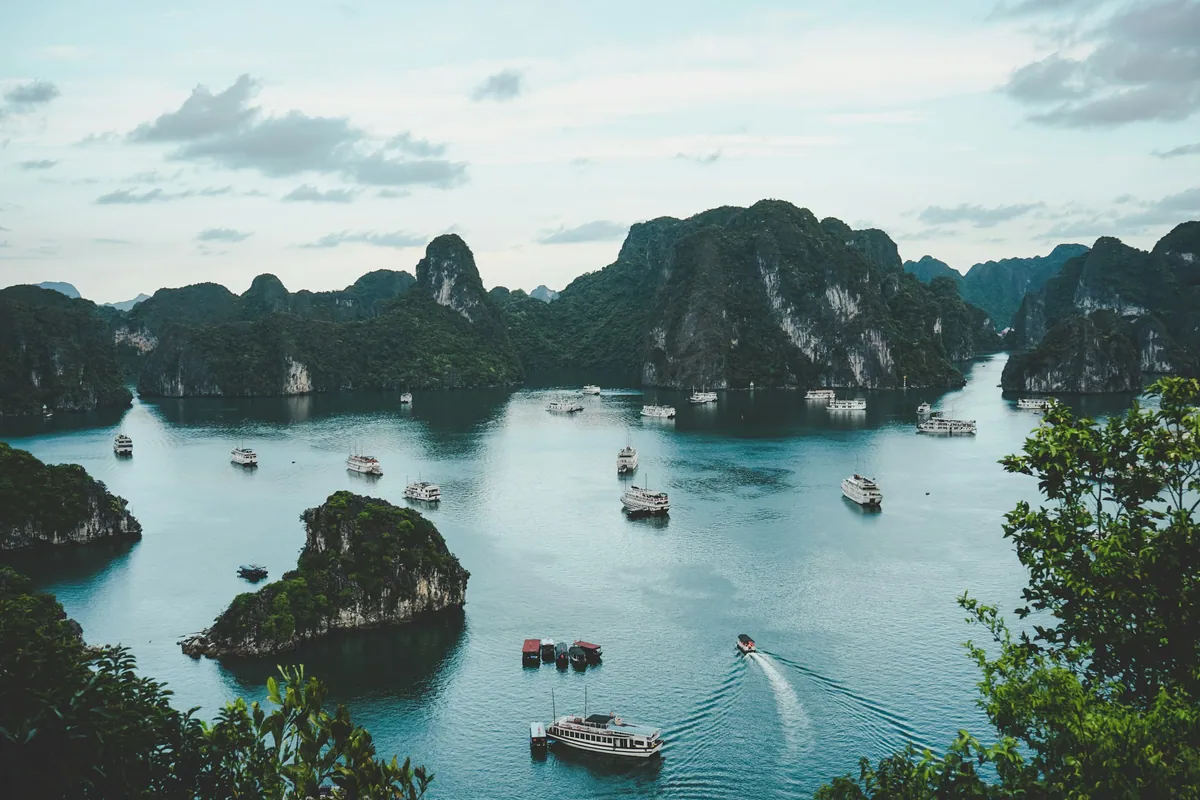
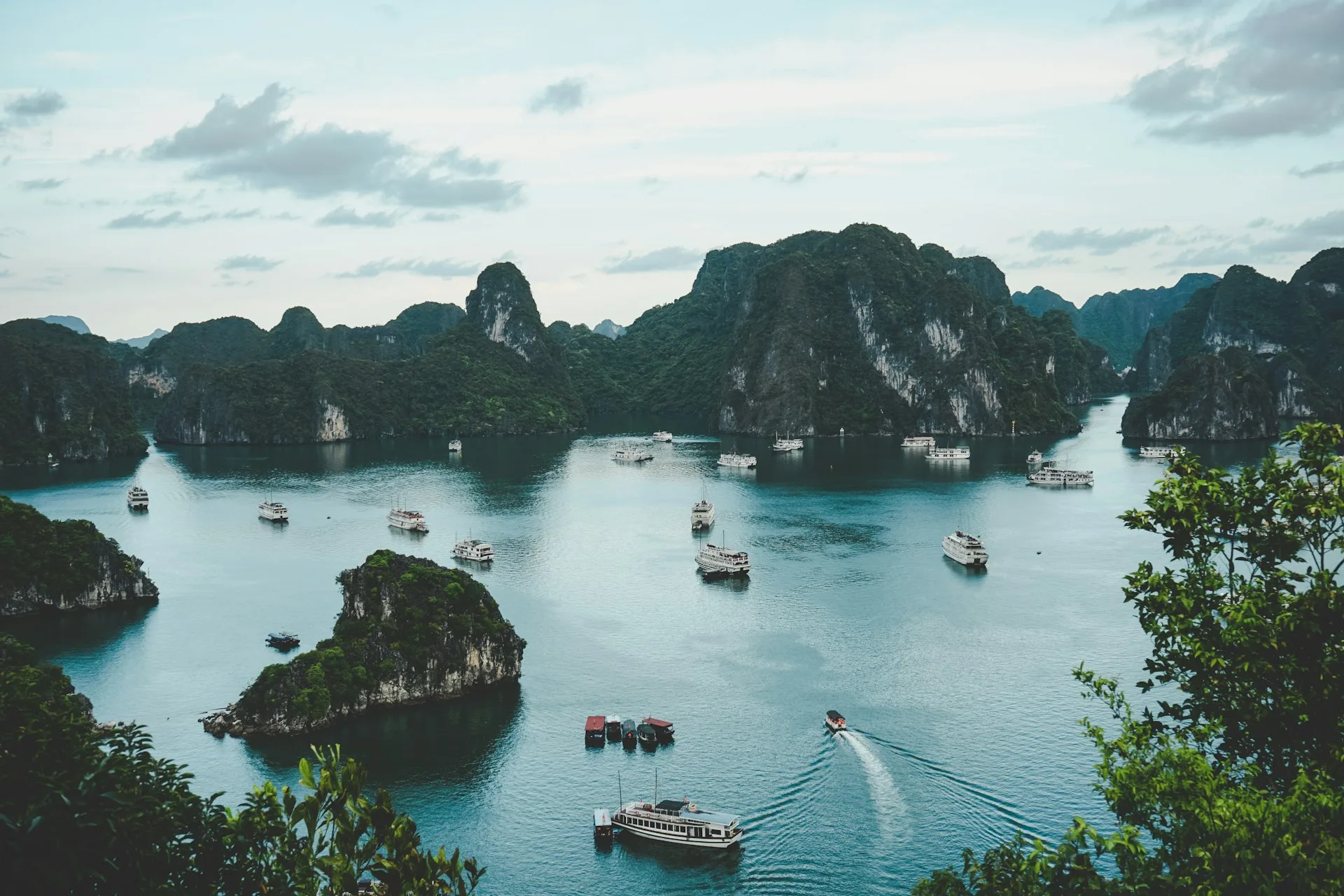
Vietnamese cuisine builds on a traditional framework of five basic tastes — spicy, sour, salty, bitter, and sweet — using fish sauce, shrimp paste, fresh herbs, lemongrass, and rice as core ingredients, with freshwater fish, crustaceans, and molluscs historically playing a larger role than meat. Well-known dishes including phở, gỏi cuốn, and bún riêu originated in the north and spread south with migration, and street food remains central to how Vietnamese food is eaten, with dozens of dishes found in food stalls nationwide; northern cooking tends to favour black pepper over chilli for its heat, reflecting a colder climate less suited to growing spices. Beyond the table, cultural tourism in Vietnam centres on sites including the former imperial city of Huế, the karst caves and islands of Hạ Long Bay, and the UNESCO World Heritage towns of Hội An and Mỹ Sơn, alongside the coastal resort areas around Nha Trang, all of which sit within a culture still visibly shaped by Confucian, Buddhist, and Taoist influences absorbed over the centuries of contact with China.
- Vietnam — Wikipedia, CC BY-SA 4.0
Text adapted from the linked articles under CC BY-SA 4.0; edited for length.
Trip Snapshot
Highlights
Suitable For
Vietnam, in frame
A quick visual sense of the landscapes, stays, and atmosphere your itinerary can be built around.
Vietnam questions, answered
When is the best time to visit Vietnam?
February to April, August to October
What is the weather like in Vietnam?
Tropical monsoon
Do I need a visa to travel to Vietnam?
e-Visa required for Indian nationals. Visa rules change without notice — confirm current requirements with the destination's embassy or consulate before you book.
What currency is used in Vietnam?
Vietnamese Dong (VND)
What languages are spoken in Vietnam?
Vietnamese, English in cities
Build a Vietnam itinerary around your dates.
Share your travel month, group size, budget comfort, and must-do experiences. The Taro team will shape the right route before any payment conversation.