heritage
Istanbul
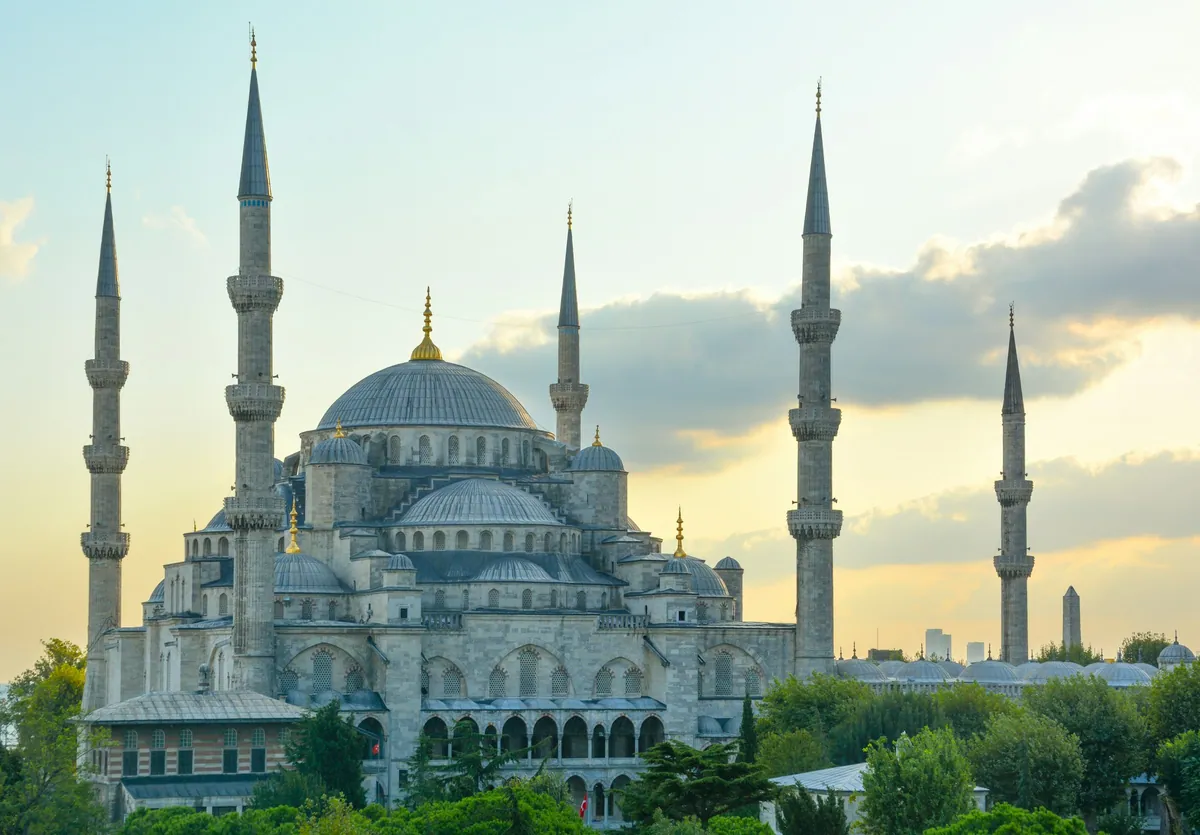
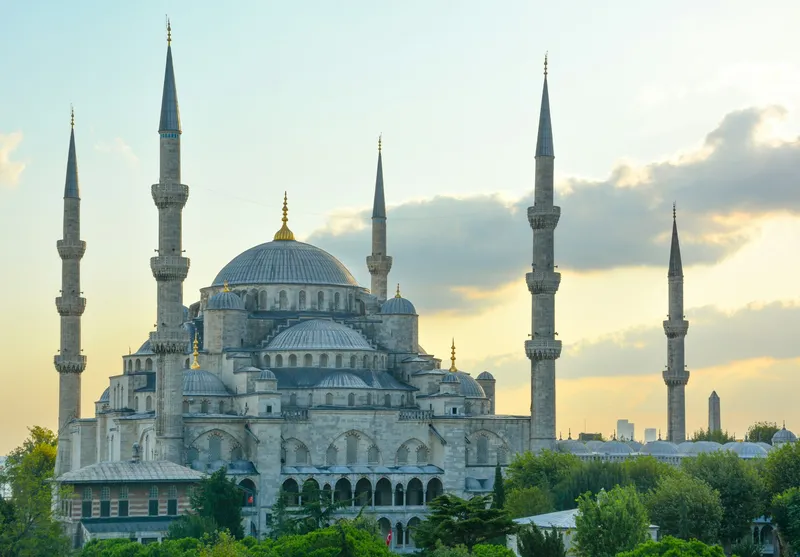
Hagia Sophia, Blue Mosque, Grand Bazaar, Topkapi Palace, Bosphorus cruise — where Europe meets Asia.
Turkey, officially the Republic of Türkiye, sits mainly in Anatolia in West Asia, with a smaller portion, East Thrace, in Southeast Europe, bridged by the Turkish Straits and the Sea of Marmara. It borders the Black Sea to the north, Georgia, Armenia, Azerbaijan, and Iran to the east, Iraq, Syria, and the Mediterranean to the south, and the Aegean Sea, Greece, and Bulgaria to the west. Istanbul, straddling both continents, is the country's largest city and economic centre, while Ankara, further inland on the Anatolian plateau, serves as the capital. Home to over 86 million people, Turkey ranks as the fourth most visited country in the world, drawn in part by its numerous UNESCO World Heritage sites and its long, layered history.
That history stretches back to some of the world's oldest known Neolithic settlements: Göbekli Tepe, in southeastern Anatolia, is close to 12,000 years old, and Çatalhöyük and Alaca Höyük preserve further early farming communities in a region that forms part of the Fertile Crescent. Anatolia passed through Hittite, Hellenistic, Roman, and Byzantine control before Seljuk Turks began migrating into the region in the eleventh century, and the Ottoman Beylik, founded by Osman I near Söğüt in the early fourteenth century, gradually absorbed the other Turkish principalities of Anatolia. Mehmed II captured Constantinople in 1453, and under Selim I and Suleiman the Magnificent in the following century the Ottoman Empire became a global power; the empire endured until the Turkish War of Independence following the First World War led to the abolition of the sultanate, the Treaty of Lausanne, and the proclamation of the Republic on 29 October 1923 under its founder, Mustafa Kemal Atatürk.
Cappadocia, in Central Anatolia, is where much of the country's ancient volcanic geology becomes visible landscape: eruptions from Mount Erciyes, Mount Hasan, and Göllüdağ over millions of years left thick layers of volcanic rock that wind and water eroded into the region's fairy chimneys, with harder rock formations such as Ortahisar and Uçhisar left standing above the softer, more eroded stone around them. Communities carved houses, churches, and entire underground settlements into this rock — Göreme became a Christian monastic centre between the third and thirteenth centuries AD, and the Göreme Open Air Museum today preserves more than thirty rock-cut churches and chapels with frescoes dating from the ninth to the eleventh centuries. Hot-air ballooning has become closely associated with the region, particularly around Göreme, where sunrise flights pass low over the valleys and rock formations that took shape over that same geological span.
Turkey's climate varies with its terrain, rising in elevation from west to east: the northern Black Sea coast sees warm summers and cool, wet conditions year-round, the western and southern coasts follow a Mediterranean pattern of dry, hot summers and mild, wet winters, and the interior experiences more severe winters and sharper temperature swings under a semi-arid to continental climate. Mount Ararat, in Eastern Anatolia, is the country's highest point at 5,137 metres, and the Taurus Mountains run along the southern coast, separating Cappadocia's high plateau from the Mediterranean. Both the Aegean and Mediterranean coastlines and the interior plateau sit within Turkey's fourteen distinct Köppen climate zones, a range that lets the same country host beach resorts, an arid central steppe, and alpine terrain in its east.
Turkish cuisine reflects a similarly layered history, shaped by Anatolian, Mediterranean, Iranian, and Central Asian influences, with bread and yoghurt as staples and ayran, a yoghurt drink, found nationwide. Various kebabs, cooked on skewers using a technique long familiar to Turkic peoples, and pilaf dishes are central to the cuisine's identity, while dolma and sarma, made by stuffing or wrapping vegetables and leaves, and mantı, a filled pasta, round out the everyday table; baklava, made with the thin dough called filo, and Turkish delight are among its best-known sweets. Bazaars and open markets remain part of how this food and craft culture is sold and experienced in cities across the country, a continuation of trade patterns documented as far back as the eleventh-century Dīwān Lughāt al-Turk, one of the earliest sources to describe the lineage of present-day Turkish cooking.
Text adapted from the linked articles under CC BY-SA 4.0; edited for length.
Book Cappadocia hot air balloon at sunrise — reserve 2 months ahead
A quick visual sense of the landscapes, stays, and atmosphere your itinerary can be built around.
Hagia Sophia, Blue Mosque, Grand Bazaar, Topkapi Palace, Bosphorus cruise — where Europe meets Asia.
Hot air balloons at sunrise over fairy chimneys, underground cities, cave hotels, and ancient rock churches.
Cotton Castle — cascading white travertine terraces of mineral-rich thermal pools, and ancient Hierapolis ruins.
One of the best-preserved ancient cities in the world — Library of Celsus, Great Theatre, Temple of Artemis.
Turquoise Coast capital — Kaleiçi old town, Düden waterfalls, golden beaches, and ancient Aspendos theatre.
The St. Tropez of Turkey — castle of the Knights, blue voyage gulets, beach clubs, and whitewashed streets.
April to May, September to November
Mediterranean and continental
e-Visa for Indian nationals. Visa rules change without notice — confirm current requirements with the destination's embassy or consulate before you book.
Turkish Lira (TRY)
Turkish, English in tourist areas
Share your travel month, group size, budget comfort, and must-do experiences. The Taro team will shape the right route before any payment conversation.