Australia Sydney + Great Barrier Reef
11DFrom ₹2,85,000
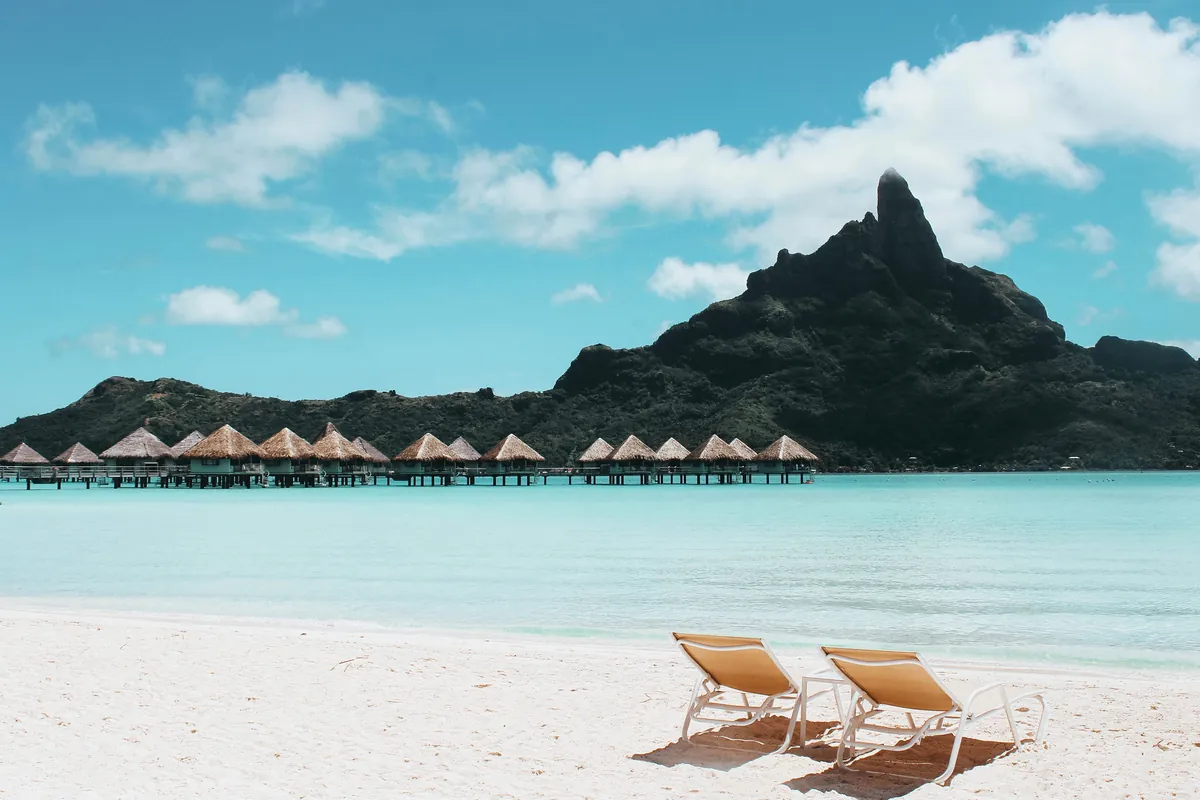
Bora Bora overwater bungalow, Moorea, lagoon snorkelling.
This trip opens in Papeete, the capital of French Polynesia on the island of Tahiti, home to 26,654 people in the commune itself and an urban population of 124,274 at the 2022 census. Its Tahitian name, meaning "water from a basket," arose from a naming taboo during the reign of Pōmare I, when the everyday word for water, vai, was replaced by pape, an older term still recognisable in place names such as Vaiʻete used elsewhere in the region today; Papeete remains the hub of French Polynesian government, commerce, and tourism.
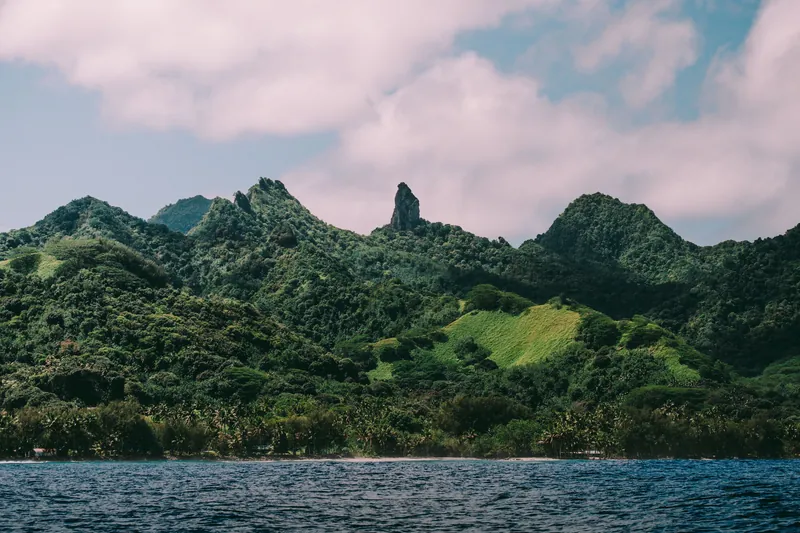
From Papeete, the trip flies to Bora Bora, a French island group in the Leeward Islands about 230 kilometres northwest of Papeete, ringed by a lagoon and barrier reef with a total land area of just 30.55 square kilometres. At its centre stand the remnants of an extinct volcano rising to two peaks, Mount Pahia and Mount Otemanu, the higher reaching 727 metres; Polynesian settlers arrived around the third century CE, the Dutch explorer Jacob Roggeveen recorded the first European sighting in 1722, and the island remained an independent kingdom until 1888, when France annexed it and forced its last queen, Teriimaevarua III, to abdicate.
The trip continues to Moʻorea, a volcanic island 17 kilometres northwest of Tahiti whose name means "yellow lizard" in Tahitian, from moʻo, lizard, and reʻa, yellow. Archaeological evidence suggests the Society Islands were settled from Samoa and Tonga around 200 CE, and nine tribal principalities later developed across Moʻorea's enclosed valleys, their leading families linked by marriage to those of neighbouring Tahiti for centuries; the island was first sighted by a European, the Spanish navigator Pedro Fernandes de Queirós, in 1606, though sustained European contact did not follow until the arrival of Samuel Wallis and James Cook in the eighteenth century.
Back on Tahiti itself, the largest island in French Polynesia at 1,045 square kilometres and home to 191,779 people at the 2022 census, the trip takes in a landscape made up of two joined volcanic landmasses, Tahiti Nui and the smaller Tahiti Iti, rising to Mont Orohena at 2,241 metres. Originally settled by Polynesians between 900 and 1100 CE, Tahiti remains home to a population about 70 percent of Polynesian heritage and today accounts for close to 69 percent of French Polynesia's total population. The island's only international airport, Faʻaʻā International Airport, sits near Papeʻete on Tahiti Nui, whose interior remains almost entirely uninhabited even as its coastline carries most of the island's population, while Tahiti Iti's southeastern half, known as Te Pari, stays accessible only on foot or by boat.
The trip closes with a performance of ʻōteʻa, a traditional Tahitian dance built around rapid hip-shaking movement performed to percussion alone, without singing, danced by rows of performers who may synchronise their hip motion with the accompanying rhythm. The drumming is typically carried by the tōʻere, a hollowed log struck along a longitudinal slit, sometimes joined by the shark-skin-covered pahu drum or the smaller faʻatētē; unlike some other traditional Tahitian dances that have since disappeared, the ʻōteʻa survives from pre-European times as one of the few dances originally performed by men.
On documentation, this trip sits in the e-visa complexity band — usually arranged online ahead of travel — treat that as a planning signal only, and verify exact, current requirements with the relevant embassy or consulate before booking. It runs 7 days, from ₹4,25,000 per person.
Every dimension the Taro team tags this pack with — filter by any of these on the packs page.
7 days across French Polynesia, starting from ₹4,25,000 per person.
Suited to Couples, Friends, and Luxury Travellers, with a suitable option for families and a moderate activity level.
This trip sits in the e-visa complexity band — usually arranged online ahead of travel. Always confirm exact, current requirements with the relevant embassy or consulate before booking — this is a planning signal, not a legal statement.
Share your travel month, group size, budget comfort, and must-do experiences. The Taro team will shape the right route before any payment conversation.