Cook Islands Aitutaki
7DFrom ₹2,45,000
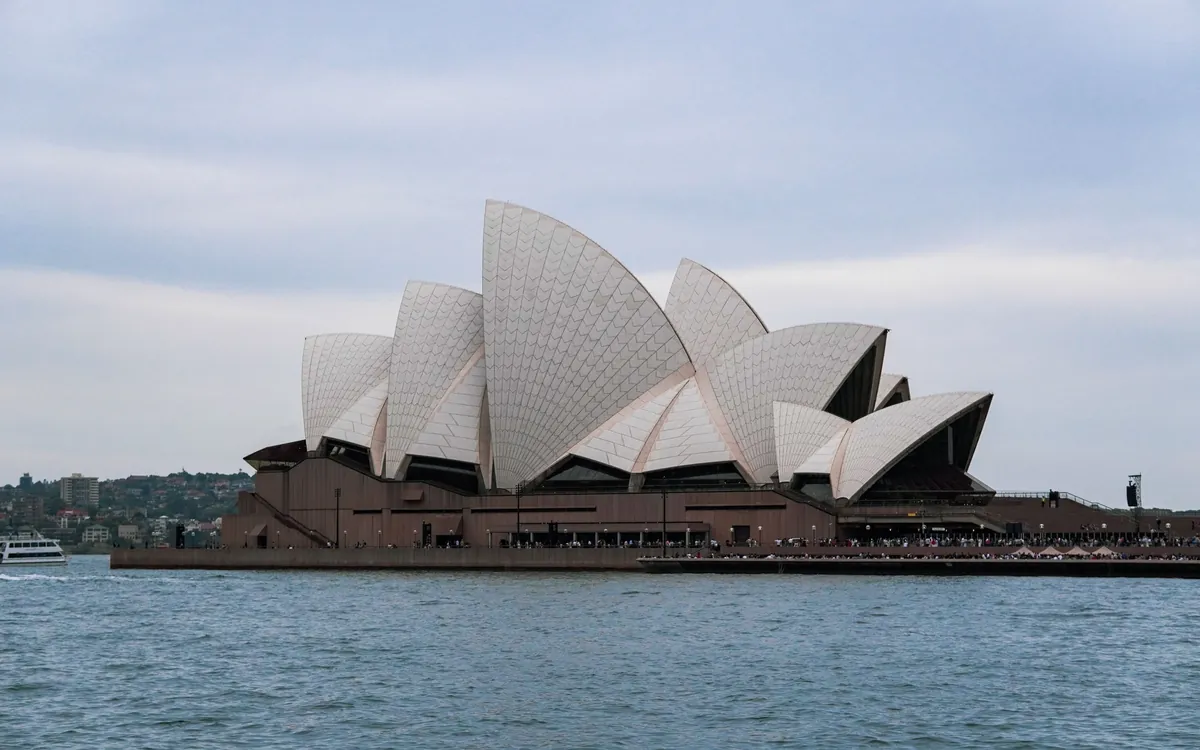
Sydney Opera House, GBR snorkel, Great Ocean Road.
Australia Sydney + Great Barrier Reef begins in Sydney, the capital of New South Wales and the largest city in both the state and the country, a metropolis built around Sydney Harbour that extends roughly 80 kilometres from the Pacific Ocean in the east to the Blue Mountains in the west. The city takes its name from the cove where Captain Arthur Phillip, the first governor of New South Wales, established the first British settlement in 1788, naming it Sydney Cove after the Home Secretary of the day, Thomas Townshend, 1st Viscount Sydney — a cove the Aboriginal inhabitants had already known as Warrane. Across 11 days the itinerary runs from that harbour city north to the reef system off Queensland, down a heritage-listed coastal road in Victoria, and inland to a single sandstone monolith near the centre of the continent.
On the harbour foreshore itself stands the Sydney Opera House, a multi-venue performing arts centre widely regarded as one of the world's most distinctive buildings and counted as a masterpiece of twentieth-century architecture, designed by the Danish architect Jørn Utzon and completed by an Australian team. Its roof, a series of large precast concrete "shells" each built from sections of a 75.2-metre-radius sphere, sits on a podium covering 1.8 hectares of land, the building running 183 metres long and 120 metres wide at its base. Its position directly on the water means the building the pack visits early in the trip is also the skyline image most associated with the city the whole route departs from.
North of Sydney the pack reaches the Great Barrier Reef, the world's largest coral reef system, made up of more than 2,900 individual reefs and 900 islands and stretching over 2,300 kilometres across roughly 344,400 square kilometres of the Coral Sea off the coast of Queensland. Aboriginal Australian and Torres Strait Islander peoples have long known and used the reef as part of their cultures, and the first European to record it was James Cook, who mapped Australia's east coast and encountered the reef on 11 June 1770. A channel as much as 160 kilometres wide separates the reef from the mainland at points along its length, a scale that makes clear why the reef is reached by boat rather than treated as a single dive site.
The itinerary then shifts south to Victoria's Great Ocean Road, a 240-kilometre, Australian National Heritage-listed route running along the south-eastern coast between the towns of Torquay and Allansford, near Warrnambool. It was built by returned soldiers between 1919 and 1932 and dedicated to those killed in the First World War, a history that has led it to be described as the world's largest war memorial rather than simply a scenic drive; the road itself is two lanes wide, with a speed limit that varies between 50 and 100 km/h as it hugs the coastline known as the Surf Coast east of the Otway Ranges.
The trip ends inland at Uluru, also known as Ayers Rock and officially gazetted under the combined name Uluru / Ayers Rock, a large sandstone monolith that crops out near the centre of the continent in the southern part of the Northern Territory, about 335 kilometres south-west of Alice Springs. It is sacred to the Pitjantjatjara, the Aboriginal people of the area, who call it Uluṟu, a proper noun without a further separate meaning in their dialect; the surveyor William Gosse became the first European to record sighting it, on 19 July 1873. Reaching it from the coastal stops that came before means the pack's last days trade Sydney Harbour, the reef and the Great Ocean Road's cliffs for a single rock formation sitting largely alone in the country's interior.
Text adapted from the linked articles under CC BY-SA 4.0; edited for length.
On documentation, this trip typically involves an online e-visa arranged ahead of travel — treat that as a planning signal only, and verify exact, current requirements with the relevant embassy or consulate before booking. It runs 11 days, from ₹2,85,000 per person.
Every dimension the Taro team tags this pack with — filter by any of these on the packs page.
11 days across Australia, starting from ₹2,85,000 per person.
Suited to Couples, Friends, and Luxury Travellers, with a suitable option for families and a moderate activity level.
This trip is in the e-visa band, generally sorted online before travel. Always confirm exact, current requirements with the relevant embassy or consulate before booking — this is a planning signal, not a legal statement.
Share your travel month, group size, budget comfort, and must-do experiences. The Taro team will shape the right route before any payment conversation.