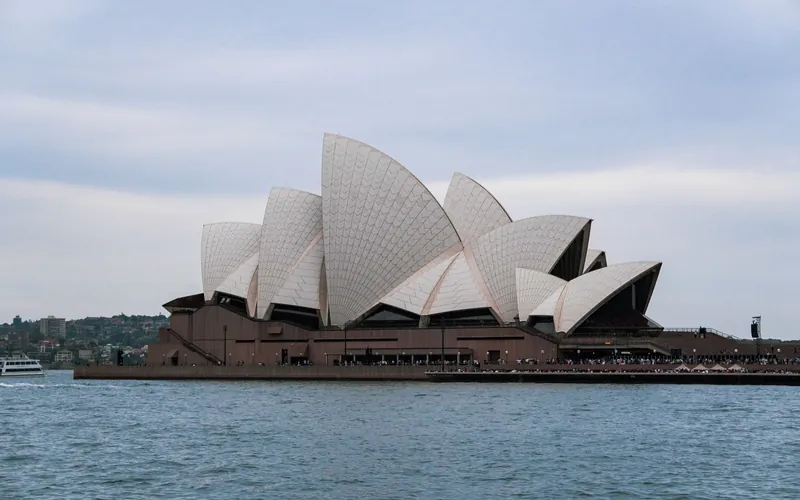
Australia Sydney + Great Barrier Reef
11DFrom ₹2,85,000
Hobbiton, Milford Sound, Queenstown adrenaline, Franz Josef glacier.
This trip opens in Auckland, New Zealand's most populous city, with an urban population of about 1,547,200 across a metropolitan area governed by Auckland Council that reaches 1,816,000. The city sits on a narrow isthmus between the Manukau Harbour on the Tasman Sea and the Waitematā Harbour on the Pacific, one of the few cities in the world with a harbour on two separate major bodies of water, and its landscape is dotted with 53 volcanic centres making up the Auckland Volcanic Field. Its Māori name, Tāmaki Makaurau, means "Tāmaki desired by many," a reference to how prized the area's land and geography have long been, dating to Māori settlement of the isthmus around 1350.
South of Auckland, in Waikato, the trip visits the Hobbiton Movie Set, built on a family-run sheep and cattle farm that director Peter Jackson first spotted during an aerial search in 1998, reportedly describing it as looking "like a slice of ancient England." Work to build the set for The Lord of the Rings began in March 1999, requiring 1.5 kilometres of new road, 37 hobbit-hole facades, a mill, a double-arch bridge, and a 26-tonne oak tree cut down nearby and reassembled on site with artificial leaves; the original set, built from untreated timber, plywood, and polystyrene, was largely dismantled after filming before being rebuilt more permanently in 2010 for The Hobbit trilogy.
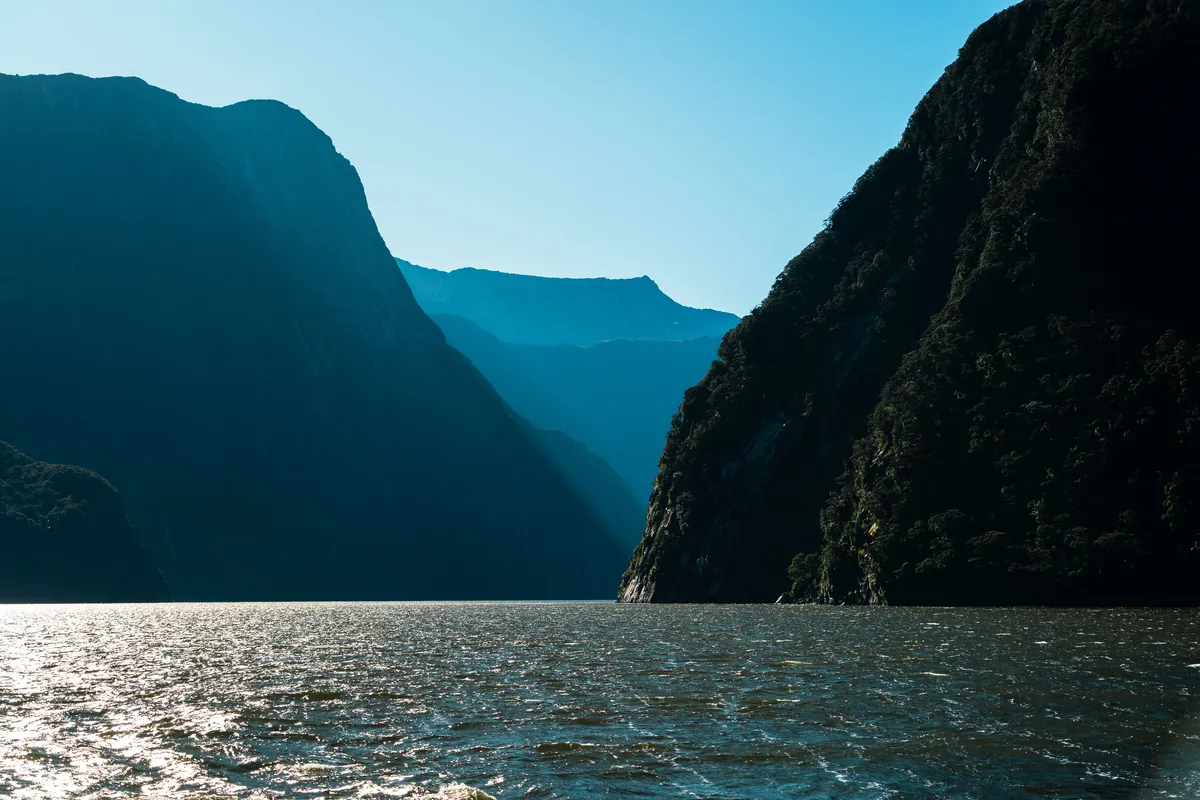
On the South Island, the trip reaches Milford Sound, a fiord within Fiordland National Park and the Te Wāhipounamu World Heritage site, known in Māori as Piopiotahi after the now-extinct piopio thrush, whose legend tells of a single bird flying to the fiord in mourning after the death of the demigod Māui. The sealer John Grono gave it its European name in 1823 after Milford Haven in his native Wales, and the fiord runs 15 kilometres inland between rock faces rising 1,200 metres or more, past peaks including The Elephant and The Lion, fed by permanent waterfalls Lady Bowen Falls and Stirling Falls and, after heavy rain, dozens of temporary ones — rainfall here averages 6,412 millimetres a year, making Milford Sound one of the wettest inhabited places in New Zealand.
Further south, Queenstown sits on Lake Wakatipu, a long, S-shaped glacial lake in Otago, ringed by mountains including The Remarkables and Cecil Peak. Known to Māori as Tāhuna, "shallow bay," the area was first settled by Kāi Tahu, whose oral tradition credits the ancestor Rākaihautū with digging the region's lakes; European settlement began in 1860 when William Gilbert Rees established a high-country farm where the town centre now stands, and the discovery of gold in the Arrow River in 1862 turned his wool shed into the hotel now known as Eichardt's, drawing prospectors and, soon after, the shops, churches, and newspaper of a fast-growing town.
The trip closes at Franz Josef Glacier, a 12-kilometre temperate maritime glacier in Westland Tai Poutini National Park that, together with the nearby Fox Glacier, descends from the Southern Alps to less than 300 metres above sea level. Its Māori name, Kā Roimata o Hine Hukatere, "the tears of Hine Hukatere," comes from a legend in which a climber's tears froze into the glacier after her companion Tuawe was swept to his death in an avalanche; German geologist Julius von Haast later named it for Emperor Franz Joseph I of Austria in 1865. A high, wide névé feeding a steep, narrow valley lets Franz Josef persist at low altitude long after most temperate-zone glaciers would have melted, letting it share its valley with temperate rainforest even as it has retreated from a coastline it once reached some 18,000 years ago.
Text adapted from the linked articles under CC BY-SA 4.0; edited for length.
On documentation, this trip typically involves an online e-visa arranged ahead of travel — treat that as a planning signal only, and verify exact, current requirements with the relevant embassy or consulate before booking. It runs 13 days, from ₹2,95,000 per person.
Every dimension the Taro team tags this pack with — filter by any of these on the packs page.
13 days across New Zealand, starting from ₹2,95,000 per person.
Suited to Couples, Friends, and Luxury Travellers, with a suitable option for families and a moderate activity level.
This trip typically involves an online e-visa arranged ahead of travel. Always confirm exact, current requirements with the relevant embassy or consulate before booking — this is a planning signal, not a legal statement.
Share your travel month, group size, budget comfort, and must-do experiences. The Taro team will shape the right route before any payment conversation.