Australia Sydney + Great Barrier Reef
11DFrom ₹2,85,000
Aitutaki lagoon, Rarotonga circle road, Polynesian dance nights.
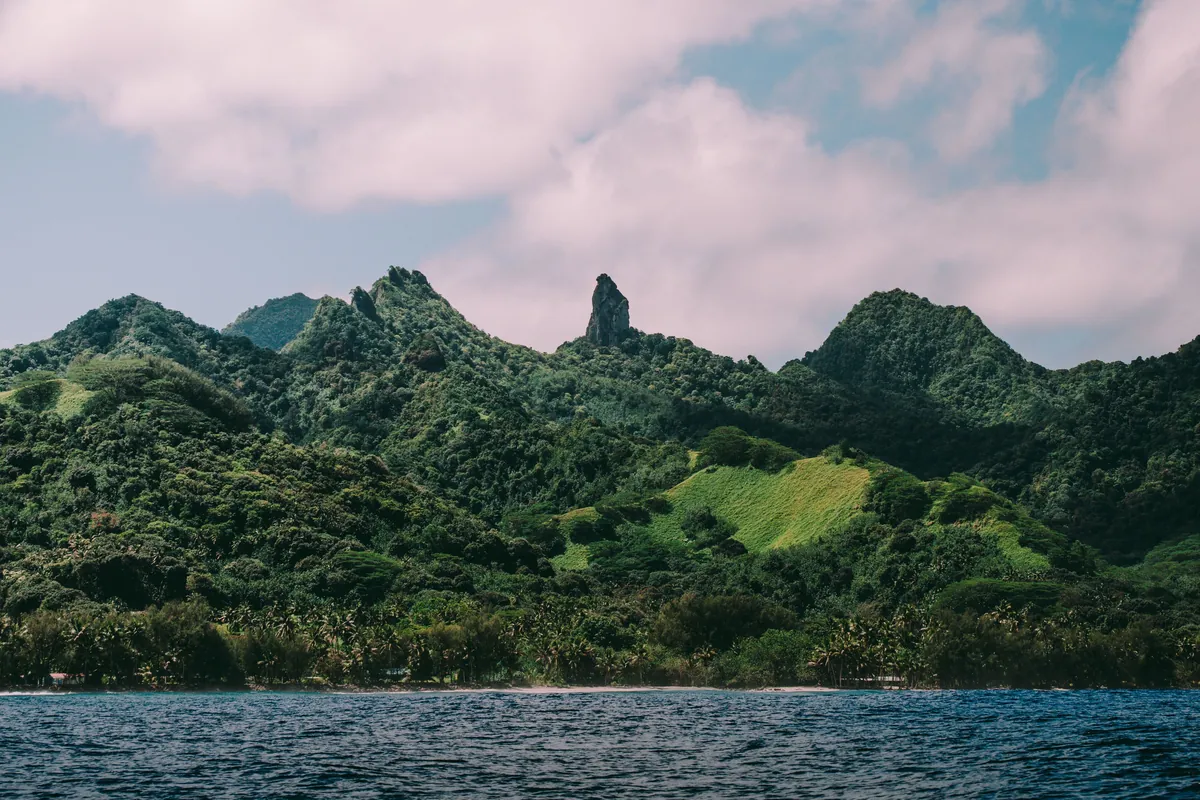
Cook Islands Aitutaki is based on Rarotonga, the largest and most populous island in the Cook Islands, a volcanic island of 67.39 square kilometres that is home to 72% of the country's population — 10,898 of a total 15,040 people — with the country's parliament sitting at Avarua on its north coast. Kidney-shaped and 32 kilometres in circumference, Rarotonga is the summit of an extinct volcano rising 5,000 metres from the seafloor, and the earliest evidence of human presence in the southern Cook Islands dates to around AD 1000, with oral tradition naming several founding groups who settled the island in the centuries that followed. Over 7 days the pack moves between two islands, a lagoon, and the islands' wider Polynesian culture.
Aitutaki, the pack's lagoon-cruise island, is the second most populated in the Cook Islands after Rarotonga, an "almost atoll" of fifteen islets set in a lagoon beside a main island with a total land area of 18.05 square kilometres and a maximum elevation of about 123 metres at the hill known as Maunga Pu, and a 2021 population of 1,782 spread across eight districts. Polynesians first settled it between AD 1225 and 1430, and they kept up voyaging contact across a wide area — the basalt adze heads found on Aitutaki can be traced by their geochemistry back to quarries as far as Samoa to the west and the Society Islands to the east. It is today the second-largest tourist destination in the Cook Islands after Rarotonga, having drawn 38,777 visitors in 2018, with more than a third of its workforce employed in restaurants and accommodation.
Circling back to Rarotonga, the pack's island-loop road follows the same kidney-shaped coastline that gives the island its 32-kilometre circumference, tracing the volcanic landscape whose extinct summit was first settled, according to oral tradition, by groups including Ata-i-te-kura, Apopo-te-akatinatina and Apopo-te-ivi-roa arriving in the ninth century, followed later by Tangi'ia Nui.
Muri Lagoon, on Rarotonga's eastern coast in the Ngatangiia district, is the largest earner of tourism revenue in the Cook Islands, accounting for a quarter of all tourism bed-nights on the island, and stretches roughly a kilometre wide with a maximum depth of 1.25 metres, bounded by Ngatangiia Harbour to the north and the motu of Taakoka to the south. The lagoon has also faced serious environmental strain — nitrogen from agricultural runoff and leaking septic tanks has fed noxious seaweed growth and reduced water visibility badly enough that the government declared its condition a national disaster in 2015.
The trip's closing Te Vara Nui dance performance sits within the wider culture of the Cook Islands, a Polynesian country spread across some 1,800,000 square kilometres of the South Pacific whose traditions were shaped by Polynesian settlers arriving from Tahiti in the 6th century. Captain Cook, who gave the islands their modern name, arrived in 1773 and 1777, and the islands' traditional social hierarchy was organised around ariki, or high chiefs — typically three to six per island — each ruling an ivi or ngati, or tribe, with mataiapo and rangatira forming the lesser noble ranks beneath them.
Text adapted from the linked articles under CC BY-SA 4.0; edited for length.
On documentation, this trip typically involves an online e-visa arranged ahead of travel — treat that as a planning signal only, and verify exact, current requirements with the relevant embassy or consulate before booking. It runs 7 days, from ₹2,45,000 per person.
Every dimension the Taro team tags this pack with — filter by any of these on the packs page.
7 days across Cook Islands, starting from ₹2,45,000 per person.
Suited to Couples, Friends, and Luxury Travellers, with a suitable option for families and a moderate activity level.
This trip sits in the e-visa complexity band — usually arranged online ahead of travel. Always confirm exact, current requirements with the relevant embassy or consulate before booking — this is a planning signal, not a legal statement.
Share your travel month, group size, budget comfort, and must-do experiences. The Taro team will shape the right route before any payment conversation.