Botswana Okavango Delta
8DFrom ₹3,65,000
A 6-day luxury safari route through Kruger National Park.
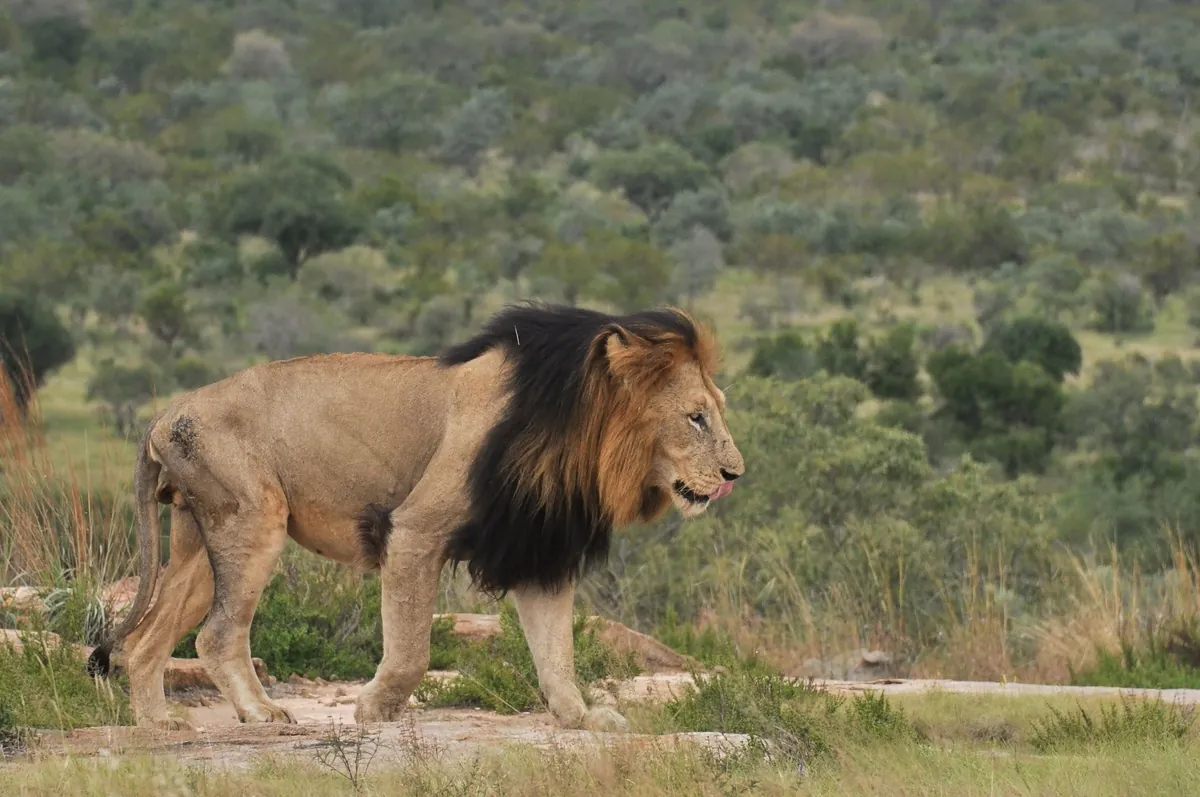
The safari is built around Kruger National Park, 19,623 square kilometres across South Africa's Limpopo and Mpumalanga provinces, running 360 kilometres north to south and up to 90 kilometres wide, with its headquarters at Skukuza. Its roots trace to the 1890s, when the farmer Alexander Marsh Robertson fenced part of his Transvaal property to protect ground game almost by accident, an experiment that impressed President Paul Kruger enough that in 1892 he proposed a much larger game reserve along the Sabi River. The Sabi Game Reserve, established under warden James Stevenson-Hamilton from 1902, absorbed the neighbouring Shingwedzi Game Reserve and surrounding farms in 1926 to form the modern Kruger National Park, named for its founding president over the following decades. The park now shelters 147 species of large mammal, more than any other African reserve, and since 2002 has formed part of the transfrontier Great Limpopo Park linking it to protected land in Mozambique and Zimbabwe. Running through the park is the Sabie River, part of the Komati River system and rated among South Africa's most biologically diverse waterways for its generally good water quality. Rising in the Drakensberg escarpment, the river flows east across the full breadth of Kruger before cutting through the Lebombo range into Mozambique, passing the settlements of Sabie, Hazyview, Skukuza and Lower Sabie along its banks and gathering tributaries including the Sand River and the Mac Mac River as it goes. Its dense riverside thicket, especially the stretch between Skukuza and Lower Sabie, draws wildlife to its banks and forms one of the park's most consistently productive game-viewing corridors. At the centre of the safari is the search for the Big Five: lion, leopard, rhinoceros, elephant and African buffalo, a term coined by 19th-century hunters for the animals judged hardest to track and confront on foot. All five occur within Kruger, alongside a further "Big Six Birds" grouping — lappet-faced vulture, martial eagle, saddle-billed stork, kori bustard, ground hornbill and the reclusive Pel's fishing owl — recognised for needing similarly large, undisturbed territory. Today the same animals once pursued for sport are the central subject of ecotourism across the reserve, their populations tracked through regular aerial surveys, camera monitoring and, for rhinos in particular, ongoing conservation programmes aimed at reversing decades of population pressure. The route's final stop is Blyde River Canyon, a 26-kilometre gorge in Mpumalanga and, by most measures, the third-largest canyon on Earth after the Grand Canyon and the Fish River Canyon — though unlike either, it is a "green canyon" cloaked in subtropical vegetation rather than bare rock. Its best-known formation, the Three Rondavels, takes its name from a resemblance to traditional round African houses, and the canyon anchors the wider Panorama Route running from the town of Graskop past God's Window, the Pinnacle and Bourke's Luck Potholes. The Blyde, meaning "glad" in old Dutch after a Voortrekker expedition's return in 1844 after being feared lost, has since been officially renamed the Motlatse River, and the canyon itself supports a wide range of primates, birdlife and the striking Kadishi Tufa waterfall, a 200-metre mineral formation built up by dolomite-rich water rather than carved by it. Across six days the safari moves from the founding grounds of Africa's most storied game reserve, along the river corridor that sustains its wildlife, through the search for the five animals that gave the safari its name, to a green-walled canyon carved by an entirely different river system — a route spanning both the animals that made Kruger famous and the geology of the escarpment that borders it.
Text adapted from the linked articles under CC BY-SA 4.0; edited for length.
Every dimension the Taro team tags this pack with — filter by any of these on the packs page.
Share your travel month, group size, budget comfort, and must-do experiences. The Taro team will shape the right route before any payment conversation.