Botswana Okavango Delta
8DFrom ₹3,65,000
A 5-day luxury gorilla-trekking route through Volcanoes National Park from Musanze.
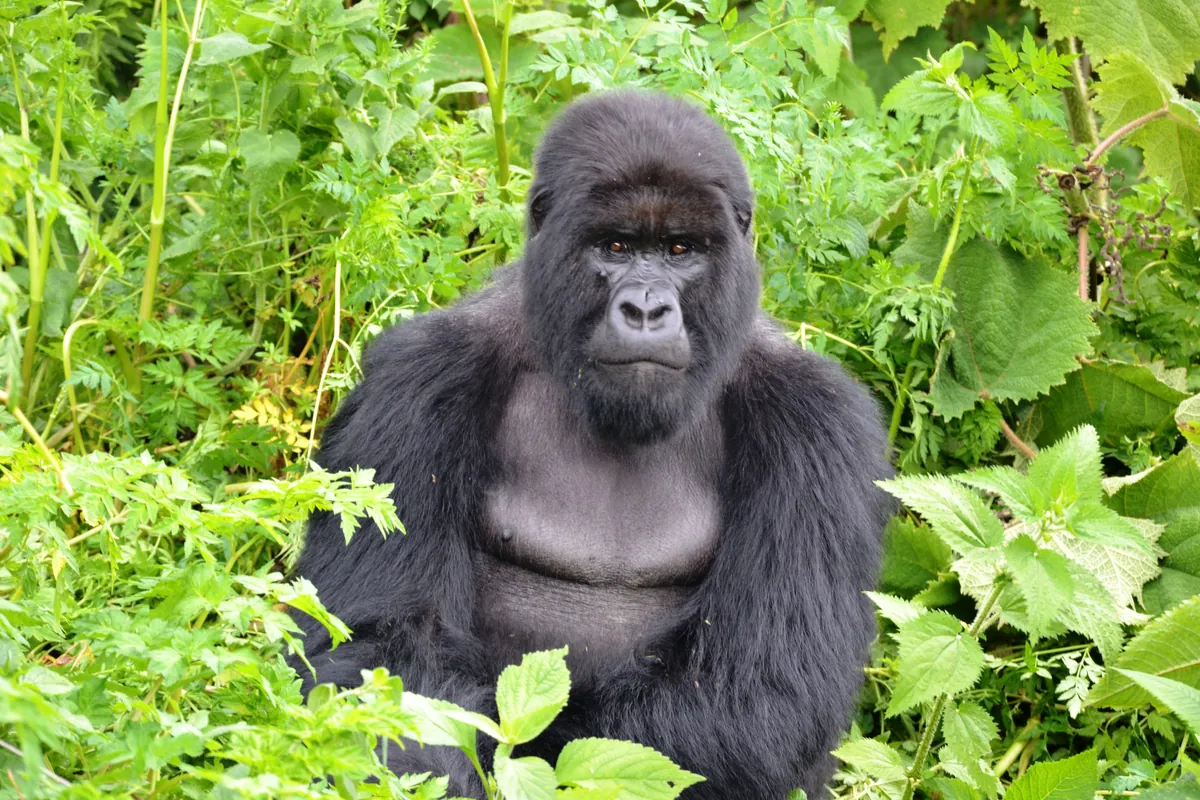
The trek is built around Volcanoes National Park, 160 square kilometres of rainforest in northwestern Rwanda spanning five of the eight Virunga volcanoes — Karisimbi, Bisoke, Muhabura, Gahinga and Sabyinyo — and bordering sister parks across the frontiers in the Democratic Republic of Congo and Uganda. Established in 1925 to protect gorillas from poachers, it was Africa's first national park, though its borders have shifted repeatedly since: expanded in 1929 into the 8,090-square-kilometre Albert National Park under Belgian colonial rule, then cut back in 1958 and again between 1969 and 1973 when more than a thousand hectares were cleared for pyrethrum cultivation. In 2022 the Rwandan government announced plans to nearly double the park's protected area to 23,000 hectares, adding a buffer zone intended to ease friction between the park and the farming communities around it. Within its bamboo, Hagenia and giant-senecio forest zones live the golden monkey, African buffalo, spotted hyena and 178 recorded bird species alongside its namesake gorillas. The mountain gorilla, one of two eastern gorilla subspecies, survives today in only two wild populations — the Virunga Mountains straddling Rwanda, Uganda and Congo, and Uganda's separate Bwindi Impenetrable Forest — with a combined 2019 estimate of roughly 1,063 individuals, up from a low point of around 250 in the early 1980s. Adult males, called silverbacks for the saddle of grey hair that develops on their backs with age, can stand over 1.6 metres and weigh close to 200 kilograms, leading stable family groups of five to thirty animals bound by long-term ties between a dominant male and several females. Groups build a fresh nest from surrounding vegetation each night, forage through the day on leaves, stems and pith from more than 140 plant species, and communicate through some twenty-five distinct vocalisations, from contact grunts to the deep belches heard during rest. Conservation work built around anti-poaching patrols, community revenue-sharing and closely managed tourism has driven the recovery from those 1980s lows, with growth strongest in habituated groups accustomed to controlled human contact. Rising over the park's Karisoke valley is Mount Bisoke, an active stratovolcano straddling the Rwanda–Congo border with its summit on the Rwandan side, roughly 35 kilometres northeast of Goma. Its two recorded eruptions, in 1891 and 1957, left twin crater lakes near the summit, one of them the largest in the Virunga range, and geologists consider the area still capable of future activity. The peak can be climbed in a single day from the Rwandan side under guidance from the Rwanda Development Board, its steep equatorial-rainforest and alpine-meadow slopes providing habitat for mountain gorillas and hosting the valley where Dian Fossey founded her research camp. The trek's defining figure is Dian Fossey, the American primatologist who arrived in the region in 1966 and, encouraged by the paleoanthropologist Louis Leakey, spent nearly two decades studying mountain gorillas at close range. In September 1967 she founded the Karisoke Research Center in the saddle between Mounts Karisimbi and Bisoke, taking its name from the first and last syllables of each peak, and over the following years documented gorilla social structure, vocalisation and diet in detail previously unrecorded, work she published in the 1983 book Gorillas in the Mist. Fossey combined this research with active opposition to poaching, financing patrols that destroyed hundreds of traps a year, and her advocacy is widely credited with helping reverse the species' population decline. She was killed in her cabin at Karisoke on 26 December 1985, a case that remains formally unresolved though a Rwandan court convicted her former research assistant in absentia; she is buried in the gorilla graveyard she built at the research centre, beside Digit, a gorilla killed by poachers in 1977 whose death marked a turning point in her conservation work. Across five days the trek moves from the forested boundaries of Volcanoes National Park, through the habituated gorilla families that are the park's central subject, up the slopes of Mount Bisoke that shelter them, to Karisoke itself — the research camp Dian Fossey built in the saddle of two volcanoes and the graveyard where she is buried among the animals she spent her life protecting.
Text adapted from the linked articles under CC BY-SA 4.0; edited for length.
Every dimension the Taro team tags this pack with — filter by any of these on the packs page.
Share your travel month, group size, budget comfort, and must-do experiences. The Taro team will shape the right route before any payment conversation.