Australia Sydney + Great Barrier Reef
11DFrom ₹2,85,000
A 6-day luxury adventure-sports route through Queenstown.
The adventure begins at the Kawarau Gorge Suspension Bridge, designed by Harry Higginson and completed in late 1880 as a key access route to the Central Otago goldfields, spanning the Kawarau River 43 metres below. Traffic moved to a new highway bridge in 1963, and the old suspension bridge, now a Category I historic place, found new life as the site of the world's first commercial bungy jumping operation, run today by the AJ Hackett Bungy Company, while also carrying walkers, runners and cyclists on the Queenstown Trail.
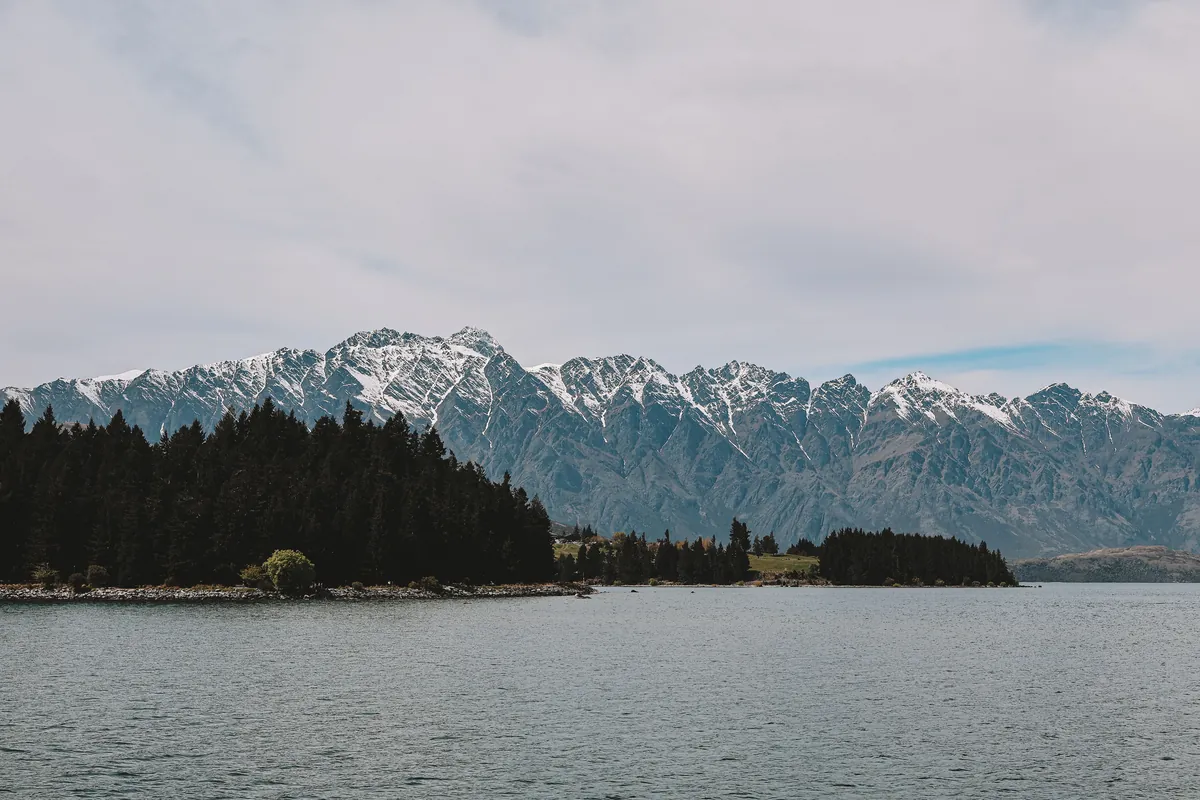
Beside the town lies Lake Wakatipu, New Zealand's longest lake at 80 kilometres and its third largest by area, with a floor that drops below sea level to a maximum depth of 420 metres. Its Māori name is traced to two rival etymologies — one from a legend that a giant's dying breaths carved the lake and cause its subtly fluctuating water level, the other meaning 'to create' or 'to cause to grow' — and the lake was first recorded on a map in 1843 from Māori-supplied details, before the first Europeans reached its shore in January 1856, guided by a map the local chief Reko had drawn in the ground. The lake has flooded the surrounding towns repeatedly, most seriously in 1999, when Queenstown's town centre and roads sustained around $50 million in damage; today it also holds the longfin eel, brown trout and rainbow trout, and doubled as Loch Ness in the 2007 film The Water Horse: Legend of the Deep.
Across the water rise The Remarkables, a serrated mountain range named in 1857-58 by the surveyor Alexander Garvie for its jagged profile, though the original Ngāi Tahu inhabitants knew the range, and the river that begins beneath it, as Kawarau. Its highest point, Single Cone, reaches 2,319 metres, and the range's slopes host a ski area of three mountain bowls covering 220 hectares, operated under a Department of Conservation concession within the Rastus Burn Recreation Reserve.
North of Queenstown, Skippers Canyon was carved by the Shotover River, named for William Gilbert Rees, one of the first European settlers in the area, after gold was discovered nearby in November 1862 by Thomas Arthur and Harry Redfern, an event that touched off one of the largest gold rushes in Otago's history. The canyon and its main settlement took their name from 'Skipper' Malcolm Duncan, a Northern Irish former sailor who found gold at what became Skippers Point that same year, and a hydroelectric station built at Dynamo in 1886 sent power over the hill to run machinery at the small mining settlement of Bullendale. Early miners' tracks through the canyon were rough and steep enough to routinely cost travellers their horses and supplies, prompting the survey of a proper road in 1883 and the construction, in stages from 1866, of successive bridges across the Shotover, the last of them completed in 1901.
Across the adventure capital, the routes converge on one goldfield-era landscape: a historic bridge turned into the birthplace of commercial bungy jumping, the glacial lake that has flooded and inspired the town in turn, the serrated range that gave Queenstown its backdrop, and the gold-rush canyon whose miners built the roads adventure tourism still uses today. Each stop carries the same nineteenth-century gold-rush history into its present-day use.
Text adapted from the linked articles under CC BY-SA 4.0; edited for length.
Every dimension the Taro team tags this pack with — filter by any of these on the packs page.
Share your travel month, group size, budget comfort, and must-do experiences. The Taro team will shape the right route before any payment conversation.