
Arctic Svalbard Polar Bears
8DFrom ₹6,85,000
A 5-day premium trip to Vilnius, Lithuania, taking in Gediminas' Tower, Gate of Dawn shrine, Cathedral Square and Trakai Island Castle.
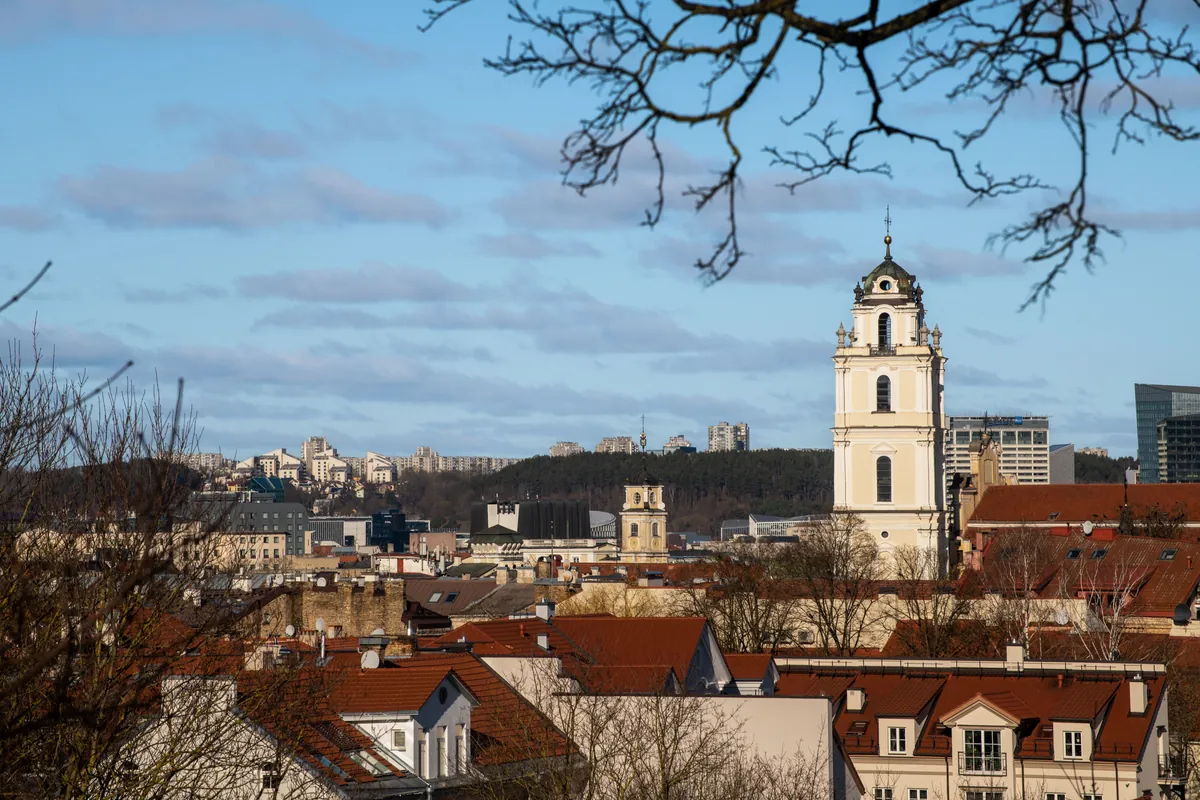
Vilnius Baroque Old Town begins atop Gediminas Hill, at Gediminas's Tower, the surviving portion of the city's Upper Castle and one of Lithuania's most recognisable state symbols. The first wooden fortifications on the hill were raised by Grand Duke Gediminas around the early 14th century, and a brick castle followed in 1409 under Grand Duke Vytautas; the present three-storey tower dates from a 1933 rebuilding by the Polish architect Jan Borowski, guided by archaeological findings from the site. According to legend the duke dreamed here of an iron wolf howling with the voice of a hundred wolves, an omen his court magician Lizdeika interpreted as a sign to found a great city on the spot — the origin story still told of Vilnius today. The tower's viewing platform now looks out over the Old Town and the modern business district beyond, and its ground floor houses a museum of archaeological finds and scale models of the city's medieval castles.
From the hill the route descends into the Old Town to the Gate of Dawn, built between 1503 and 1514 as one of nine gates in the Vilnius city wall and known historically as the Medininkai Gate for the road it led toward. Firing openings are still visible on its outer face, evidence of its original defensive purpose, but the gate is better known today as a major site of Catholic pilgrimage: a chapel within it holds an icon of the Virgin Mary, Mother of Mercy, venerated since at least the 17th century and credited by pilgrims with miraculous powers. Thousands of votive offerings line its walls, and Masses are still held there in both Lithuanian and Polish.
The trail opens onto Cathedral Square, the main square of the Old Town, laid out only in the 19th century when the area around the neo-classical Vilnius Cathedral was cleared and redeveloped; before that the ground had been densely built up with medieval and Renaissance houses and part of the former Lower Castle. Since its creation the square has hosted fairs, military parades, religious and civic ceremonies, concerts and New Year gatherings, and it remains, at the crossing point of the city's main streets, both the most active public space in Vilnius and one of the most widely recognised symbols of Lithuania.
The route ends outside the city at Trakai Island Castle, built on an island in Lake Galvė and begun in the second half of the 14th century by Grand Duke Kęstutis, with major work completed around 1409 by his son, Vytautas the Great, who died within its walls in 1430. Trakai served as one of the principal centres of the Grand Duchy of Lithuania, its strategic value reflected in successive building phases that added a six-storey keep, a Ducal Palace with an inner courtyard and galleried walkways, and defensive towers with walls thickened to 2.5 metres. Left to decay for centuries afterward, the castle was rebuilt in the 1950s and 1960s on Lithuanian initiative despite resistance from Soviet authorities, and the Trakai History Museum was established inside it once the reconstruction was complete.
Across five days the route moves from the hilltop tower that gave Vilnius its founding legend, through the Old Town's pilgrimage gate and cathedral square, out to the lake-island castle at Trakai — a single loop spanning roughly six centuries of Lithuanian building, from Gediminas's 14th-century hill fort to Vytautas's island stronghold.
Text adapted from the linked articles under CC BY-SA 4.0; edited for length.
Every dimension the Taro team tags this pack with — filter by any of these on the packs page.
Share your travel month, group size, budget comfort, and must-do experiences. The Taro team will shape the right route before any payment conversation.

