
Austria Vienna + Salzburg
7DFrom ₹1,45,000
Polar bear searches, glaciers, midnight sun in summer.
Arctic Svalbard Polar Bears is based out of Longyearbyen, one of the world's northernmost settlements and, with an estimated population of around 2,400 to 2,800, the capital and largest settled area of the Norwegian archipelago of Svalbard. The town sits along the foot of the Longyear Valley and the shore of Adventfjorden, an estuary leading into Isfjorden on the west coast of Spitsbergen, the archipelago's broadest island, and traces its origins to the town's early coal-mining economy, which drew the first commercially viable operations to the area in the early 20th century after an earlier, short-lived attempt at tourism around Hotellneset in the 1890s. Across these 8 days, the itinerary works outward from that base — toward the ice where polar bears are searched for, past glaciers reached by inflatable boat, into an abandoned mining town, and under a sun that in summer never sets.
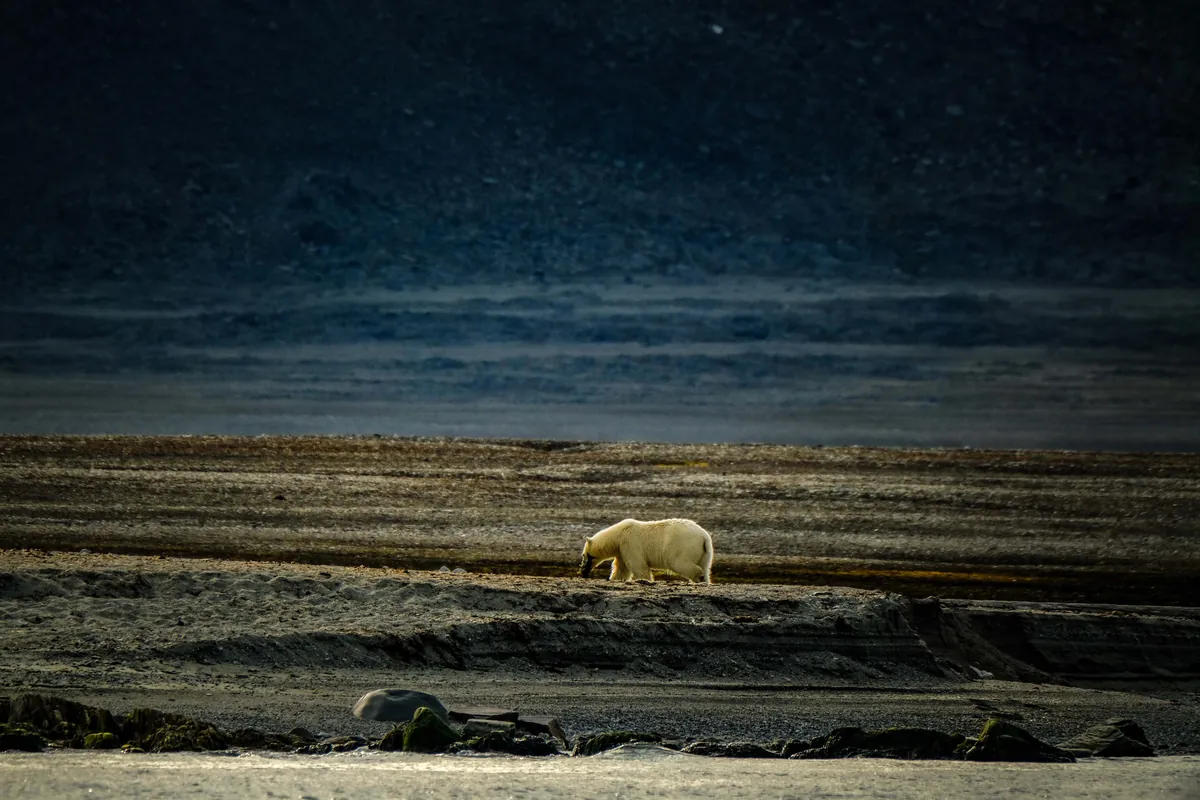
The pack's polar bear search targets the largest extant species of bear and land carnivore by body mass, an animal native to the Arctic and closely related to the brown bear — closely enough that the two species can interbreed. Adult males typically weigh between 300 and 800 kilograms, considerably more than females in a species that is strongly sexually dimorphic, and their coats, usually described as white or yellowish, are part of what makes spotting them across Svalbard's ice and coastline a matter of scanning a landscape built almost entirely from the same colour. The English name was given by the naturalist Thomas Pennant in 1771; before that, Europeans knew the animal for centuries simply as the "white bear," "ice bear" or "sea bear," while Norse speakers called it isbjørn and the Inuit call it nanook.
The zodiac trips out to Svalbard's glaciers cover ground built from a persistent body of natural ice technically classed as a form of rock, one that forms wherever snow accumulation outpaces melting for years or centuries at a stretch. Under its own weight that ice slowly flows and deforms, undergoing both ductile and brittle deformation, and develops the surface features — crevasses and seracs among them — that give a glacier front its broken look from the water. The word itself is a loanword from French, traced back through Franco-Provençal to the Vulgar Latin glaciarium and ultimately the Latin glacies, meaning "ice." Approaching that ice by small boat is what lets the pack get close without setting foot on ground that is, by definition, always moving.
Pyramiden, the pack's ghost town, began as a Soviet coal-mining settlement on Svalbard, founded by Sweden in 1910 and sold to the Soviet Union in 1927. It lies at the foot of Billefjorden on the island of Spitsbergen, taking its name from the pyramid-shaped mountain that stands beside the town, and sits roughly 50 kilometres from Longyearbyen, the nearest settlement. It was closed in 1998 and has stood largely abandoned ever since, its infrastructure and buildings mostly still in place because Svalbard's cold climate slows the decay that would otherwise have taken them apart — a preservation effect that has turned the town into a tourist destination rather than simple industrial wreckage.
The trip's midnight sun, or polar day, is the natural phenomenon that occurs in summer at latitudes north of the Arctic Circle — and, in the opposite season, south of the Antarctic Circle — when the Sun stays visible even at local midnight. It occurs, more precisely, from around 65°44' up to exactly 90° north or south, and because of atmospheric refraction the effect does not switch off cleanly at the Arctic Circle line itself. For a trip built around a polar bear search, glacier zodiacs and a Soviet ghost town, having daylight through the small hours is less a novelty than the condition the whole itinerary runs under.
Text adapted from the linked articles under CC BY-SA 4.0; edited for length.
On documentation, this trip typically involves an online e-visa arranged ahead of travel — treat that as a planning signal only, and verify exact, current requirements with the relevant embassy or consulate before booking. Summer tends to be the best window. It runs 8 days, from ₹6,85,000 per person.
Every dimension the Taro team tags this pack with — filter by any of these on the packs page.
8 days across Norway (Svalbard), starting from ₹6,85,000 per person.
Suited to Couples, Friends, and Luxury Travellers, with a suitable option for families and a moderate activity level.
Summer tends to be the best window for this trip, based on its tagged travel season.
This trip is in the e-visa band, generally sorted online before travel. Always confirm exact, current requirements with the relevant embassy or consulate before booking — this is a planning signal, not a legal statement.
Share your travel month, group size, budget comfort, and must-do experiences. The Taro team will shape the right route before any payment conversation.