
Arctic Svalbard Polar Bears
8DFrom ₹6,85,000
Game of Thrones walls, Hvar nightlife, Plitvice waterfalls.
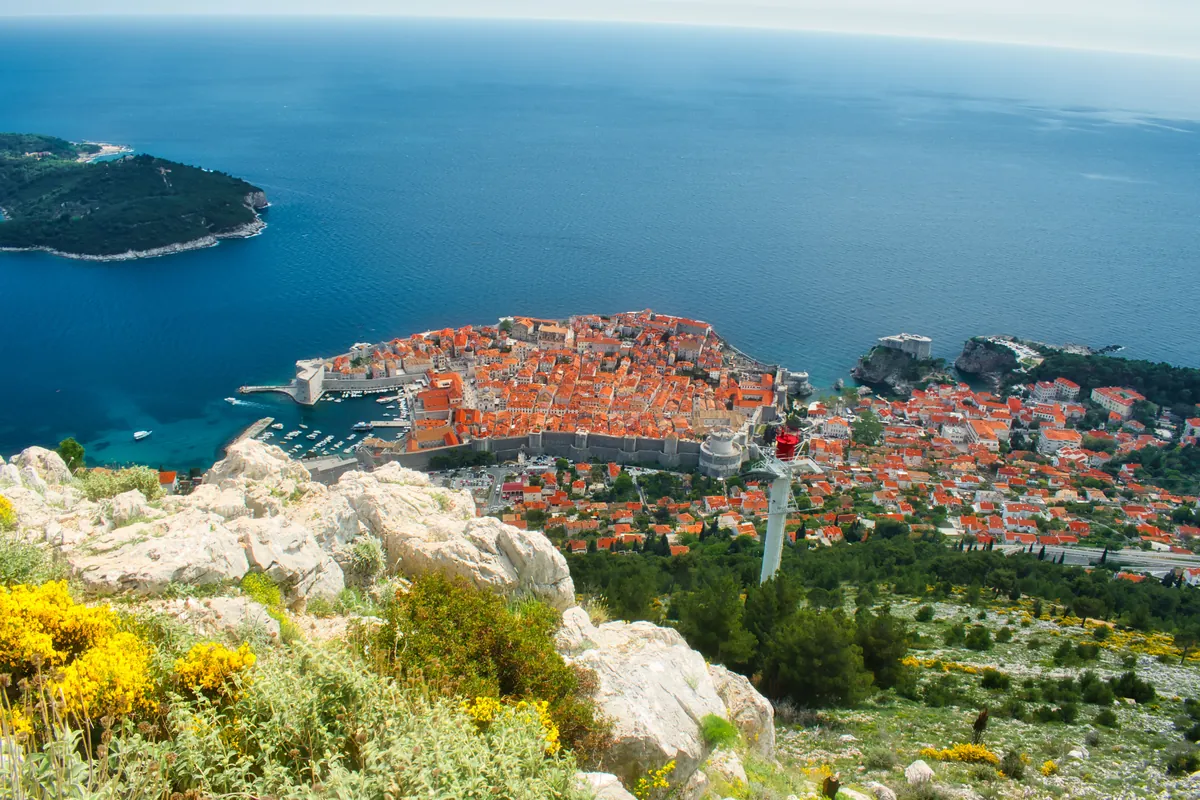
Croatia Dubrovnik + Hvar is based in Dubrovnik, historically also known as Ragusa, a city on the Adriatic Sea in southern Dalmatia and one of the most prominent tourist destinations in the Mediterranean. The two names co-existed for centuries — Ragusa, recorded since at least the 10th century, remained the official name of the Republic of Ragusa until 1808 — and the settlement itself traces back to the Illyrian tribe of Pleraei, with the 10th-century De Administrando Imperio of Constantine Porphyrogenitus dating the city's founding to the 7th century, when refugees from Epidaurum are said to have named it after a "rocky island" called Lausa. Over 8 days the pack moves along the city's defensive walls, across to an island, into a lake-filled national park, and on to a Roman palace in Split.
The Walls of Dubrovnik, the stone fortifications ringing the old town, began as limestone forts built toward the end of the 8th century, with ramparts later extended into the surrounding hills as part of a set of statutes issued in 1272. The walls seen today have survived largely intact, preserved both by the skill of the workers who built them and by the continuous care of generations of Dubrovnik residents who maintained and rebuilt them as needed.
Hvar, the pack's island stop, lies in the Adriatic off the Dalmatian coast between Brač, Vis and Korčula, a roughly 68-kilometre-long island defined by a high east-west ridge of Mesozoic limestone and dolomite. Its position at the north-eastern centre of the Adriatic's sailing routes made it, for a long history stretching back to prehistoric times, an important base for controlling trade running up and down the Adriatic, across to Italy and throughout the wider Mediterranean.
Plitvice Lakes National Park, one of Croatia's oldest and largest national parks, was inscribed on the UNESCO World Heritage list in 1979 for its cascading tufa lakes, caves and connected waterfalls. Sixteen of its lakes are visible from the surface, their colours shifting between azure, green, grey and blue depending on the mineral content and light, and the name Plitvice was first recorded in writing in 1777 by Dominik Vukasović, the priest of Otočac, referring to the shallow basins — pličina or plitvak in Croatian — that natural processes carved into the landscape.
The trip closes at Diocletian's Palace in Split, an ancient Roman palace and fortress complex built at the end of the third century AD by the Emperor Diocletian as his own retirement residence, with roughly half of the complex reserved for his personal use and the rest housing his military garrison and staff. Diocletian ordered the heavily fortified compound built near his hometown of Spalatum, close to Salona, the provincial administrative centre of Dalmatia, in preparation for his retirement on 1 May 305 AD, and in November 1979 UNESCO recognised the historic city of Split that grew up around the palace as a World Cultural Heritage site. In November 2006 the city council controversially voted to permit more than twenty new buildings within the palace grounds, including a shopping and garage complex, a decision made even after the site's UNESCO listing and one widely reported as politically motivated.
Text adapted from the linked articles under CC BY-SA 4.0; edited for length.
On documentation, this trip typically involves an online e-visa arranged ahead of travel — treat that as a planning signal only, and verify exact, current requirements with the relevant embassy or consulate before booking. It runs 8 days, from ₹1,65,000 per person.
Every dimension the Taro team tags this pack with — filter by any of these on the packs page.
8 days across Croatia, starting from ₹1,65,000 per person.
Suited to Couples and Friends, with a suitable option for families and a moderate activity level.
This trip typically involves an online e-visa arranged ahead of travel. Always confirm exact, current requirements with the relevant embassy or consulate before booking — this is a planning signal, not a legal statement.
Share your travel month, group size, budget comfort, and must-do experiences. The Taro team will shape the right route before any payment conversation.