Arctic Svalbard Polar Bears
8DFrom ₹6,85,000
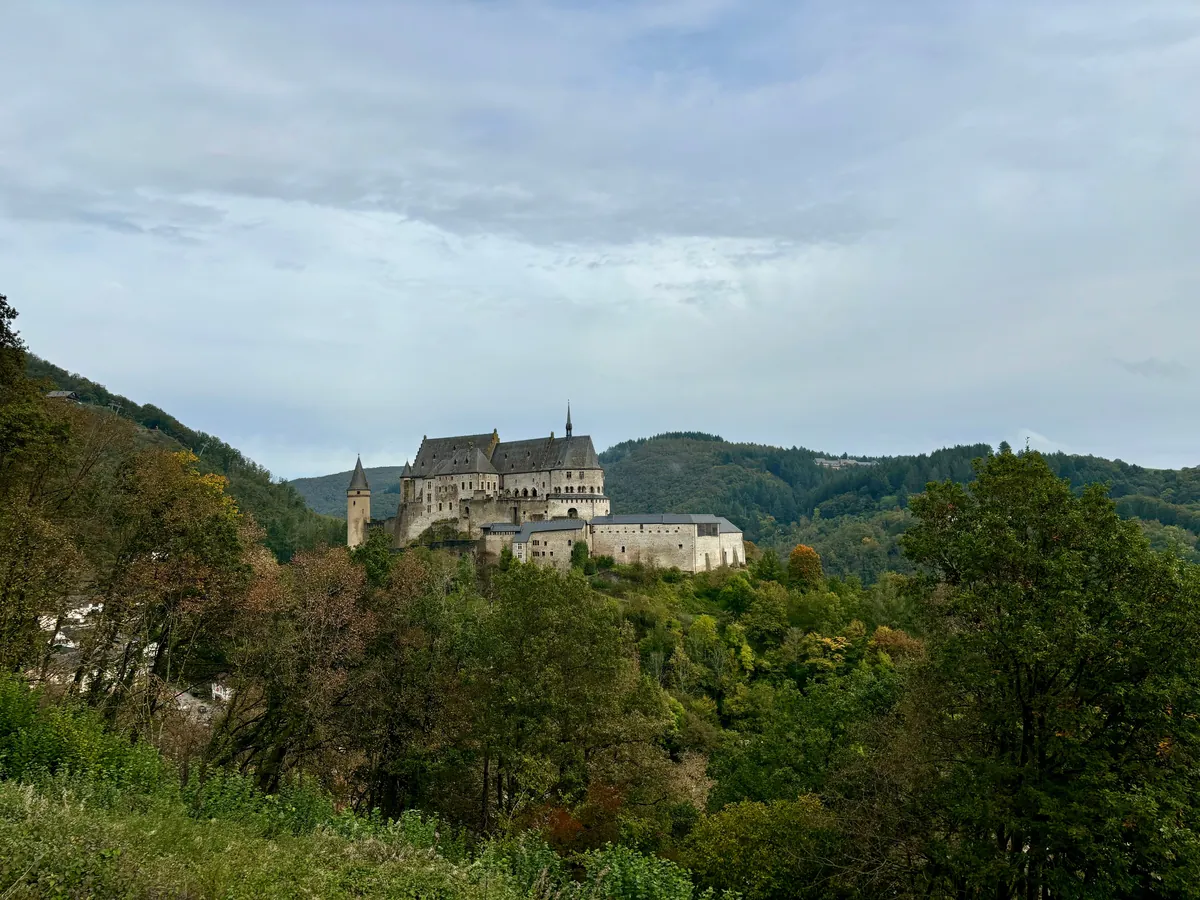
A 4-day luxury trip to Vianden, Luxembourg, taking in Vianden Castle, Our River valley, Éislek highlands and Mullerthal Trail.
Vianden Castle & the Ardennes opens beneath the walls of Vianden Castle, one of the largest fortified castles west of the Rhine, set on a rocky promontory 310 metres high and towering some 100 metres above the town and the River Our below. Its earliest structure was a Roman shelter built in 275 along the Reims–Cologne road, abandoned between 430 and 440, and the site's first medieval stone castle followed around 1000 with a watchtower ringed by an oval wall; a 1994 excavation uncovered a late-antique, Merovingian-period tower dated by its wood scaffolding, the only surviving trace of that first fortification. Successive counts of Vianden, first recorded in 1090, expanded the castle through the 12th and 13th centuries with a residential keep, a decagonal chapel, a two-storey palace and Romanesque and then Gothic remodelling, before Prince Maurice of Orange-Nassau added the Renaissance Nassau Mansion in 1621. Abandoned by the 16th century and sold for demolition piece by piece in 1820, the ruin was repurchased by King William I in 1827 amid public indignation over the demolition, restored in stages under Grand Duke Adolphe from 1890 and again after the State took ownership in 1977, and — having also been defended by Luxembourg Resistance fighters against the Waffen-SS in the November 1944 Battle of Vianden — stands today fully restored, its Arms Hall lined with armour and pikes and its Banqueting Hall centred on a fireplace dated to 1450.
Below the castle runs the Our, a 96-kilometre river rising in Belgium's High Fens that forms the border between Germany and Luxembourg for much of its course before joining the Sauer near Wallendorf. North of Vianden the river is impounded by the Our Dam, forming the lower basin of the Vianden Pumped Storage Plant, and the historic Our Valley Route traces a circular touring path along its banks through Belgium and northern Luxembourg.
The route continues into the Éislek, the hilly northern third of Luxembourg — accounting for 32 percent of the country's territory — that forms part of the wider Ardennes region shared with Belgium, Germany and France. Covered largely in deciduous forest and cut by the scenic valleys of the Clerve, Our, upper Sauer and Wiltz rivers, the Éislek holds almost all of Luxembourg's highest hills and is sparsely populated outside Clervaux, Vianden and Wiltz, its hillside villages depending heavily on seasonal tourism; the region also saw fighting in the Battle of the Bulge during the winter of 1944–45.
The trip closes in Little Switzerland, the nickname given to a small, craggy corner of eastern Luxembourg roughly matching the canton of Echternach and also known as the Mullerthal after one of its villages. Despite the name, the terrain here is low by Alpine standards — its highest point reaches only 414 metres — but its thick forests, caves and streams have earned the comparison, and the region, covering just 7 percent of Luxembourg, holds Echternach, the country's oldest surviving city, alongside the smaller towns of Beaufort, Berdorf and Consdorf — a rock-cut, forested finish to a four-day route that runs from a restored hilltop fortress through river valley and highland to this compact sandstone landscape.
Text adapted from the linked articles under CC BY-SA 4.0; edited for length.
Every dimension the Taro team tags this pack with — filter by any of these on the packs page.
Share your travel month, group size, budget comfort, and must-do experiences. The Taro team will shape the right route before any payment conversation.