Abu Dhabi + Yas Island
5DFrom ₹1,05,000
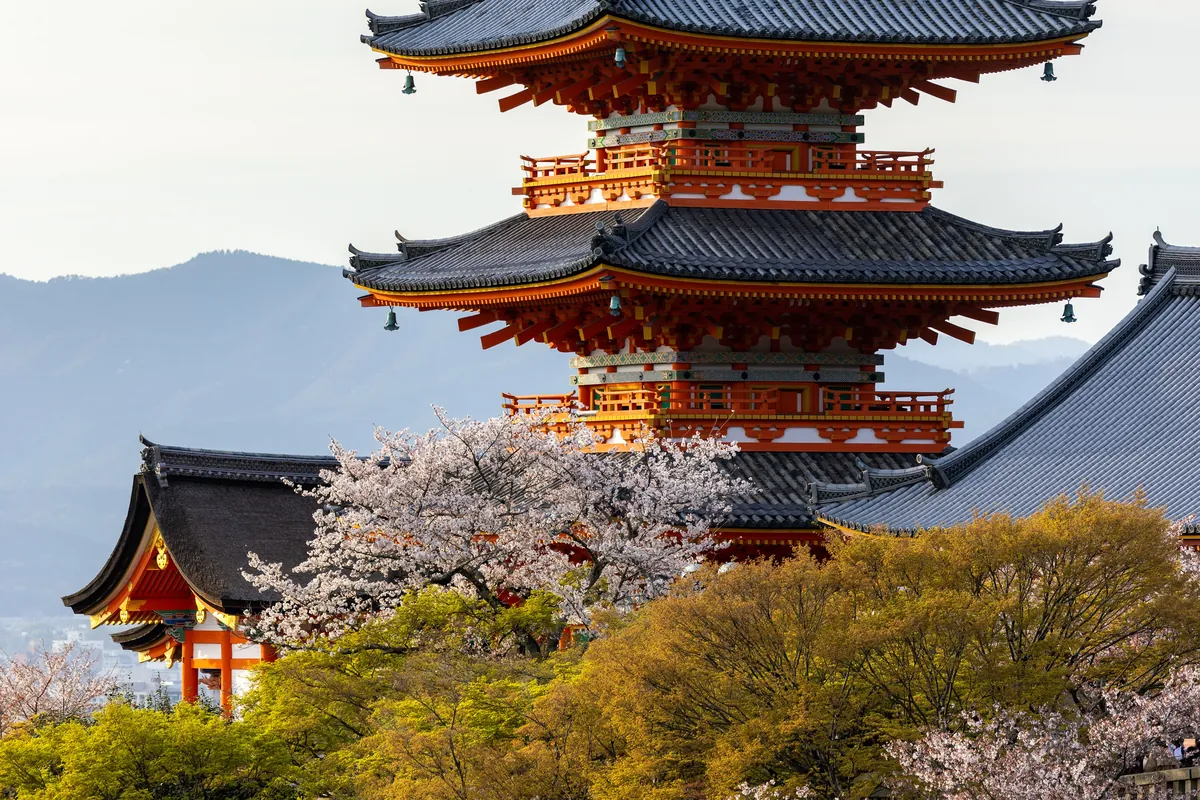
Cherry blossom hanami in temple gardens, bullet train to ancient Kyoto.
This trip opens in Tokyo, Japan's capital and most populous city, at the head of Tokyo Bay in the Kantō region, with a city-proper population of more than 14 million and a Greater Tokyo Area of about 33 million, the third-most populous metropolitan area in the world. Originally called Edo, meaning roughly "estuary," for its site at the meeting of the Sumida River and Tokyo Bay, the city took its current name, meaning "eastern capital," during the Meiji Restoration of 1868, when it became Japan's new imperial capital, following the East Asian tradition of naming capitals with the character for "capital," also seen in Kyoto and Beijing. During the early Meiji period the city was briefly also known as Tōkei, an alternative pronunciation of the same characters, though that reading is now obsolete; Tokyo today is the seat of both the Japanese government and the Emperor, governed since 1943 in a structure closer to that of a prefecture than an ordinary city.
The trip's first stop is Shibuya Crossing, a scramble intersection near Shibuya Station described as the world's busiest pedestrian crossing, with as many as 3,000 people crossing during a single green-light cycle and, by one 2014 survey, up to 390,000 pedestrians on a single non-working day. Inaugurated in 1973, the crossing has become a recognisable symbol of Tokyo through frequent appearances in film and television, including Lost in Translation, and it featured in the 2016 Rio Olympics closing ceremony to promote the Tokyo Games that followed.
A day trip reaches Mount Fuji, Japan's highest mountain at 3,776.24 metres and an active stratovolcano roughly 100 kilometres southwest of Tokyo, last erupting between 1707 and 1708. One of Japan's Three Holy Mountains alongside Mount Tate and Mount Haku, Fuji was added to the UNESCO World Heritage List as a cultural site in 2013, with UNESCO noting that it has "inspired artists and poets and been the object of pilgrimage for centuries," and its exceptionally symmetrical cone stays snow-covered for about five months of the year.
In Kyoto, the trip walks Fushimi Inari-taisha, the head shrine of the kami Inari, formally founded in 711 CE by the Hata clan, an influential immigrant group with roots on the Korean Peninsula. Trails climbing the 233-metre Mount Inari behind the shrine run some four kilometres past roughly 10,000 torii gates, each donated by a Japanese business, with about 800 of them forming the tunnel-like Senbon Torii; Inari began as the kami of rice and agriculture and is now also worshipped by merchants as a patron of business.
The trip closes in Arashiyama, a district on Kyoto's western outskirts named for the mountain across the Ōi River that backs it, and a nationally designated place of scenic beauty. Its bamboo grove, the Arashiyama Bamboo Grove or Sagano Bamboo Forest, sits near Tenryū-ji, the head temple of one of the two main Zen Buddhist sects in Japan, and the district's Togetsukyō, or Moon Crossing Bridge, rebuilt largely in concrete in 1934 after the original wooden bridge dating to 836 was lost, remains a noted spot for viewing cherry blossoms and autumn colour along the slopes of Arashiyama.
Text adapted from the linked articles under CC BY-SA 4.0; edited for length.
On documentation, this trip typically involves an online e-visa arranged ahead of travel — treat that as a planning signal only, and verify exact, current requirements with the relevant embassy or consulate before booking. Spring tends to be the best window. It runs 10 days, from ₹2,15,000 per person.
Every dimension the Taro team tags this pack with — filter by any of these on the packs page.
10 days across Japan, starting from ₹2,15,000 per person.
Suited to Couples, Friends, and Honeymooners, with a suitable option for families and a moderate activity level.
Spring tends to be the best window for this trip, based on its tagged travel season.
This trip sits in the e-visa complexity band — usually arranged online ahead of travel. Always confirm exact, current requirements with the relevant embassy or consulate before booking — this is a planning signal, not a legal statement.
Yes — Tokyo + Kyoto Cherry Blossom suits anniversaries well.
Share your travel month, group size, budget comfort, and must-do experiences. The Taro team will shape the right route before any payment conversation.