Abu Dhabi + Yas Island
5DFrom ₹1,05,000
Potala Palace, Jokhang Temple, monastery debates at altitude.
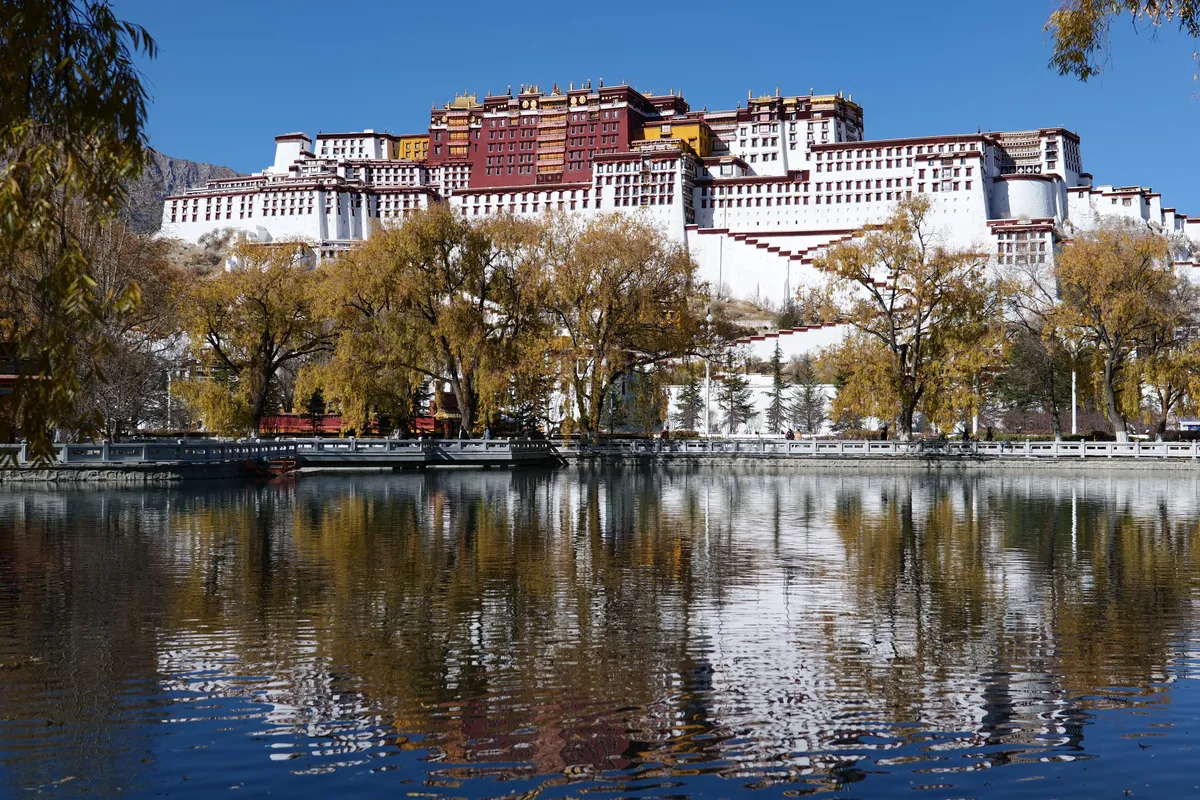
This trip is based in Lhasa, the religious and administrative capital of Tibet since the mid-seventeenth century, sitting at 3,656 metres above sea level and ranking among the highest cities in the world, with a resident population of 876,400 by the end of 2024. Its Tibetan name means "place of gods," replacing the earlier name Rasa, "goat's place," a herding site until King Songtsen Gampo moved his capital there in the seventh century and, in 637, raised the first structures on Mount Marpori that would later become the Potala Palace.
The Potala Palace itself, now a museum, served as the winter residence of the Dalai Lamas from 1649 until 1959. Built in the dzong style at about 3,700 metres on Marpo Ri, the present structure was begun in 1645 under the fifth Dalai Lama on the site of Songtsen Gampo's earlier palace, measuring 400 metres east to west and 350 metres north to south, with sloping stone walls up to five metres thick at the base and copper poured into the foundations to help it withstand earthquakes; construction of the complex continued until 1694, some twelve years after the fifth Dalai Lama's death.
In the old town, the trip visits the Jokhang, considered the spiritual heart of Lhasa and the most sacred temple in Tibet, built around 640 by Songtsen Gampo to house a Buddha statue brought by his Nepalese queen Bhrikuti. Nepalese and Indian artists worked on its original design, and the Barkhor market square around it still carries a pilgrim walkway that takes about 20 minutes to circle, marked by four stone incense burners; the temple's own name comes from Jowo, its central image, giving it the meaning "House of the Jowo."
North of the city, the trip visits Sera Monastery, one of the "great three" Gelug university monasteries of Tibet, founded in 1419 by Jamchen Chojey Sakya Yeshe, a disciple of the Gelug founder Je Tsongkhapa. Its complex splits into an eastern sector holding the Great Assembly Hall and a western sector containing three colleges — Sera Je, Sera Me, and the tantric Ngakpa Dratsang — where monks aged eight to seventy once trained over a twenty-year programme leading to the geshe degree; the monastery is traditionally said to take its name from the wild roses that covered the hillside behind it during construction.
The trip closes at Yamdrok Lake, one of Tibet's three largest lakes at over 72 kilometres long and 638 square kilometres in area, its turquoise colour giving the lake its English gloss. Considered one of four sacred "Great Wrathful Lakes" in Tibetan tradition, it draws pilgrims from the Dalai Lama to local villagers, and its shores hold Samding Monastery, the only Tibetan monastery traditionally headed by a female reincarnate lama, presiding over a community of about thirty monks and nuns on a peninsula jutting into the water. The lake and its surroundings are closely tied to Padmasambhava, credited with bringing Buddhism to Tibet in the eighth century, and it lies fan-shaped across an average depth of 30 metres, reaching 60 metres at its deepest, fed by streams from the snow-capped mountains around it and freezing over each winter under the region's cold, dry climate.
Text adapted from the linked articles under CC BY-SA 4.0; edited for length.
On documentation, this trip falls into the embassy band, the most involved of the four — treat that as a planning signal only, and verify exact, current requirements with the relevant embassy or consulate before booking. It runs 9 days, from ₹2,45,000 per person.
Every dimension the Taro team tags this pack with — filter by any of these on the packs page.
9 days across China (Tibet), starting from ₹2,45,000 per person.
Suited to Couples, Friends, and Luxury Travellers, with a suitable option for families and a moderate activity level.
This trip typically needs an embassy-arranged visa ahead of travel. Always confirm exact, current requirements with the relevant embassy or consulate before booking — this is a planning signal, not a legal statement.
Share your travel month, group size, budget comfort, and must-do experiences. The Taro team will shape the right route before any payment conversation.