Abu Dhabi + Yas Island
5DFrom ₹1,05,000
A 6-day mid-range beach week on Koh Samui.
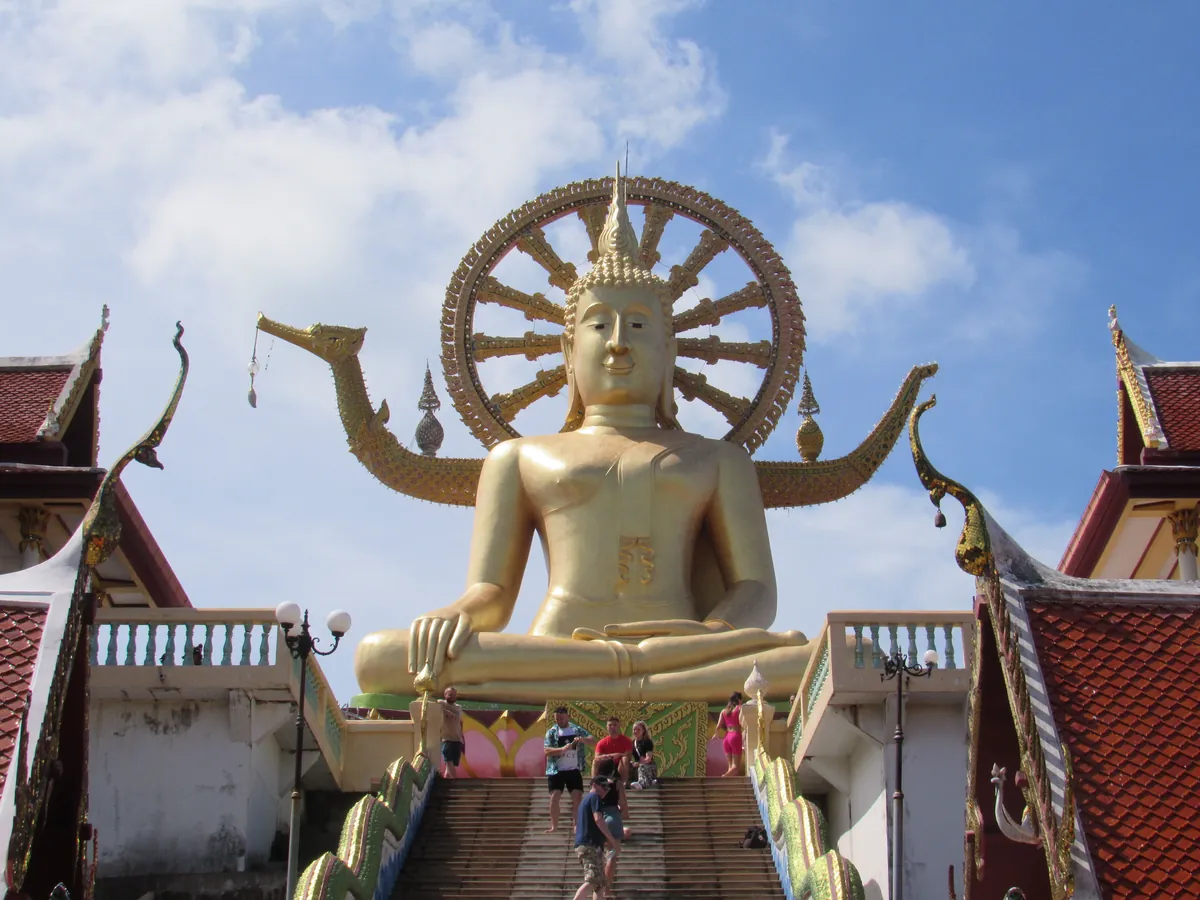
The week opens at Wat Phra Yai, known to visitors as the Big Buddha Temple, on the small island of Ko Phan just off Koh Samui's northeast coast, linked to the main island by a short causeway. Built in 1972, the temple takes its name from the 12-metre gold-painted Buddha statue at its centre, shown in the Mara posture, one hand resting open in the lap and the other reaching toward the ground, a pose representing the Buddha's calm after overcoming temptation and fear. Its design blends animist, Brahmanic and Buddhist elements, with naga serpent statues lining the entrance stairway in the style common to Thai temples, and the surrounding beach town of Bang Rak has taken on the name Big Buddha Beach for the landmark above it. The route continues to Mu Ko Ang Thong National Park, a marine park of 42 islands in the Gulf of Thailand covering about 102 square kilometres, established in 1980 and recognised as a Ramsar wetland site since 2002. Steep limestone formations rise across the archipelago, honeycombed with caves, sinkholes and inland marine lakes, with the highest point, on Ko Phaluai, reaching 396 metres; most of the islands are uninhabited, apart from small communities on Ko Wua Ta Lap, where the park's headquarters and visitor facilities are based. Its name, meaning "golden basin" in Thai, predates the international attention the park drew after Alex Garland's novel The Beach and its film adaptation popularised the region's island scenery, even though filming for the movie took place elsewhere in Thailand. Back on Koh Samui, the route reaches Wat Plai Laem, a modern temple blending Chinese and Thai design, developed in part by the Thai artist Jarit Phumdonming. Its principal statue, in Chinese style, does not depict Gautama Buddha but Cundi, a multi-armed form of the bodhisattva of compassion Avalokiteśvara known in Chinese tradition as Guanyin, set on a pavilion surrounded by a temple lake; smaller shrines nearby honour Budai, Ganesha, Vishnu, Shiva and Sakka, reflecting the temple's mix of religious traditions within a single compound. The week's final stop is Ko Pha-ngan, Koh Samui's neighbouring island to the north, its name derived from the southern Thai word for sandbar. A Dongson-culture bronze drum found nearby in 1977 points to settlement in the area more than 2,000 years ago, and the island was a repeated destination for King Chulalongkorn, who visited fourteen times during his reign. Reached only by sea, the island now receives close to half a million visitors a year, a volume that has driven local and government efforts, including waste-collection programmes and organic farming initiatives, to manage the pressure on its coastline and coral, alongside its reputation as a base for the region's full moon gatherings on its beaches. Across six days the week moves between two adjoining Gulf of Thailand islands and the marine park that separates them: a golden Buddha statue overlooking the sea, a limestone archipelago whose scenery helped define a generation's image of tropical Thailand, a temple built around an entirely different deity from its neighbour, and an island whose royal visits and ancient bronze predate the tourism that now defines it.
Text adapted from the linked articles under CC BY-SA 4.0; edited for length.
Every dimension the Taro team tags this pack with — filter by any of these on the packs page.
Share your travel month, group size, budget comfort, and must-do experiences. The Taro team will shape the right route before any payment conversation.