Arctic Svalbard Polar Bears
8DFrom ₹6,85,000
A 7-day premium trip to Tallinn, Estonia, taking in Toompea Hill, Kuressaare Castle, Kaali crater and Kadriorg Palace.
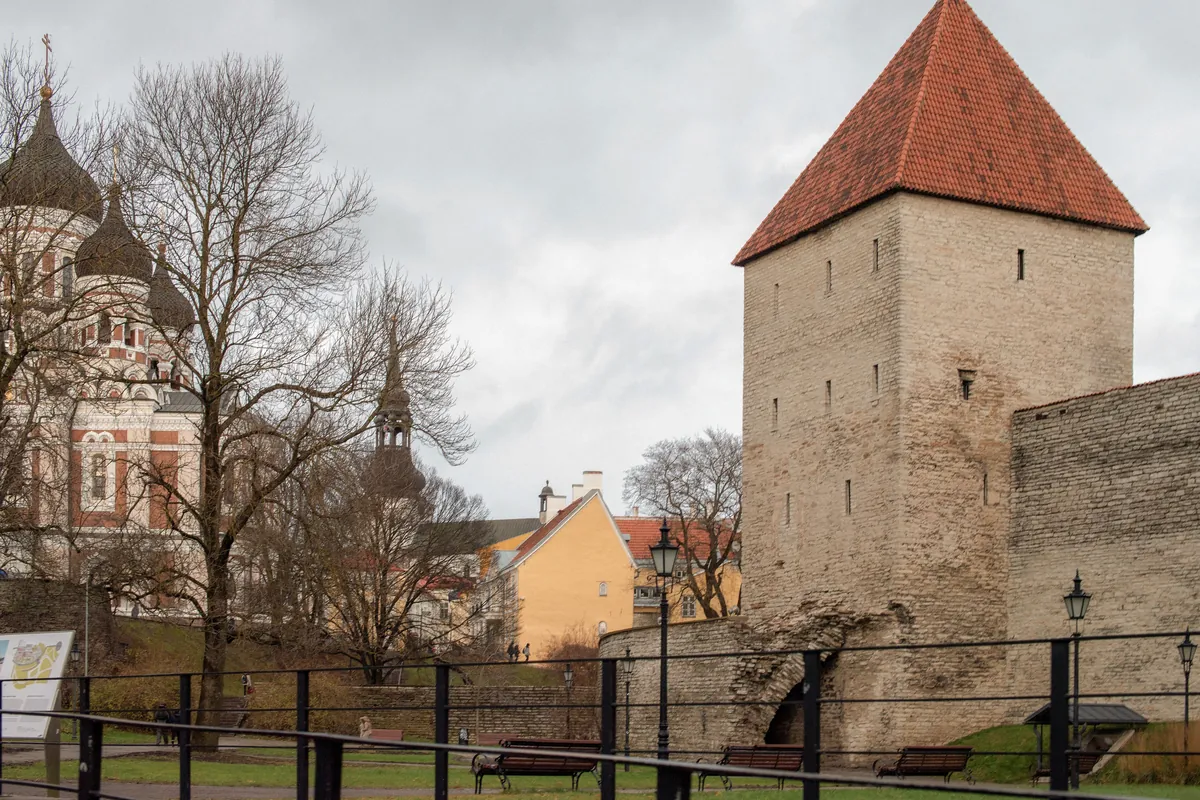
Tallinn to Saaremaa Island Hop begins atop Toompea, the limestone hill in central Tallinn that has anchored the city's government since at least the 13th century. First fortified by Estonians of the ancient county of Revala, the hill was seized by Danish crusaders under King Valdemar II in 1219 and later, in 1227, by the Livonian Brothers of the Sword, who divided the plateau into a Small Castle, a Great Castle and an outer ward, raising the first stone castle here between 1227 and 1229. The Pikk Hermann tower, completed in its first form by 1371 and rebuilt taller in the 16th century, still flies Estonia's flag from the castle's southwestern corner, and the much-rebuilt complex — combining a Tsarist-era governor's palace, medieval fortress walls and an expressionist 1922 parliament wing — today houses the Estonian parliament, the Riigikogu, beside the 1894–1900 Orthodox Alexander Nevsky Cathedral on Castle Square.
From Tallinn's old town the route reaches Kuressaare Castle on the island of Saaremaa, first recorded in the 1380s when the Teutonic Order built it for the bishops of Ösel-Wieck as part of a wider crusading effort to subdue the island's resistant population. Passing through Danish, Swedish and Russian hands over the following centuries and serving as a 19th-century poorhouse once it lost its frontier significance, the castle was restored by architects Karl Rudolf Hermann Seuberlich and Wilhelm Neumann between 1904 and 1912 and again in 1968; considered one of Estonia's best-preserved medieval fortifications, its late Gothic convent building and 37-metre defence tower now house the Saaremaa Museum.
The trip continues to the Kaali crater, a group of nine meteorite craters near the village of Kaali on Saaremaa, formed by an impact now dated to shortly after 1530–1450 BC and among only a handful of meteorite strikes known to have hit a populated area anywhere on Earth. The main crater, 110 metres across and 22 metres deep, is ringed by eight smaller craters within a kilometre, and archaeological digs between 1976 and 1979 uncovered a fortified Iron Age settlement and a silver hoard at its edge, evidence the crater lake later became a site of ritual importance to the communities who settled nearby.
The route closes back in Tallinn at Kadriorg Palace, an 18th-century Petrine Baroque residence begun on 25 July 1718 to designs by Italian architect Nicola Michetti, built by Tsar Peter the Great for his wife Catherine after his forces took the city in 1710. Construction of the main building finished in 1725, the year of Peter's death, and the palace's great hall — decorated with Catherine's initials in ornate stucco attributed to Heinrich von Bergen — survives largely intact even as later interiors were altered; the palace became the summer residence of Estonia's head of state in 1929 before postwar neglect under Soviet rule, and following a Swedish-supported restoration it reopened in 2000 as the Kadriorg Art Museum, now displaying foreign art from the 16th to 20th centuries in the same rooms Peter and Catherine once visited — a fitting close to a seven-day route linking Tallinn's hilltop seat of power with Saaremaa's castle and crater and back again.
Text adapted from the linked articles under CC BY-SA 4.0; edited for length.
Every dimension the Taro team tags this pack with — filter by any of these on the packs page.
Share your travel month, group size, budget comfort, and must-do experiences. The Taro team will shape the right route before any payment conversation.

