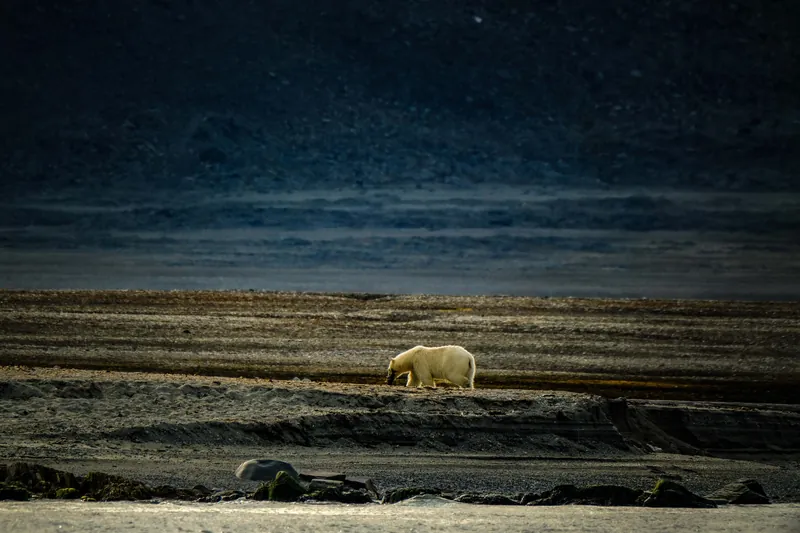
Arctic Svalbard Polar Bears
8DFrom ₹6,85,000
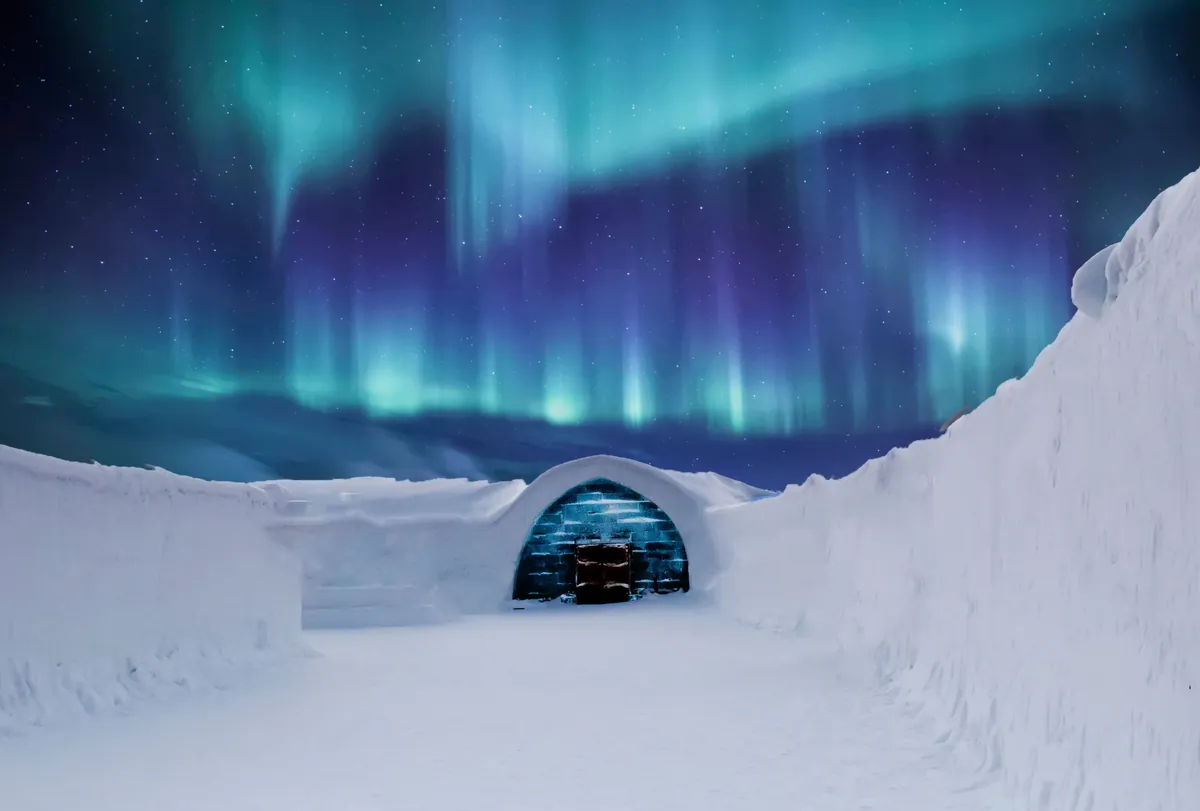
Santa Village, husky safari, glass igloo aurora night.
This trip is based in Rovaniemi, the regional capital of Finnish Lapland, sitting about six kilometres south of the Arctic Circle at the confluence of the Kemijoki and Ounasjoki rivers, with a population of around 66,000. First mentioned by name in official documents in 1453 as a cluster of small farming villages, the town grew through the exploitation of Lapland's natural resources in the 1800s, when logging and a gold rush drew thousands of new residents, and it was granted its own market-town status on 1 January 1929 after seceding from the surrounding rural municipality.
Just outside the city, the trip visits Santa Claus Village, an amusement park that opened in 1980 about eight kilometres northeast of Rovaniemi, close to the airport. A white line painted across the park marks the position of the Arctic Circle as it ran in 1865 — the true line today sits about 700 metres further north — and the village includes Santa's House of Snowmobiles, a museum on the history of Arctic snowmobiling, and Santa Claus's Main Post Office, an official Finnish post office that reads and answers letters addressed to Santa from around the world.
The trip's dog-sledding and reindeer excursions move through Finnish Lapland itself, the country's largest and northernmost region at 100,367 square kilometres, bordered by Sweden, Norway, and Russia and crossed by the Arctic Circle, which brings the midnight sun, the polar night, and the northern lights within reach here. Its terrain ranges from the fells of Fell-Lapland in the north, covered in birch forest, willow thicket, and heath rather than bare rock, to the conifer-forested mires of Forest-Lapland in the south, home to Lake Inari, the region's largest lake at 1,102 square kilometres, and Halti, at 1,324 metres the highest point in Finland.
Reindeer herding, the activity behind the trip's farm visit, is practised today in nine countries across the circumpolar North, with around 100,000 people worldwide engaged in it. Domestication likely began somewhere between the Sayan Mountains on the Russia-Mongolia border and the region east of Lake Baikal, roughly two to three thousand years ago, spreading from there across Eurasia; reindeer sleds, which came later than dog sleds, opened up tundra and mountain terrain that would otherwise be hard to cross, making the reindeer the preferred means of transport across much of the far north.
For the Sámi, the indigenous people of Sápmi across northern Norway, Sweden, Finland, and Russia's Kola Peninsula, reindeer herding remains a defining, though not universal, livelihood: as of 2007 only about 10 percent of Sámi were connected to the practice, working within siiddat, traditional herding groups that also organised hunting and fishing. State borders drawn across Sápmi in the nineteenth century — between Norway and Russia in 1852, and Sweden and Finland in 1889 — cut across these traditional herding groups, and today about 6,500 Sámi in Scandinavia continue reindeer herding, alongside sheep herding, coastal fishing, and fur trapping as some of the community's other traditional livelihoods.
Text adapted from the linked articles under CC BY-SA 4.0; edited for length.
On documentation, this trip is in the e-visa band, generally sorted online before travel — treat that as a planning signal only, and verify exact, current requirements with the relevant embassy or consulate before booking. Winter tends to be the best window. It runs 7 days, from ₹2,15,000 per person.
Every dimension the Taro team tags this pack with — filter by any of these on the packs page.
7 days across Sweden and Finland, starting from ₹2,15,000 per person.
Suited to Couples, Friends, and Luxury Travellers, with an ideal fit for families and a moderate activity level.
Winter tends to be the best window for this trip, based on its tagged travel season.
This trip typically involves an online e-visa arranged ahead of travel. Always confirm exact, current requirements with the relevant embassy or consulate before booking — this is a planning signal, not a legal statement.
Share your travel month, group size, budget comfort, and must-do experiences. The Taro team will shape the right route before any payment conversation.