Arctic Svalbard Polar Bears
8DFrom ₹6,85,000
A 5-day premium city break in Seville around its Alcázar and flamenco quarter.
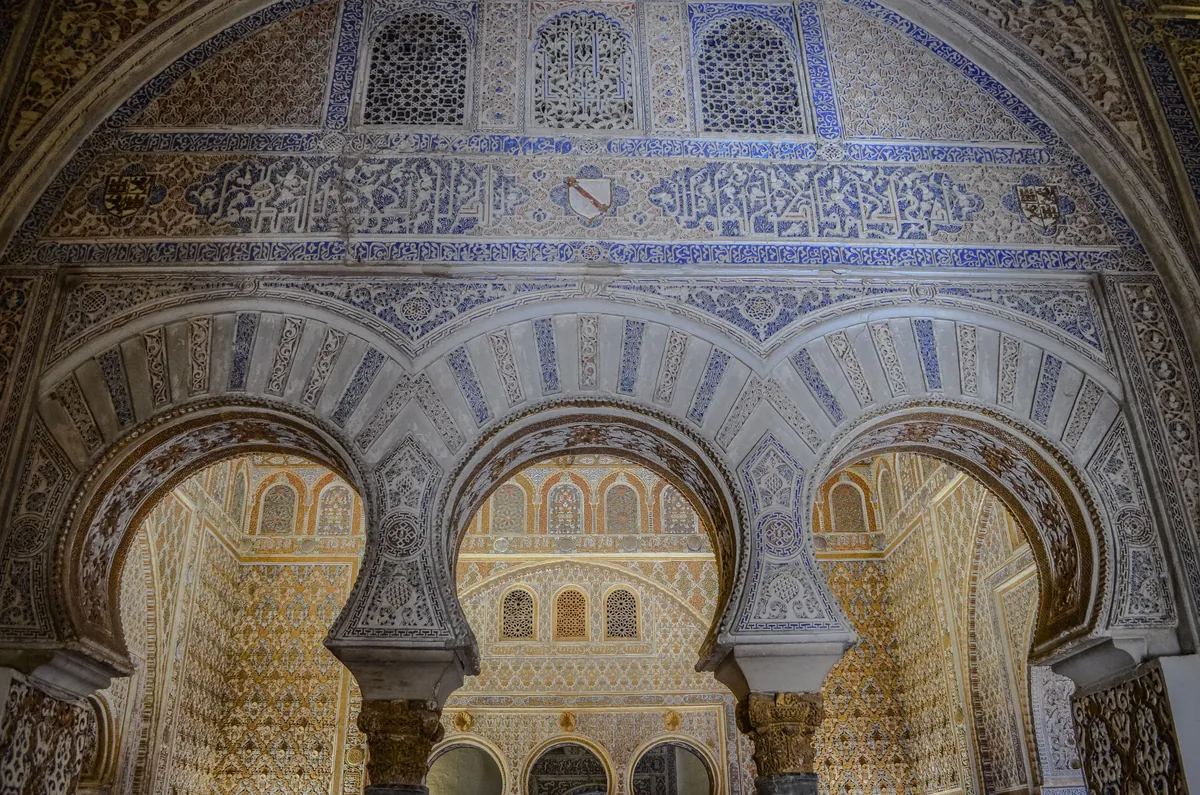
The route begins at the Alcázar of Seville, a royal palace built on the site of an Islamic-era citadel begun in the 10th century under the Umayyads and expanded successively by the Abbadid and Almohad dynasties before the Castilian conquest of 1248. Its most celebrated section, the Mudéjar palace built by Pedro I in the 1360s, includes the Hall of the Ambassadors, a domed chamber where Emperor Charles V married Isabella of Portugal in 1526, and the Patio de las Doncellas, whose sunken Islamic-era garden was rediscovered and restored following excavations between 2002 and 2005 after centuries buried beneath a marble floor. The upper storeys remain an official royal residence, administered by Patrimonio Nacional, and in 1987 UNESCO listed the palace as a World Heritage Site together with the adjoining cathedral and archive; its courtyards and gardens have since served as filming locations for Lawrence of Arabia and Game of Thrones. Adjoining the Alcázar is Seville Cathedral, registered under the same UNESCO listing and, since its completion in the early 16th century, the largest Gothic cathedral in the world. Built from 1402 on the site of the city's Almohad-era mosque, whose ablutions courtyard survives today as the orange-tree-filled Patio de los Naranjos, the cathedral took over a century to complete and required rebuilding after its central dome collapsed in both 1511 and 1888. Its royal chapel holds the remains of Ferdinand III, the king who conquered Seville from Muslim rule, along with his son Alfonso the Wise, while a separate tomb holds Christopher Columbus. Rising beside the cathedral is the Giralda, the mosque's former minaret, built from 1184 in the style of the Koutoubia Mosque in Marrakesh and converted into a Renaissance-topped bell tower after the Reconquista, still one of the city's most recognisable landmarks at over 104 metres tall. From the historic centre the route moves to the Plaza de España, built in 1928 within Maria Luisa Park for the following year's Ibero-American Exposition and designed by the architect Aníbal González in a mix of Art Deco, Spanish Renaissance Revival and Neo-Mudéjar styles. Its huge half-circle of buildings, fronted by a moat crossed by four bridges representing Spain's ancient kingdoms, is lined with tiled alcoves representing each of the country's provinces, several still paired with small book-exchange shelves for visitors. Restored between 2007 and 2010 at a cost of nine million euros to recover Aníbal González's original design, the plaza has since appeared in films including Lawrence of Arabia and Star Wars: Episode II — Attack of the Clones, and its former exhibition buildings now house Spanish government offices. The route's final stop is Triana, a neighbourhood on the west bank of the Guadalquivir River historically separate enough from central Seville to be classed as an arrabal, or outlying district. Long home to sailors, potters and flamenco performers, Triana developed around a 10th-century Muslim-era castle that was destroyed by Ferdinand III in 1248 and later rebuilt as the seat of the Spanish Inquisition from 1481 until 1785; its remains can still be seen beneath the neighbourhood's modern market building. The Isabel II Bridge, built between 1845 and 1852, remains the district's defining link to the rest of the city, leading onto Calle Betis's riverside promenade and into a historic quarter still centred on pottery workshops, the Church of Santa Ana — the first Catholic church built in Seville after Muslim rule ended — and a flamenco tradition tied closely to the neighbourhood's Romani heritage. Across five days the route crosses Seville's layered history from a single point outward: a Moorish citadel turned Mudéjar palace at the Alcázar, the cathedral and minaret raised beside it to outshine Hagia Sophia, an early-20th-century monument to Spain's own provinces at the Plaza de España, and, across the river, the working-class neighbourhood of Triana that has shaped the city's flamenco and ceramic traditions for centuries.
Text adapted from the linked articles under CC BY-SA 4.0; edited for length.
Every dimension the Taro team tags this pack with — filter by any of these on the packs page.
Share your travel month, group size, budget comfort, and must-do experiences. The Taro team will shape the right route before any payment conversation.