Abu Dhabi + Yas Island
5DFrom ₹1,05,000
A 6-day premium coastal break in Busan with its temples and fish markets.
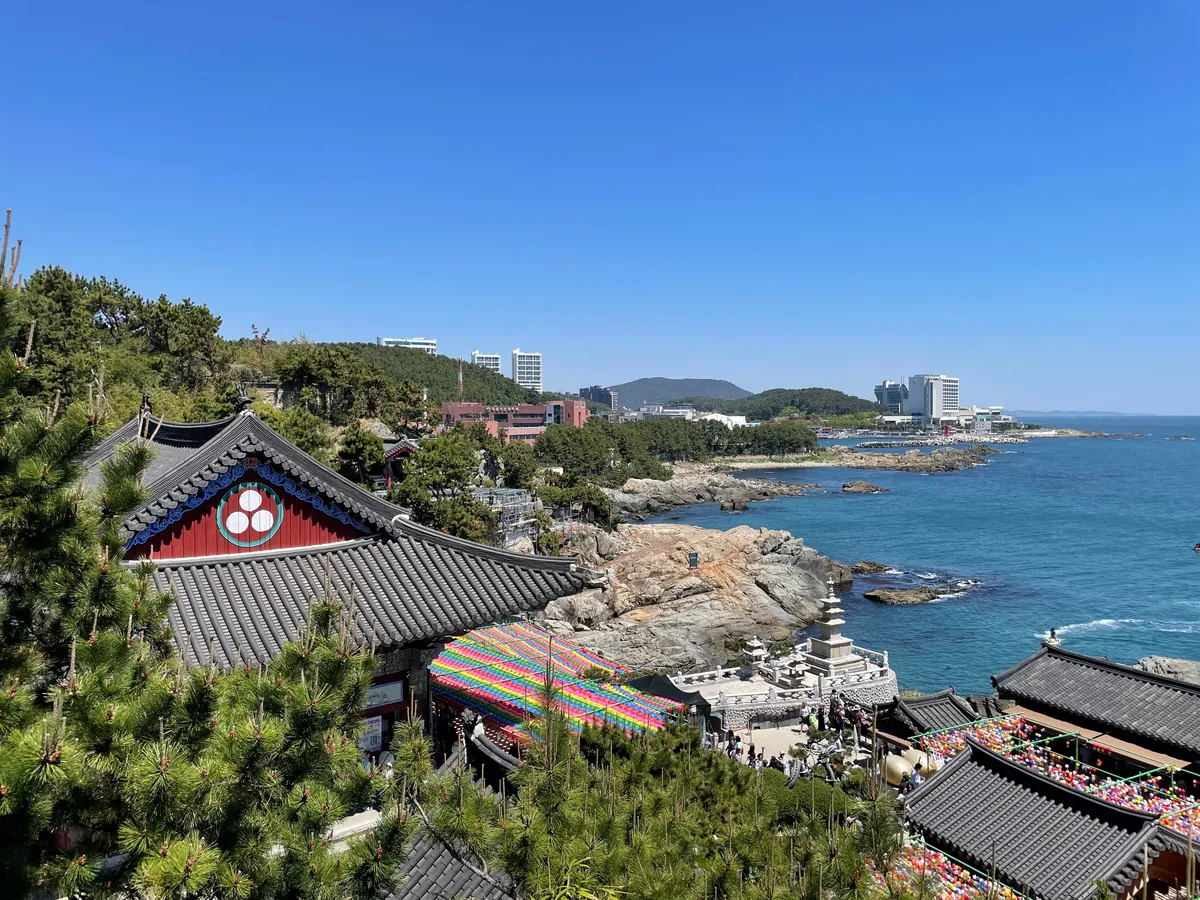
The coast route opens at Haedong Yonggungsa, a Buddhist temple in Busan's Gijang-gun district built directly on the seaside cliffs, a rare setting among Korean temples. The complex traces its founding to 1376, though the claim is disputed by historians, and its buildings honour Haesu Gwaneum Daebul, the Sea Goddess Buddha of Mercy, an aspect of the bodhisattva Gwaneum. Its coastal position and proximity to Haeundae Beach make it a frequent stop for sightseers, particularly around Buddha's Birthday, when the temple grounds are hung with paper lanterns. From the coast the route moves inland to Gamcheon Culture Village, a hillside settlement in Busan's Saha District built in the 1920s and 1930s when the city relocated working-class residents to a site secluded from the port yet close enough to supply it with labour. Around 800 families moved there during the post-war recovery of 1955, including members of the Taegeukdo religious community, and the village grew in irregular tiers of wooden and later two-storey houses through decades of persistent poverty. A 2009 public-art renovation, organised by the Ministry of Culture, Sports and Tourism and carried out with art students, professional artists and residents, repainted the houses in bright colours and added dozens of installations — bird sculptures, scenes from The Little Prince, painted fish guiding visitors through the alleys — transforming the village into one of Busan's most visited neighbourhoods, drawing some 1.4 million visitors by 2015, a shift that has left mixed feelings among the residents who still live there. The route continues to Haeundae Beach, an urban beach in Busan's Haeundae District that has drawn more than ten million visitors in a single season. The sandy stretch runs 1.46 kilometres long and 40 metres wide, first opened as the country's largest beach in 1965 and designated a special tourist area in 1994; erosion has since shrunk its sand by more than half between 1947 and 2004, prompting the city to install underwater breakwaters and replenish the beach with sand each year. Originally a fishing ground before becoming a leisure destination in the late 19th century, the beach was used by the U.S. military to prepare landing operations during the Korean War and today hosts the Busan International Film Festival, the annual January Polar Bear Festival, and a Guinness World Record for the most beach umbrellas ever assembled in one place, set in 2008. The route's final stop is Jagalchi Market, on the edge of Nampo Port and considered the largest fish market in South Korea, its name derived from jagal, the Korean word for gravel, after the shingle that once surrounded the site. Spanning three kilometres of stalls, the market sells dried anchovies, seaweed and shellfish near the Yeongdo Grand Bridge and herbal remedies closer to city hall, and is known for its female vendors, the Jagalchi Ajumma, a tradition dating to the years after the Korean War when women sold goods on the street here to support their families. The market's autumn Busan Jagalchi Festival, themed around its call to "come, see, buy," draws visitors for fish-catching, singing and tasting events. Across six days the route follows Busan's coastline from a cliffside temple built into the sea, inland to a hillside village reborn through public art, back to a beach shaped by war and decades of erosion control, and finally to the fish market that has fed the city since before either the village or the beach took their modern form.
Text adapted from the linked articles under CC BY-SA 4.0; edited for length.
Every dimension the Taro team tags this pack with — filter by any of these on the packs page.
Share your travel month, group size, budget comfort, and must-do experiences. The Taro team will shape the right route before any payment conversation.