Arctic Svalbard Polar Bears
8DFrom ₹6,85,000
A 6-day premium route through Transylvania's castle towns from Brașov.
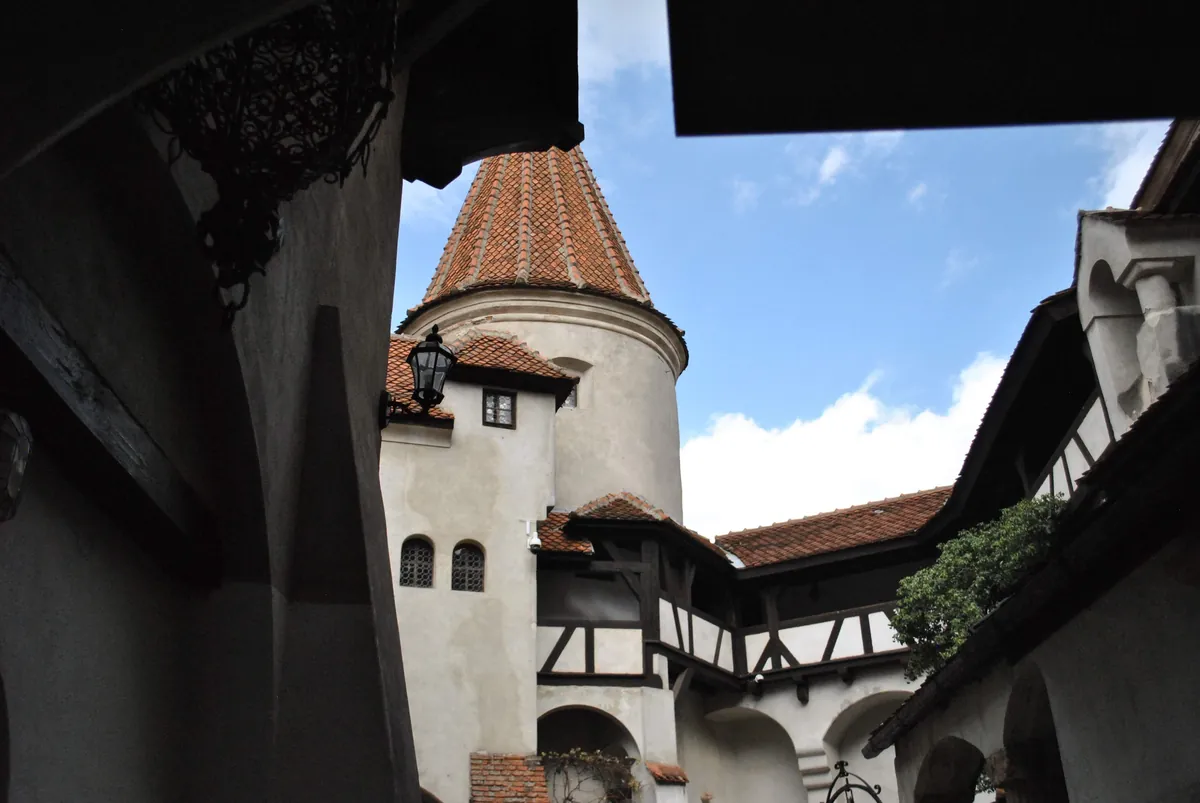
The trail begins at Bran Castle, 25 kilometres southwest of Brașov, built in 1377 by Saxons under a privilege granted by Louis I of Hungary after an earlier wooden fortress on the site, Dietrichstein, had been destroyed nearly two centuries before. Marketed abroad as Dracula's Castle, the fortress has only a tangential link to the historical figure most associated with the name: Vlad III, known as Vlad the Impaler, is not documented as having ruled or been imprisoned here, and Bram Stoker never visited Transylvania or based his fictional castle's description on this building, drawing the Dracula name instead from accounts of Vlad's cruelty that he encountered during his research. The castle served for centuries as a customs post on the mountain pass between Transylvania and Wallachia before becoming, after 1920, a royal residence renovated for Queen Marie of Romania by the Czech architect Karel Zdeněk Líman; seized by the communist state in 1948, it was returned to Marie's descendants through a lengthy restitution process completed in 2009 and reopened that year as Romania's first private museum, its collection built around Marie's own art and furniture. From Bran the route descends into Brașov's historic centre and Council Square, known in Romanian as Piața Sfatului, which has hosted weekly and annual markets since 1364 and gained formal market rights in 1520. The square is ringed by 18th- and 19th-century houses and centred on the former Council House, built in 1420 and today home to the Brașov County Museum of History; a pillory once stood here for public punishment, and in 1688 the head of the local shoemakers' guild was executed on the square for opposing the entry of Austrian troops into the city. During the communist era the square was renamed Piața 23 August, reverting to its historic name after 1989. The route continues to Peleș Castle, near Sinaia in Prahova County, a Neo-Renaissance palace built between 1873 and 1914 for King Carol I of Romania and inaugurated in 1883 as the world's first castle powered entirely by its own locally produced electricity. Designed initially by the German architect Johannes Schultz and later expanded under the Czech architect Karel Liman, who added its towers including a 66-metre central spire, the complex cost an estimated 16 million gold lei and drew a workforce of craftsmen from across Europe and beyond — Italian masons, German and Hungarian carpenters, Czech stone carvers, Turkish brickmakers — according to Queen Elizabeth's own account of the site. Its 170-plus rooms, spread over 3,200 square metres, hold collections including more than 4,000 pieces of arms and armour, hand-painted Swiss stained glass, and rugs and porcelain sourced from as far as Bukhara and Sèvres. Nationalised after King Michael I's forced abdication in 1947, the estate was returned to the royal family through a case concluded in 2007 and remains leased to the Romanian state as a museum, drawing between a quarter and nearly half a million visitors annually. The route's final stop is Râșnov Fortress, a medieval refuge fortress near Brașov built between 1211 and 1225 under Teutonic Knight rule to shelter villagers along the invasion route from the Bran Pass. Garrisoned jointly by local Romanian and Saxon communities, it withstood a Tatar incursion in 1335 and an Ottoman siege in 1421, and was breached only once, in 1612, after attackers discovered the path to its hidden spring; to remove that vulnerability, defenders spent nineteen years digging a 146-metre well between 1623 and 1642, reportedly using two captured prisoners whose Koranic inscriptions are said to still mark its walls. The fortress sheltered refugees as late as the 1848–49 revolutions before falling into disuse and later ruin, restored only partially after the Second World War and more thoroughly following a Romanian municipal takeover in 2008. Across six days the trail moves through four structures built for four different kinds of protection: a customs fortress turned royal retreat at Bran, a merchant square governed by its own council in Brașov, an electrified royal palace built as a monument to a young kingdom at Peleș, and a communal refuge fortress at Râșnov built to outlast whichever army came through the Bran Pass next.
Text adapted from the linked articles under CC BY-SA 4.0; edited for length.
Every dimension the Taro team tags this pack with — filter by any of these on the packs page.
Share your travel month, group size, budget comfort, and must-do experiences. The Taro team will shape the right route before any payment conversation.

