
Arctic Svalbard Polar Bears
8DFrom ₹6,85,000
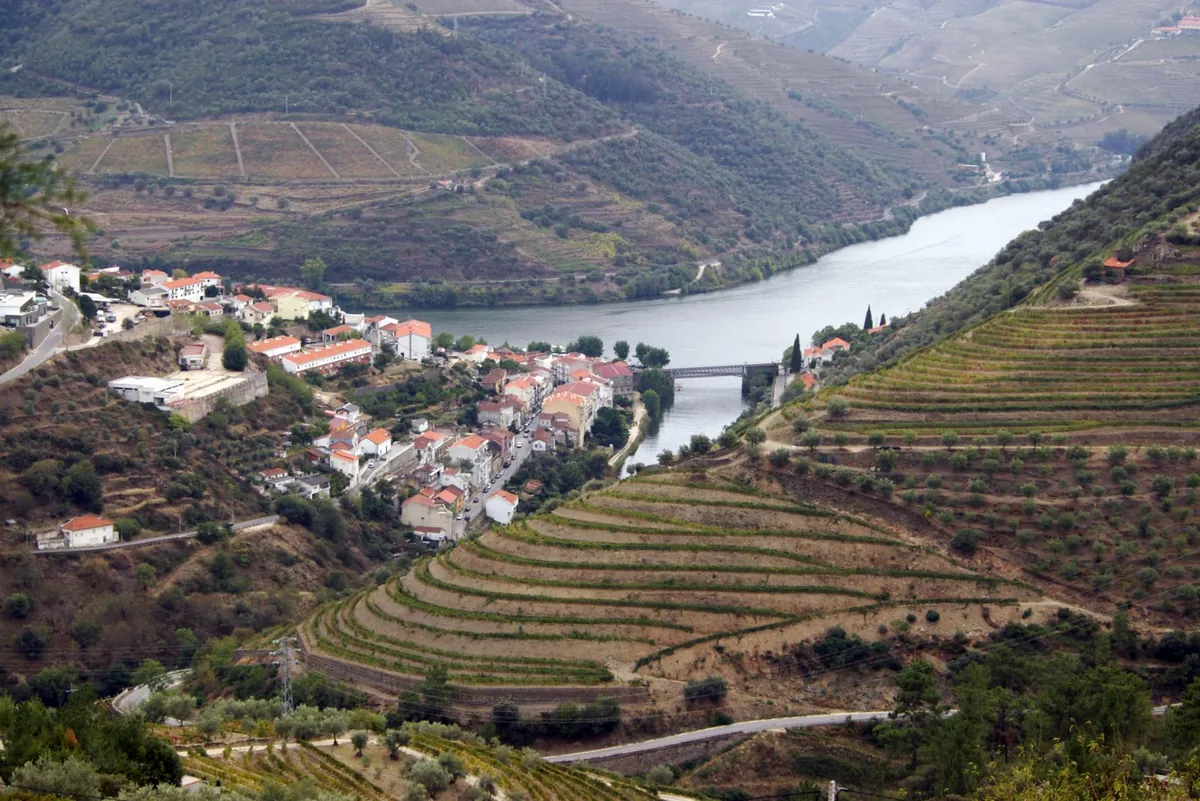
A 5-day premium river cruise through the Douro Valley's vineyard terraces.
The cruise starts at Peso da Régua, commonly known as Régua, a city and municipality in the district of Vila Real with a 2011 population of 17,131, about 10,000 of them in the town itself. Historians believe the site was inhabited during the Roman, Suebi and Visigothic periods, and its name has several competing origins put forward — from Vila Reggula, a Roman country estate, to récua, a word for livestock once driven across the Douro here, to reguengo, a term for crown lands. The town received its foral, or municipal charter, from King Sancho I, and was elevated to the status of vila on 3 February 1837, absorbing the annexed municipality of Godim; it became a city on 14 August 1985. Its fortunes are tied to Port wine: after the Marquess of Pombal designated the Douro a demarcated wine region in 1756, the newly formed Companhia Geral das Vinhas do Alto Douro marked out the valley's vineyards with granite boundary stones, and Régua became the region's commercial centre, a role recognised in 1988 when the Office International de la Vigne et du Vin named the municipality the Cidade Internacional da Vinha e do Vinho, the International City of Vine and Wine. Tourist boats still leave from here, working through the locks of two dams upriver, and the town is linked to Porto by the Douro railway line.
Upriver, the cruise calls at Pinhão railway station, on the Douro Line, serving the parish of Pinhão in the municipality of Alijó. The railway reached Pinhão in 1879, authorised by a law of 2 July 1867, with the section from the Ferrão halt into the station entering service on 1 June 1880. In 1935, at the proposal of the local parish council president António Manuel Saraiva, the Instituto dos Vinhos do Douro e Porto — the Port Wine Institute — donated the azulejo tiles that still cover the station's front and platform, after the railway company itself had turned the idea down. Its 24 tile panels, made up of more than 3,000 individual tiles, depict the region's traditional activities: the cultivation of vines, the treading of grapes, and the transport of wine downriver in rabelo boats to the cellars of Vila Nova de Gaia. The restored tilework won the SOS Azulejo Conservation and Restoration Intervention Award in 2013.
The route also reaches Lamego, a city and municipality in the Viseu District on the shores of the Balsemão River, with a population of 26,691 across 165.42 square kilometres, and origins predating the Roman occupation of the Iberian Peninsula. Tradition holds that the first Cortes of Portugal met here in 1143, and Lamego is today the seat of the Roman Catholic Diocese of Lamego. Just outside the city stands the tiny 7th-century São Pedro de Balsemão Chapel, a Visigothic building believed to be the oldest chapel in Portugal and the second-oldest in Europe. The city changed hands repeatedly during the Reconquista — taken by Alfonso I of Asturias in 741, repopulated in 868 by Alfonso III, then held briefly by Islamic forces again in the late 10th century before Ferdinand I of León and Castile secured it for good on 29 November 1057 — and it was here, in 1139, that nobles declared Afonso Henriques the first king of Portugal; he later built the city's Gothic cathedral, of which only the Romanesque tower survives from the original structure. A 686-step staircase climbs from the city's main street to the Baroque church beside the shrine of Our Lady of Remedies.
The Mateus Palace, in the civil parish of Mateus in the municipality of Vila Real, is built around three structures — the manor, the winery and the chapel — of which the winery buildings date to the 16th century and were later modified in the 1800s. The manor itself was raised in the 18th century, possibly between 1739 and 1743, with the architect Nicolau Nasoni involved in its construction under the authority of António José Botelho Mourão, the 3rd Morgado of Mateus; it was classified as a National Monument in 1910 and is today owned by the Mateus Foundation, whose name it lends to the Mateus rosé wine brand. Its garden was first planted in the 1700s, modified in 1870 and expanded in 1930, with a lake added in the 1950s and 1960s to mirror the manor house and a sculpture by João Cutileiro installed in the water in 1981.
The cruise's furthest point upriver is São João da Pesqueira, a municipality and town in the Viseu District with a 2021 population of 6,775 across 266.11 square kilometres, sitting at an altitude of 850 metres against the northern bank of the Douro. Archaeological evidence places human presence here back at least 7,000 years, and the town, together with the nearby settlements of Penela, Paredes da Beira, Linhares and Ansiães, received the earliest known royal charter in the territory of modern Portugal, issued by Ferdinand I of León between 1055 and 1065 — predating even the charters of Coimbra, Guimarães and Lamego. The municipality lies within the Alto Douro Wine Region, a UNESCO World Heritage Site, and holds roughly 20 percent of its classified area, the largest share of any single municipality, with its terraced vineyards and river valleys visible from viewpoints such as São Salvador do Mundo, overlooking the Valeira Dam.
Text adapted from the linked articles under CC BY-SA 4.0; edited for length.
Every dimension the Taro team tags this pack with — filter by any of these on the packs page.
Share your travel month, group size, budget comfort, and must-do experiences. The Taro team will shape the right route before any payment conversation.