Arctic Svalbard Polar Bears
8DFrom ₹6,85,000
A 5-day premium city break in Warsaw around its old town and modern history.
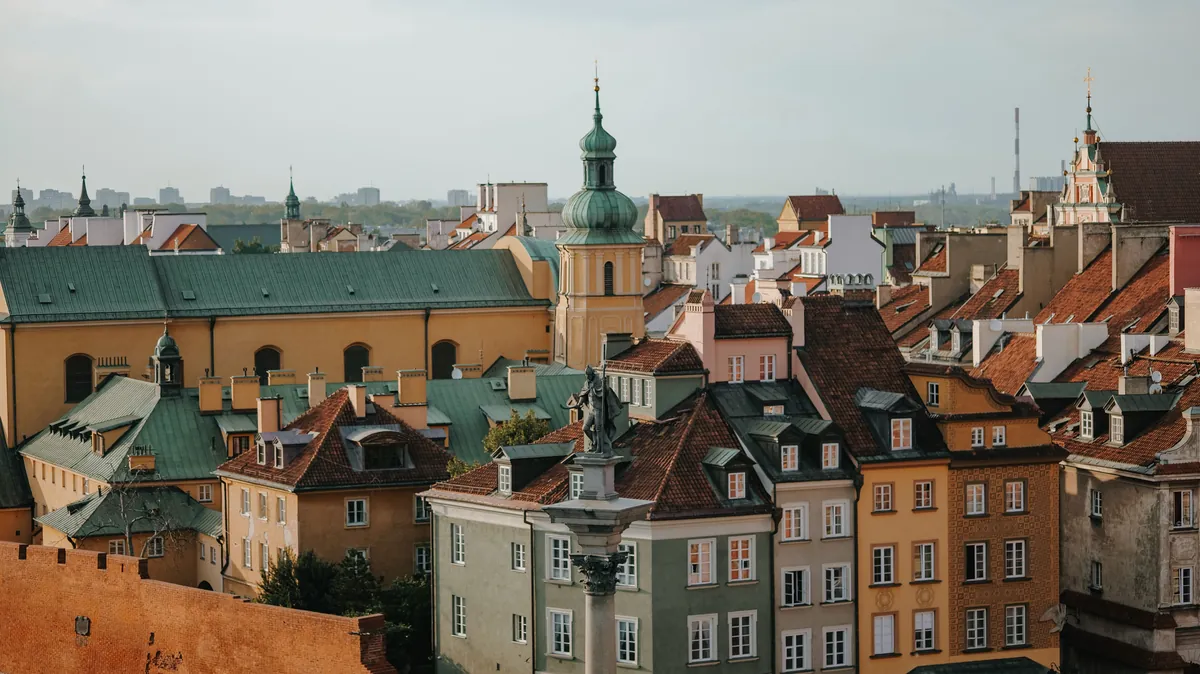
The route opens in Warsaw's Old Town, the oldest part of the city, settled in the 13th century around the castle of the Dukes of Mazovia that later became the Royal Castle and granted town privileges around 1300. Its Market Square, laid out in the late 13th or early 14th century, was the commercial heart of Warsaw until the late 18th century, its surrounding houses rebuilt in late-Renaissance style after a fire in 1607; Castle Square nearby is marked by Sigismund's Column, raised in 1644 by King Władysław IV in honour of his father, Sigismund III Vasa, who had moved Poland's capital from Kraków to Warsaw. German bombing during the 1939 invasion badly damaged the district, and after the 1944 Warsaw Uprising was suppressed, German forces systematically dynamited what still stood. The Old Town was rebuilt from 1945 to 1951 by a purpose-created Warsaw Reconstruction Office, reusing salvaged bricks and decorative fragments and drawing on 18th-century paintings by Bernardo Bellotto and pre-war architecture students' drawings as reference; UNESCO listed the reconstructed district as a World Heritage Site in 1980, citing it as an outstanding example of near-total historical reconstruction, and in 2011 added the Reconstruction Office's own archive to its Memory of the World register. The route continues to the Warsaw Rising Museum in the Wola district, opened on 31 July 2004 to mark the 60th anniversary of the Warsaw Uprising, though the museum itself had been established as an institution back in 1983. Spread across several floors, its exhibits combine photographs, film, audio, artefacts and personal testimony to trace the uprising day by day from 1 August to 2 October 1944, with rooms dedicated to the youngest insurgents, replica sewers used to move fighters through German-held territory, a hangar housing a full-size B-24 Liberator, and a memorial wall carrying thousands of names of the fallen. Separate sections address the German occupation's abuses and the Soviet takeover that followed, framing the uprising's defeat within the wider fate of the Polish resistance under the post-war communist government that took power in its aftermath. From Wola the route moves to Łazienki Park, at 76 hectares the largest park in central Warsaw, laid out along Ujazdów Avenue on the Royal Route linking the Royal Castle to Wilanów Palace. Its centrepiece, the Palace on the Isle, began around 1680 as a Baroque bathing pavilion designed by Tylman van Gameren for the military commander Stanisław Herakliusz Lubomirski — the building that gave the park its name, Łazienki meaning "baths." King Stanisław II August acquired the estate in 1764 and spent two decades remodelling it into a classicist palace-and-garden complex, adding the Myślewicki Palace, an amphitheatre and a water cascade, and hosting the Thursday Lunches at which he gathered scholars, writers and poets of his court. Nazi occupiers closed the park to Poles in 1939 and set the palace ablaze in December 1944 before withdrawing, though an attempt to dynamite it, as they had the Royal Castle, ultimately failed; a reconstruction lasting nearly two decades reopened the palace's ground floor in 1960 and its full interior by 1965. The park today holds more than 9,500 trees and resident populations of peafowl and red squirrels. The route's final stop is the Palace of Culture and Science, at 237 metres the second-tallest building in both Warsaw and Poland, designed by the Soviet architect Lev Rudnev and built between 1952 and 1955 as a gift from the Soviet Union, originally dedicated to Joseph Stalin before that dedication was revoked during destalinization. Between 3,500 and 5,000 Soviet workers and 4,000 Polish workers built the tower, which at completion ranked as the eighth-tallest building in the world and incorporates Polish architectural motifs — parapets modelled on the Renaissance houses of Kraków and Zamość — within a structure otherwise related to Moscow's Stalinist "Seven Sisters" skyscrapers. It now houses theatres, museums, a cinema, a concert hall and a public swimming pool, and its 30th-floor terrace, at 114 metres, remains a well-known viewpoint over the city; peregrine falcons nest on its 42nd floor, watched by a public webcam since 2009. The building remains politically divisive in Poland, viewed by some as a monument to Soviet domination and periodically the subject of demolition proposals from Polish political figures. Across five days the route moves through Warsaw's rebuilt and remembered history in sequence: a medieval Old Town destroyed in 1944 and painstakingly reconstructed afterward, the museum built to hold the uprising that led to that destruction, the royal park whose own palace survived a failed German demolition, and the Soviet-built tower that has stood over the rebuilt city, and divided opinion about it, ever since.
Text adapted from the linked articles under CC BY-SA 4.0; edited for length.
Every dimension the Taro team tags this pack with — filter by any of these on the packs page.
Share your travel month, group size, budget comfort, and must-do experiences. The Taro team will shape the right route before any payment conversation.

