Abu Dhabi + Yas Island
5DFrom ₹1,05,000
El Nido lagoons, Coron WWII wrecks, white-sand Bacuit Bay.
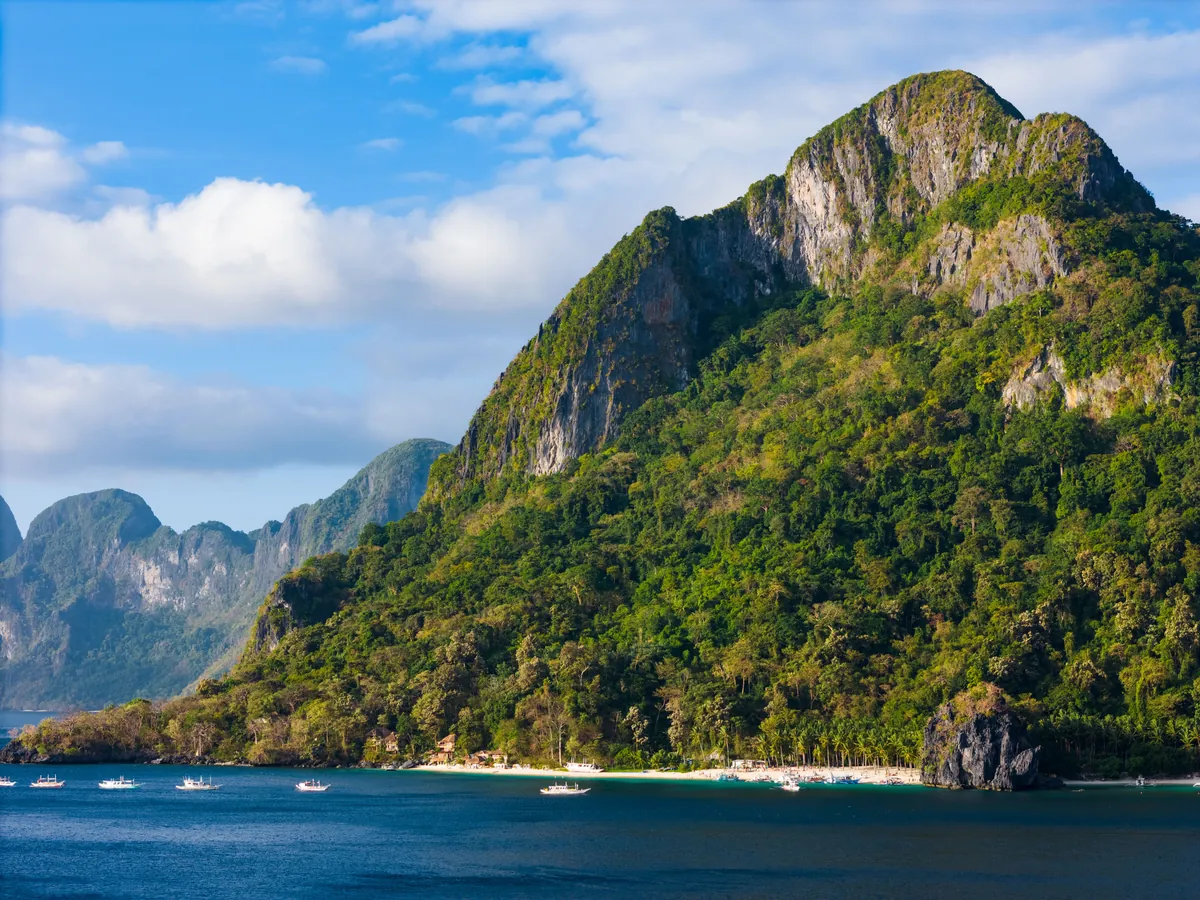
This seven-day Palawan trip is built around two municipalities on opposite ends of the same province: El Nido and Coron. El Nido, officially the Municipality of El Nido, recorded a population of 51,367 people in the 2024 census and is designated a managed resource protected area, known for its white-sand beaches, coral reefs, and limestone cliffs and for serving as the gateway to the Bacuit archipelago where the trip's island-hopping days are spent. According to a local folktale, the name Bacuit — still attached to the bay and archipelago around the town — comes from a Spanish party asking the area's Tagalog inhabitants for its name; misunderstanding the reply of "Bakit?" as the answer, they recorded it as "Bacuit."
El Nido's human history runs far deeper than that Spanish-era naming. The area, also known historically as Bacuit, has been inhabited since at least 2800 BC around Bacuit Bay, with evidence at Dewil Valley suggesting occupation as early as 14,000 years ago; fossils and burial sites from the Late Neolithic Age have been found in caves across the municipality, including Ille Cave in New Ibajay. When Spanish colonisers arrived in the sixteenth century they encountered two Tagbanua sub-tribes, the Tandulanen and the Silanganen — the former staying in the interior and preserving Tagbanua culture to this day, the latter assimilating into Spanish territory — before waves of migrants from the Cuyo Islands settled the area later in the same century.
The island-hopping days move through Bacuit Bay itself, where El Nido covers a land area of 465.1 square kilometres at the northernmost tip of mainland Palawan, bordered by the Linapacan Strait to the north, the Sulu Sea to the east, and the South China Sea to the west. The municipality includes 45 islands and islets, each with its own geological formations, and its highest peak, on Cadlao Island, rises 640 metres above sea level. Geologically, El Nido sits on the Sunda Plate, a plate entirely separate from the Philippine Mobile Belt that the rest of the Philippines belongs to, and its Permian-to-Paleogene limestone cliffs are of a kind also found in Ha Long Bay in Vietnam, Guilin in China, and Krabi in Thailand — all part of the same plate. El Nido lies roughly 420 kilometres south-west of Manila and 269 kilometres north-east of Puerto Princesa, Palawan's capital, before the itinerary crosses north to Coron.
Coron, officially the Municipality of Coron, recorded a population of 69,439 in the 2024 census and is home to the Coron Island Natural Biotic Area, listed on the natural category of the UNESCO World Heritage Tentative List. Its name has changed twice: it was first called Bancuang, after a palm that grew abundantly along its rivers and marshes, before Spanish arrivals renamed it Peñon de Coron using the Tagbanua word "Corong," meaning a type of pot; the name was shortened to Coron in 1902. The Calamian Islands around Coron were originally home to the Cuyunon tribe, alongside the Tagbanua and Calamianen, and Cuyunon oral history holds that Datu Macanas once ruled the whole of neighbouring Busuanga Island.
Coron's Spanish-era record includes some of the same colonial defensive building seen elsewhere in the Calamianes: around 1670, Spanish missionaries built a fort and church at Libis, near Culion, as part of their defences against Muslim raids, reinforced by a second fortification built between 1730 and 1735. Coron itself, then known as Banuang Daan, grew as a settlement for migrants to the Calamianes under this Spanish administration. That layered history — a name changed twice, a natural site now on UNESCO's tentative list, and a coastline of small forts built against raiders — sits behind the limestone lagoons the trip's final days are spent exploring.
Text adapted from the linked articles under CC BY-SA 4.0; edited for length.
On documentation, this trip sits in the e-visa complexity band — usually arranged online ahead of travel — treat that as a planning signal only, and verify exact, current requirements with the relevant embassy or consulate before booking. It runs 7 days, from ₹78,000 per person.
Every dimension the Taro team tags this pack with — filter by any of these on the packs page.
7 days across Philippines, starting from ₹78,000 per person.
Suited to Couples and Friends, with a suitable option for families and a moderate activity level.
This trip typically involves an online e-visa arranged ahead of travel. Always confirm exact, current requirements with the relevant embassy or consulate before booking — this is a planning signal, not a legal statement.
Share your travel month, group size, budget comfort, and must-do experiences. The Taro team will shape the right route before any payment conversation.