Argentina Buenos Aires + Patagonia
11DFrom ₹2,45,000
A 6-day premium loop through the Sacred Valley's villages from Urubamba.
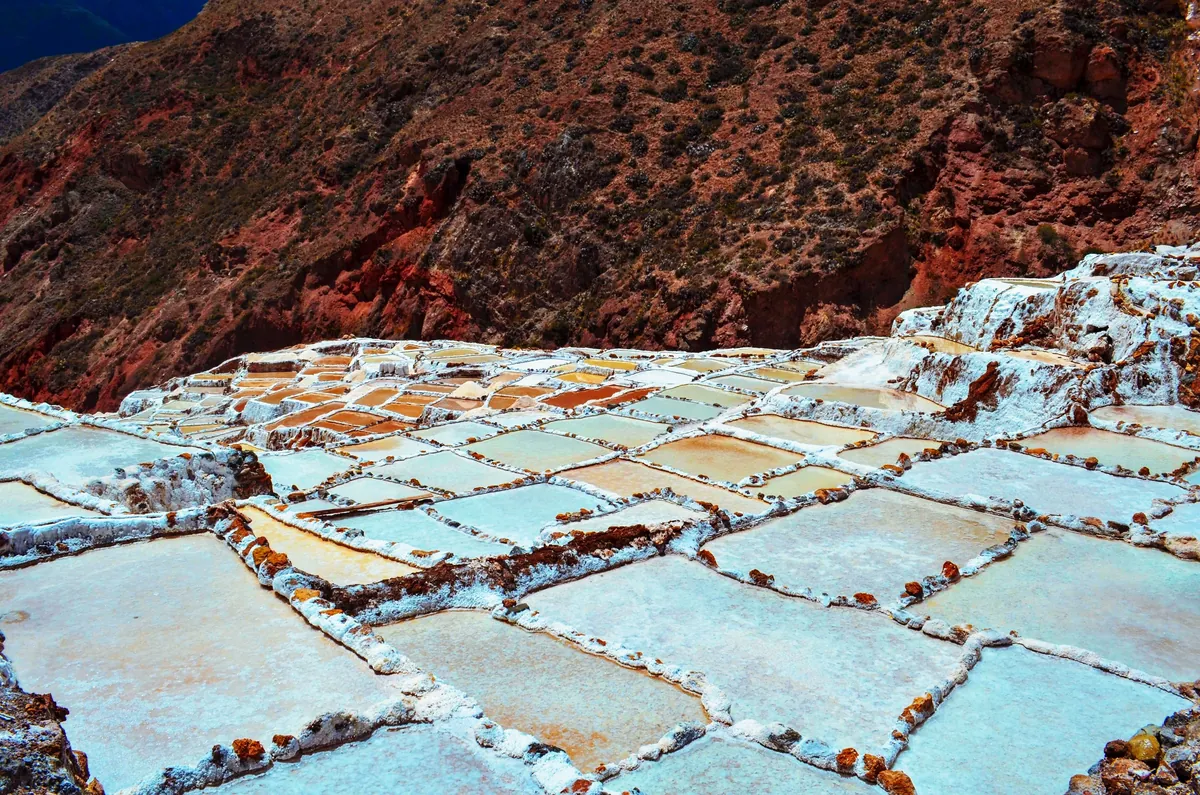
The route follows the terraces of the Sacred Valley of the Incas, the Urubamba Valley that stretches north of Cusco between Pisac and Ollantaytambo along the Urubamba River. First worked by the Chanapata civilisation from around 800 BCE for its fertile soil, the valley passed through the Qotacalla and Killke cultures before the Inca absorbed it between 1000 and 1400 CE, drawn to its lower elevation, warmth and suitability for growing maize, a crop central to Inca ceremonial life. The Inca built extensive stone agricultural terraces, or andenes, up the valley's flanks to expand cultivable land against a mountain backdrop that rises from about 2,050 metres at the river below Machu Picchu to over 5,800 metres at peaks such as Veronica and Sahuasiray, and by the 15th century had turned much of the valley into royal estates, including Pachacuti's holdings at Pisac and the ruins of Quispiguanca in the town of Urubamba. The route continues to the Maras salt pans, more than 5,000 terraced evaporation ponds fed since Inca times by a naturally salty subterranean spring four kilometres from the town of Maras. Water channelled through an intricate network of tiny canals fills several hundred ancient ponds, each typically under four metres square and thirty centimetres deep, where the sun evaporates it over about a month until crystallised salt can be scraped from the walls and floor in graded layers — pink or white table salt on top, coarser bulk salt beneath, and industrial-grade brown salt at the bottom. Local families, organised through community agreement rather than formal ownership, maintain the ponds using a system residents say dates to Inca administration, though a 2019 restriction now keeps visitors from walking directly among the pools. From Maras the route reaches Ollantaytambo, a town and Inca archaeological site 72 kilometres by road from Cusco at 2,792 metres, occupied in some form for roughly 3,500 years and rebuilt as a royal estate by the emperor Pachacuti after his mid-15th-century conquest of an earlier settlement. Its grid of streets and walled compounds, still inhabited today, sits below Cerro Bandolista, where the Inca began an unfinished ceremonial complex of cut and fitted stone known as the Sun Temple, its Wall of the Six Monoliths quarried five kilometres away at Kachiqhata and hauled across the valley on purpose-built ramps. During the Spanish conquest, the Inca leader Manco Inca Yupanqui fortified Ollantaytambo and, in 1537, defeated a Spanish force here at the Battle of Ollantaytambo before withdrawing to Vilcabamba the following year. The route's final stop is Chinchero District, in Peru's Urubamba Province, where the town of Chinchero sits among peaks reaching over 4,400 metres and a population that is overwhelmingly Quechua-speaking. The district has long been a centre of hand-weaving: the anthropologists Ed and Chris Franquemont documented traditional textile techniques among Chinchero weavers through the 1970s, work carried on by their daughter Abby Franquemont, who became a noted revivalist of spindle-based hand spinning, and the town remains linked today to the Centro de Textiles Tradicionales del Cusco, which supports weaving cooperatives across the region using the same drop-spindle and backstrap-loom methods studied decades earlier. Across six days the route moves through a single Inca-built landscape under different uses: agricultural terraces carved into the Sacred Valley's slopes, salt ponds worked continuously since Inca administration at Maras, an emperor's fortified estate at Ollantaytambo, and, in Chinchero, a weaving tradition documented by anthropologists and still practised on the same looms their studies once recorded.
Text adapted from the linked articles under CC BY-SA 4.0; edited for length.
Every dimension the Taro team tags this pack with — filter by any of these on the packs page.
Share your travel month, group size, budget comfort, and must-do experiences. The Taro team will shape the right route before any payment conversation.