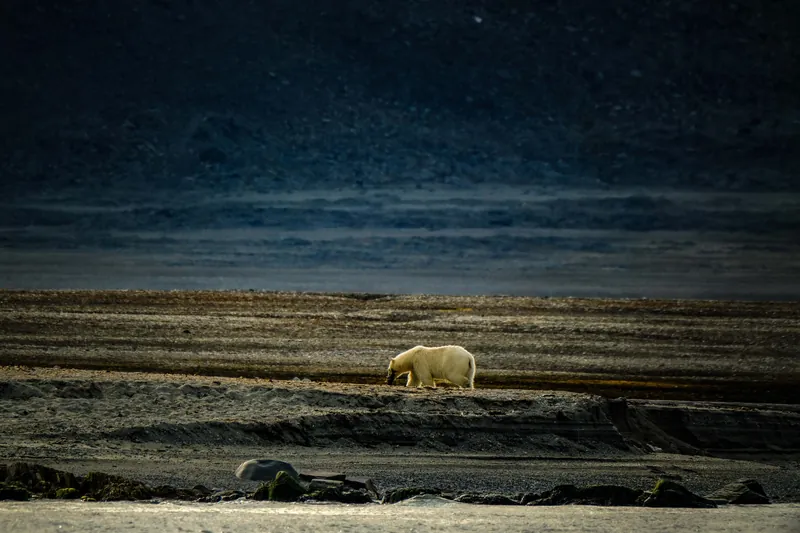
Arctic Svalbard Polar Bears
8DFrom ₹6,85,000
A 6-day premium trip to Paphos, Cyprus, taking in Paphos Archaeological Park mosaics, Tombs of the Kings, Aphrodite's Rock and Kourion amphitheatre.
Paphos Mosaics & Coast opens inside Paphos Archaeological Park, which covers the major part of ancient Nea Paphos, the island's capital first under the Hellenistic Ptolemaic Kingdom and then under Roman administration. Founded in the late 4th century BC by Nikokles, the last ruler of the Cypriot city-kingdom of Paphos, the city grew into a strategic Ptolemaic shipbuilding centre before becoming Cyprus's administrative capital in the 2nd century BC, a role it held through the Roman era until a series of earthquakes in the 4th century AD forced the capital to move back to Salamis. Excavations begun in 1965 by Polish archaeologists, and continuing today with Cypriot and other international teams, have uncovered four grand Roman villas — the House of Aion, the House of Dionysos, the House of Orpheus and the Villa of Theseus — each named for the mythological figures depicted in their extensive, intricately detailed polychrome floor mosaics, considered among the finest surviving anywhere in the Mediterranean, alongside an agora, a healing sanctuary, a basilica and a Hellenistic-Roman theatre dated to the end of the 4th century BC.
Within the same archaeological zone lie the Tombs of the Kings, a large necropolis about 2 kilometres north of Paphos harbour, designated part of the same UNESCO World Heritage Site as Nea Paphos in 1980. Many of the underground tombs date to the 4th century BC and were cut directly from solid rock for the burial of Paphian aristocrats and high officials up to the 3rd century AD — the name reflects the grandeur of the tombs rather than any actual royal burials — with some featuring Doric columns and frescoed walls that at times imitate the houses of the living. First recorded by the traveller Richard Pococke in 1738, the site saw its earliest archaeological excavation in 1870 under Luigi Palma di Cesnola, the American consul to Cyprus, with systematic scientific work beginning in 1915 under Menelaos Markides and continuing under Sophocles Hadjisavvas in the late 1970s and 1980s.
The route then follows the coast to Petra tou Romiou, known popularly as Aphrodite's Rock, a sea stack rising from the water along the road between Paphos and Limassol. According to the version of the myth recorded in Hesiod's Theogony, the goddess Aphrodite was born from sea foam after the Titan Cronus threw the severed body parts of his father Uranus into the ocean, the waves first carrying her to Kythera before bringing her to Cyprus — a local variant of the legend places the rock itself as the very spot where she came ashore. The cult of Aphrodite that grew up around Paphos became one of the most significant in the ancient Mediterranean before being suppressed under Roman rule, evidence of which survives at the nearby Sanctuary of Aphrodite in the village of Kouklia, itself part of the same UNESCO listing as Nea Paphos and the Tombs of the Kings.
The trail closes at Kourion, an ancient Greek city-state on Cyprus's southwestern coast, settled by Greek colonists from Argos in the twelfth century BC after the collapse of the Mycenaean palaces. Kourion developed into an influential kingdom during the Cypro-Archaic period, later coming under Assyrian, Egyptian, Persian and finally Roman rule, when the city's civic government functioned under an elected archon and council overseen by the provincial proconsul; its acropolis sits atop a limestone promontory nearly 100 metres above Episkopi Bay. First identified by antiquarians in the 1820s, the site was properly excavated from 1895 onward, first by the British Museum and later by teams from the University of Pennsylvania, whose work in the Kaloriziki necropolis and elsewhere recovered Cypro-Minoan inscribed pottery and the so-called Kourion Sceptre — a fitting last stop after mosaics, rock-cut tombs and a mythic birthplace already spanning more than two thousand years of Cypriot history.
Text adapted from the linked articles under CC BY-SA 4.0; edited for length.
Every dimension the Taro team tags this pack with — filter by any of these on the packs page.
Share your travel month, group size, budget comfort, and must-do experiences. The Taro team will shape the right route before any payment conversation.