Abu Dhabi + Yas Island
5DFrom ₹1,05,000
Wadi Shab swims, Wahiba Sands camp, fjord-like Musandam.
This trip opens in Muscat, Oman's capital and most populous city, home to a governorate population of 1.72 million as of 2022 across a metropolitan area of about 6,500 square kilometres beneath the Hajar Mountains. Known since the first century AD as a leading port between west and east — the geographer Ptolemy called it Cryptus Portus, the "Hidden Port," and Pliny the Elder referred to it as Amithoscuta — the city has been ruled in turn by indigenous tribes and foreign powers including the Persians, the Portuguese, and the Ottomans, and its low-lying white buildings and the port district of Muttrah, with its corniche and harbour, still define its skyline today.
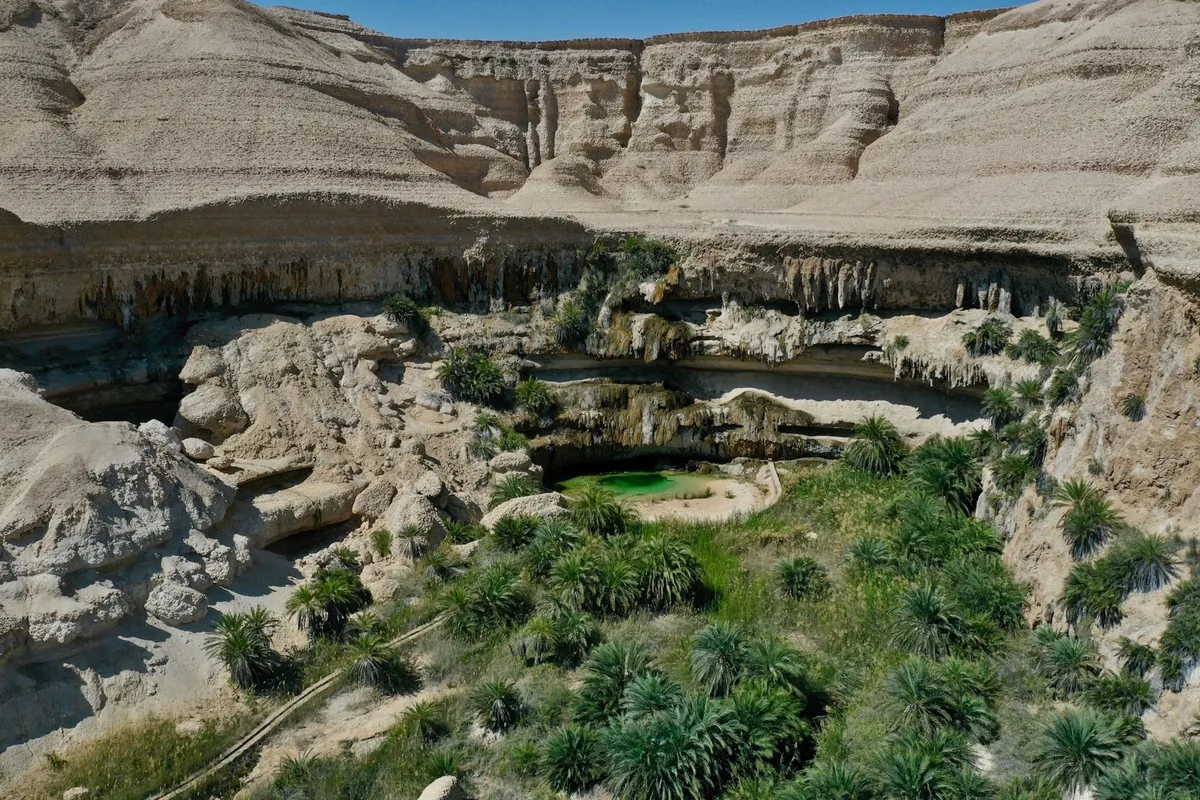
East of the capital, the trip reaches the coastal town of Tiwi, which sits between Wadi Shab and Wadi Tiwi on the Gulf of Oman and gives its name to a nearby fortified archaeological site, al-Jurayf, inhabited during the Samad Late Iron Age and into Islamic times. Hidden behind the easternmost cusp of a volcanic wall and little visible from the sea or coastal road, the site was first mapped and surveyed in 2002 and again in 2014, a record of settlement in the same landscape of canyons and rock pools the trip's wadi excursion moves through.
The desert leg of the trip crosses the Sharqiya Sands, formerly and still commonly known as the Wahiba Sands, a 12,500-square-kilometre desert region named for the Bani Wahiba tribe and bounded by roughly 180 kilometres north to south and 80 kilometres east to west. Formed during the Quaternary period by the combined action of the south-west monsoon and the northern shamal wind, its dunes reach up to 100 metres high in the north; a 1986 Royal Geographical Society expedition catalogued the desert's biodiversity, recording some 16,000 invertebrate species, 200 species of other wildlife including birds, and 150 species of native plants, while Bedouin tribes, chiefly the Al Wahiba, still gather each June to September at the oasis of Al-Huyawah to harvest dates.
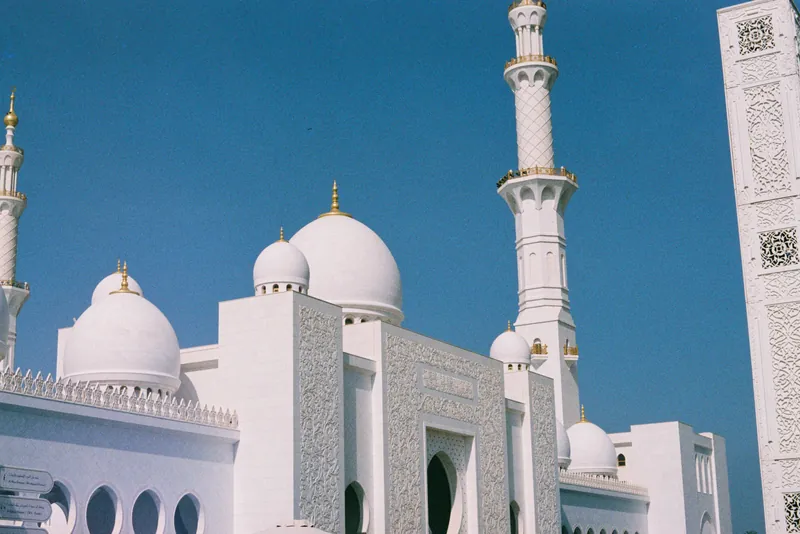
Back in Muscat, the trip visits the Sultan Qaboos Grand Mosque, completed in 2001 in a contemporary Islamic style and able to hold 20,000 worshippers, making it the largest mosque in the country. Ordered by Sultan Qaboos bin Said Al Said in 1992 and built from December 1994 using some 270,000 tonnes of imported Indian sandstone, the complex is crowned by a 90-metre main minaret and four flanking minarets of 45.5 metres, and its 5,476-square-metre main prayer hall sits beneath a central dome 50 metres above the floor. The prayer hall's carpet, containing 1.7 million knots and weighing 21 tonnes, took four years and more than 600 weavers to produce and was, until the completion of Abu Dhabi's Sheikh Zayed Grand Mosque in 2018, the largest single-piece carpet in the world.
The trip closes in the Musandam Governorate, an Omani exclave on the Musandam Peninsula separated from the rest of the country by the United Arab Emirates and jutting into the Strait of Hormuz, giving Oman partial control, shared with Iran, of that strategic waterway. Covering 1,800 square kilometres with a 2020 census population of 49,062, the peninsula's fjord-like coastline was shaped not by glaciers but by the slow subduction of the Arabian Plate beneath the Eurasian Plate, which is causing the peninsula to sink and letting the sea fill its valleys with fingers of water; its highest point, Jabal Al Harim, rises 2,087 metres above sea level.
Text adapted from the linked articles under CC BY-SA 4.0; edited for length.
On documentation, this trip is in the e-visa band, generally sorted online before travel — treat that as a planning signal only, and verify exact, current requirements with the relevant embassy or consulate before booking. It runs 7 days, from ₹95,000 per person.
Every dimension the Taro team tags this pack with — filter by any of these on the packs page.
7 days across Oman, starting from ₹95,000 per person.
Suited to Couples and Friends, with a suitable option for families and a moderate activity level.
This trip is in the e-visa band, generally sorted online before travel. Always confirm exact, current requirements with the relevant embassy or consulate before booking — this is a planning signal, not a legal statement.
Share your travel month, group size, budget comfort, and must-do experiences. The Taro team will shape the right route before any payment conversation.