Arctic Svalbard Polar Bears
8DFrom ₹6,85,000
A 4-day premium spring break centred on the Keukenhof tulip gardens near Lisse.
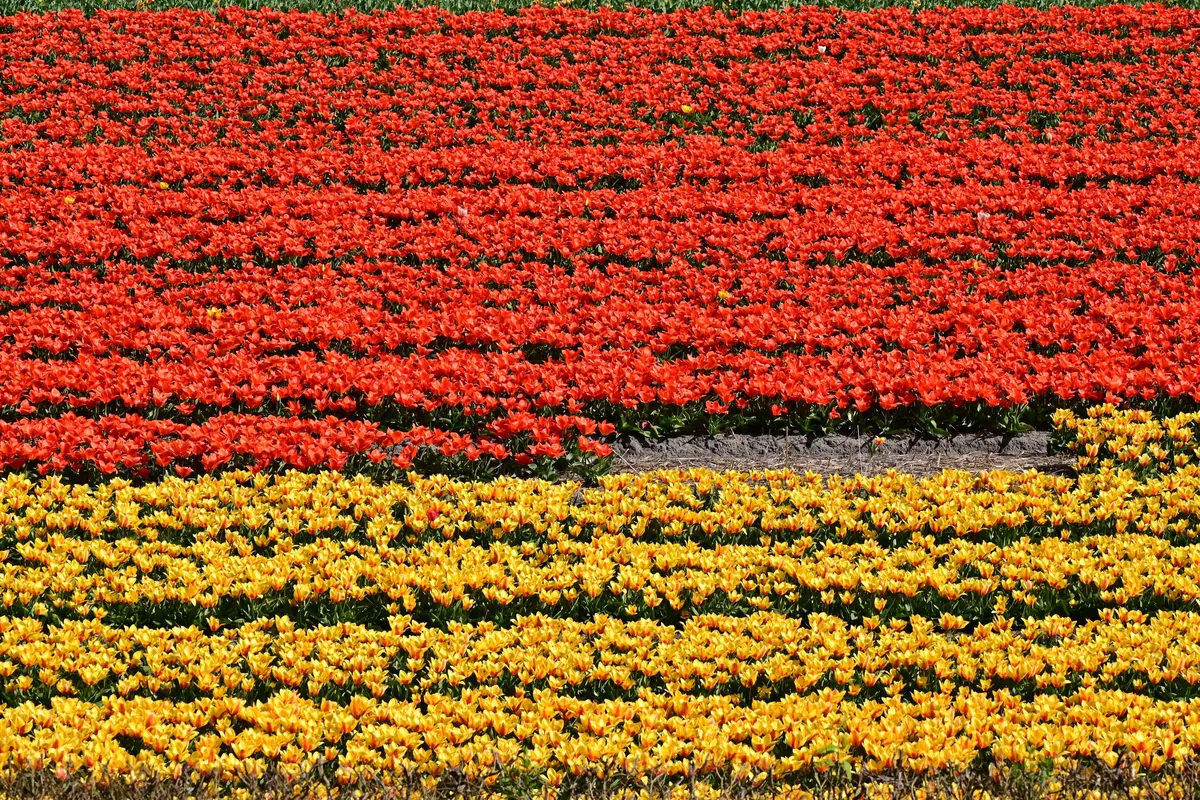
The route opens at Keukenhof in Lisse, one of the largest flower gardens in the world, its 32 hectares planted each year with around 7 million bulbs — chiefly tulips, but also hyacinths, daffodils, lilies and roses. The park sits on what was once the 15th-century kitchen garden (keukentuin) of Slot Teylingen castle, used by Countess Jacoba van Beieren to grow game, fruit and vegetables; a Dutch East India Company captain, Adriaen Maertensz Block, bought the estate in 1638 and built the manor now known as Castle Keukenhof three years later. In 1857, Baron and Baroness Van Pallandt commissioned landscape architects Jan David Zocher and his son Louis Paul Zocher, designers of Amsterdam's Vondelpark, to lay out the grounds in the English landscape style that still shapes the gardens today. A consortium of bulb growers and exporters founded the present-day Keukenhof in 1949 to showcase their flowers, opening it to the public the following year; each autumn some 40 gardeners plant three bulbs at every point so that blooms follow in successive layers across the garden's eight-week spring opening. From Lisse the route travels north to Zaanse Schans, a riverside neighbourhood of Zaandam built as an open-air collection of historic windmills and wooden houses gathered here between 1961 and 1974 from across the surrounding Zaanstreek region. Two of its windmills stand on the ground where they were originally built in the 16th century, predating the relocated structures around them; the settlement takes its name from the Zaan river and from its original role as a schans, a defensive sconce raised against Spanish troops during the Eighty Years' War. Recognised as an anchor point of the European Route of Industrial Heritage, the site today mixes inhabited homes and businesses with a cheese factory, a wooden-shoe workshop, a bakery museum and a pewter foundry, most of them free to enter, while the windmills and indoor museums charge admission. The route continues to the Aalsmeer Flower Auction, the largest flower auction in the world and, by floor area, the ninth-largest building on Earth at 999,000 square metres. Around 43 million flowers arrive here daily from growers across Europe, Israel, Ecuador, Colombia, Ethiopia and Kenya, rising by roughly 15 percent around Valentine's Day and Mother's Day, and each shipment passes some 30 quality checks before being graded onto an A1, A2 or B scale. The auction runs as a Dutch auction, in which the price starts high and counts down until a bidder accepts it within a few seconds; the company merged with its main competitor, Royal FloraHolland, on 1 January 2008. The route closes in Haarlem, the capital of North Holland on the river Spaarne, granted city rights in 1245 and known for centuries as the historical centre of the Dutch tulip bulb trade — a reputation that made it ground zero for tulip mania in the 1630s, when prices for individual bulbs briefly reached extraordinary heights. A seven-month siege by the Spanish army in 1572–73 ended in the city's surrender, but its prolonged resistance is credited with rallying the rest of Holland against Spanish rule; the Golden Age that followed brought an influx of Flemish and French immigrants skilled in linen and silk, and drew painters including Frans Hals and Jacob van Ruisdael to the city. On the central Grote Markt square stands a statue of Laurens Janszoon Coster, credited by local tradition, though not by most scholars, as an independent inventor of the printing press, while the Frans Hals Museum and the Teylers Museum, the oldest museum in the Netherlands, preserve the era's art and science. Across four days the route moves from a single castle's kitchen garden turned bulb showcase, north to a village of relocated windmills, on to the auction floor that prices the country's flower trade, and finally to Haarlem, whose canals once carried the bulb boom's speculative excess and whose Golden Age painters recorded the city that grew rich on it.
Text adapted from the linked articles under CC BY-SA 4.0; edited for length.
Every dimension the Taro team tags this pack with — filter by any of these on the packs page.
Share your travel month, group size, budget comfort, and must-do experiences. The Taro team will shape the right route before any payment conversation.