Abu Dhabi + Yas Island
5DFrom ₹1,05,000
4,000 temples on the Bagan plain, Inle Lake stilt villages.
This trip opens in Yangon, Myanmar's most populous city with over five million people and, until 2006, the country's capital before administrative functions moved to the purpose-built city of Naypyidaw. It remains the country's most important commercial centre and the gateway most visitors use to reach the rest of Myanmar. Founded as Dagon in the early eleventh century by the Mon people, the town grew into an important pilgrimage centre from the fourteenth century under governors including Princess Maha Dewi and, later, Queen Shin Saw Pu, before King Alaungpaya captured and enlarged it in 1755, renaming it Yangon, meaning "End of Strife"; the English name Rangoon later derived from a Rakhine-dialect pronunciation of the same word. Yangon today holds the largest number of colonial-era buildings anywhere in Southeast Asia, centred on the more than 2,000-year-old Sule Pagoda in its historic commercial core.
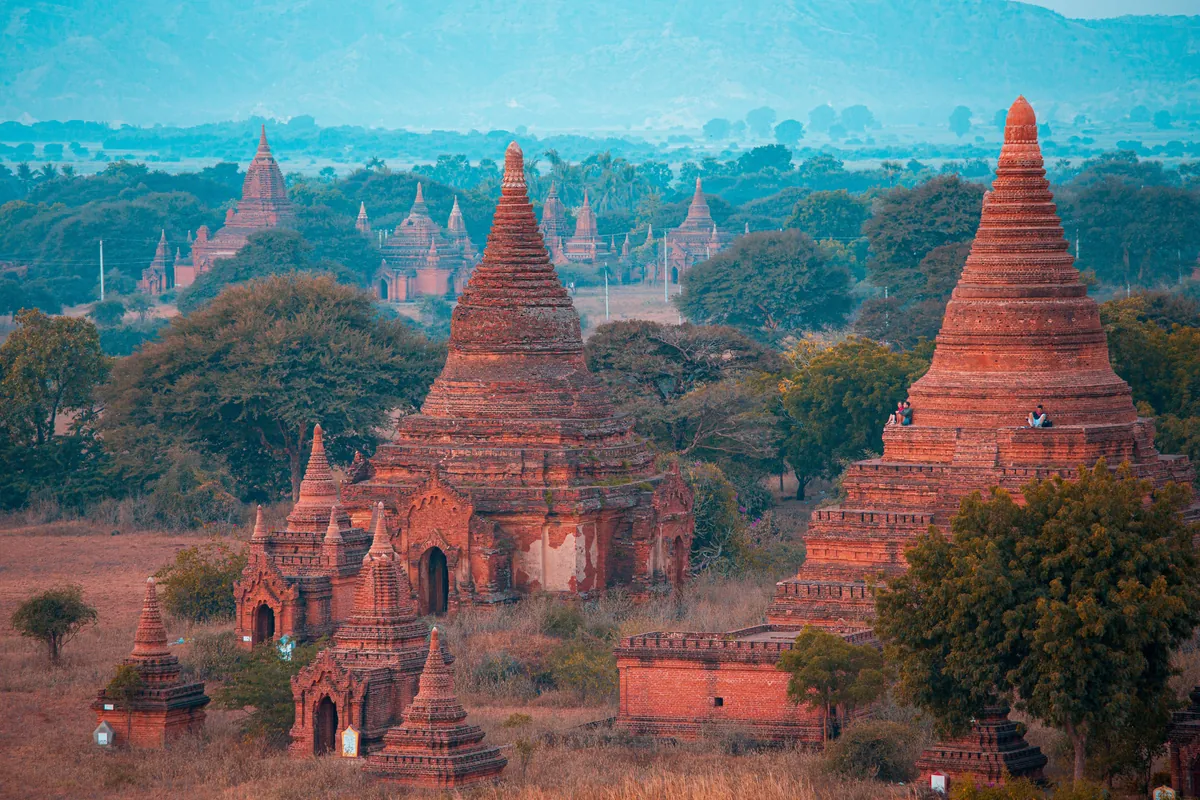
From Yangon, the trip flies to Bagan, an ancient city and UNESCO World Heritage Site in the Mandalay Region that served as capital of the Pagan Kingdom, the first kingdom to unify the regions that became Myanmar, from the ninth to thirteenth centuries. At its height between 1044 and 1287, Bagan's rulers and wealthy subjects built more than 10,000 religious monuments — roughly 1,000 stupas, 10,000 small temples, and 3,000 monasteries — across 104 square kilometres of plains; more than 2,200 temples and pagodas survive today, and the sunrise views the trip takes in look out over that same field of monuments.
On Inle Lake, in Shan State's Nyaungshwe Township, the trip visits stilt villages built over Myanmar's second-largest lake, an estimated 116 square kilometres in area and, at 880 metres elevation, among the country's highest. Average water depth runs about 2.1 metres in the dry season, deepening by roughly 1.5 metres in the rainy season, a shallow, level surface that has long supported the floating gardens and stilt houses built along its shores.
Back in Yangon, the trip visits Shwedagon Pagoda, officially Shwedagon Zedi Daw and the most sacred Buddhist pagoda in Myanmar, believed to enshrine relics of four Buddhas, including eight strands of hair from Gautama Buddha himself. Built atop the 51-metre Singuttara Hill, the gilded stupa itself rises 112 metres, its crown tipped with 5,448 diamonds and 2,317 rubies and, at the very top, a single 76-carat diamond; its gold plating has been maintained over centuries by donations from monarchs, beginning with Queen Shin Saw Pu, and from ordinary worshippers across the country.
The trip closes in Mandalay at U Bein Bridge, a 1.2-kilometre teakwood crossing over Taungthaman Lake near Amarapura, built around 1850 and believed to be the oldest and longest teak bridge in the world. Constructed when the capital of the Ava Kingdom moved to Amarapura and named for Maung Bein, the official who had it built, the bridge remains an everyday passageway for local people as well as a major tourist draw, busiest in July and August when the lake reaches its highest level.
Text adapted from the linked articles under CC BY-SA 4.0; edited for length.
On documentation, this trip sits in the e-visa complexity band — usually arranged online ahead of travel — treat that as a planning signal only, and verify exact, current requirements with the relevant embassy or consulate before booking. It runs 8 days, from ₹95,000 per person.
Every dimension the Taro team tags this pack with — filter by any of these on the packs page.
8 days across Myanmar, starting from ₹95,000 per person.
Suited to Couples and Friends, with a suitable option for families and a moderate activity level.
This trip sits in the e-visa complexity band — usually arranged online ahead of travel. Always confirm exact, current requirements with the relevant embassy or consulate before booking — this is a planning signal, not a legal statement.
Share your travel month, group size, budget comfort, and must-do experiences. The Taro team will shape the right route before any payment conversation.