Arctic Svalbard Polar Bears
8DFrom ₹6,85,000
Valletta UNESCO, Blue Lagoon Comino, Mdina silent city.
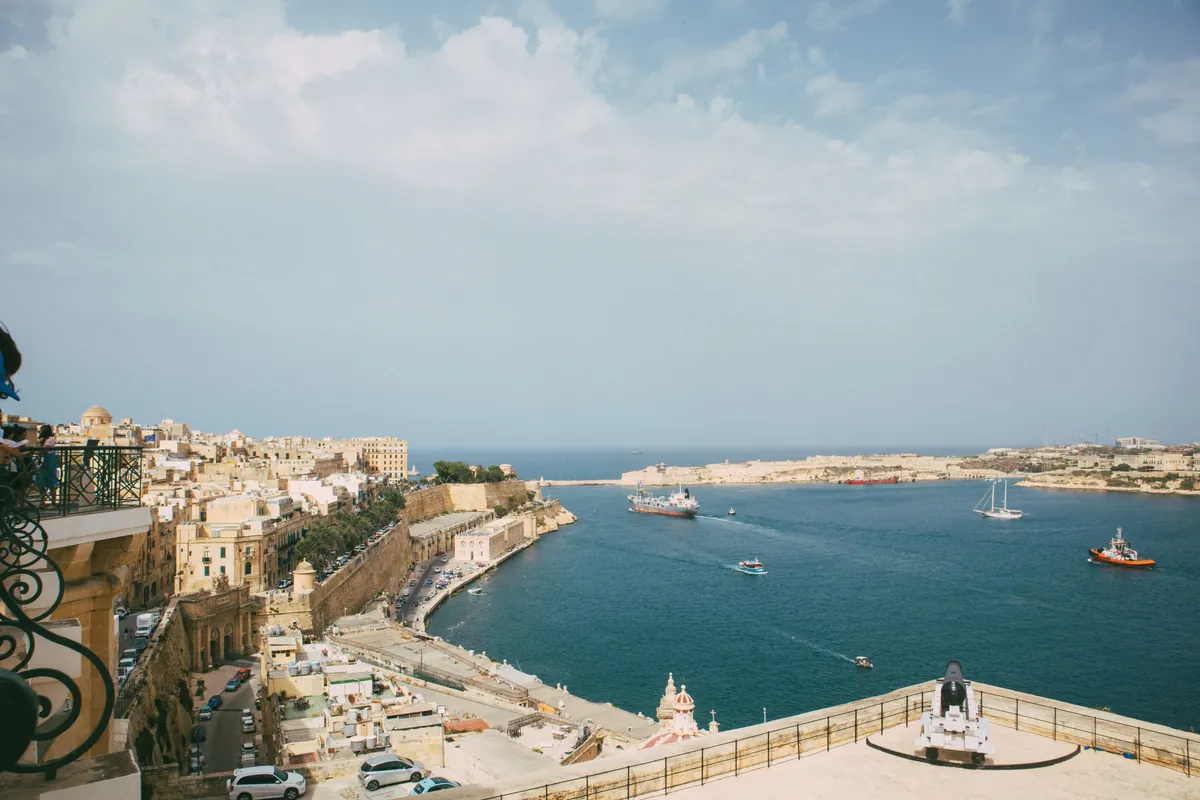
This trip opens in Valletta, Malta's capital and, at just 0.61 square kilometres, the European Union's second-smallest capital city, sitting between the Grand Harbour to the east and Marsamxett Harbour to the west with a 2021 population of 5,157. Its Baroque buildings, with elements of Mannerist, Neo-Classical, and modern architecture, were raised by the Knights Hospitaller in the sixteenth century after the Order's grand master, Jean Parisot de Valette, defended the island against Ottoman invasion in the 1565 Great Siege of Malta and set out to fortify the Sciberras Peninsula in response; the new city took his name. Valletta packs some 320 monuments into an area of just 0.55 square kilometres and was recognised as a UNESCO World Heritage Site in 1980, despite the destruction the Second World War brought to the city, including its Royal Opera House.
A short trip north from the mainland reaches Comino, a small island of the Maltese archipelago covering 3.5 square kilometres between Malta and Gozo, home to a permanent population of just two residents and protected today as a bird sanctuary and Natura 2000 marine reserve. Formerly called Ephaestia, Comino was farmed during Roman times but spent long stretches of its history sparsely populated or abandoned, its limestone cliffs and caves used by pirates and marauders through the Middle Ages as staging posts for raids on boats crossing between Malta and Gozo. The Knights of Malta later used the island as hunting ground, protecting its wild boar and hares so fiercely that convicted poachers could be sentenced to three years as a galley slave, and in 1618 Grandmaster Wignacourt's Knights built St Mary's Tower on the island's southern coast as part of a coastal defence chain — a project the Maltese had first petitioned for in 1416.
The trip's inland stop is Mdina, known by the Italian epithets Città Vecchia and Città Notabile, a fortified city that served as Malta's capital from antiquity through the medieval period and today holds just 242 residents within its unexpanded ancient walls. A Phoenician colony called Ann was established on the site around the eighth century BC, and after Rome captured Malta in 218 BC during the Second Punic War the city was renamed Melita, growing to about three times its present size before Byzantine or Arab-era retrenchment reduced it again; a ninth-century massacre left the area largely uninhabited until its refounding in the eleventh century as Madīnah, the Arabic word for "town," from which the modern name Mdina derives. According to the Acts of the Apostles, Paul the Apostle was shipwrecked on Malta in AD 60 and was greeted by the island's governor Publius, whom Christian legend holds went on to become Malta's first bishop.
The trip closes at Ħaġar Qim, a megalithic temple complex on Malta's southern coast dating from the Ġgantija phase of 3600 to 3200 BC and built from globigerina limestone, the island's second-oldest rock, which outcrops across roughly 70 percent of Malta's surface. Recognised by UNESCO as a World Heritage Site in 1992 alongside four other Maltese megalithic structures, the temple's façade is built around a trilithon entrance, an outer bench, and orthostats, with a wide forecourt and a central passage following the classic Maltese megalithic design later modified as construction continued. V. Gordon Childe, who directed the Institute of Archaeology at the University of London from 1946 to 1957 and had visited prehistoric ruins from Mesopotamia to Egypt, Greece, and Switzerland, wrote after seeing it that he had "nowhere seen a place as old as this one" — a judgment that still frames the closing stop on this trip through Malta's layered heritage.
On documentation, this trip sits in the e-visa complexity band — usually arranged online ahead of travel — treat that as a planning signal only, and verify exact, current requirements with the relevant embassy or consulate before booking. It runs 5 days, from ₹1,05,000 per person.
Every dimension the Taro team tags this pack with — filter by any of these on the packs page.
5 days across Malta, starting from ₹1,05,000 per person.
Suited to Couples and Friends, with a suitable option for families and a moderate activity level.
This trip sits in the e-visa complexity band — usually arranged online ahead of travel. Always confirm exact, current requirements with the relevant embassy or consulate before booking — this is a planning signal, not a legal statement.
Share your travel month, group size, budget comfort, and must-do experiences. The Taro team will shape the right route before any payment conversation.

