Abu Dhabi + Yas Island
5DFrom ₹1,05,000
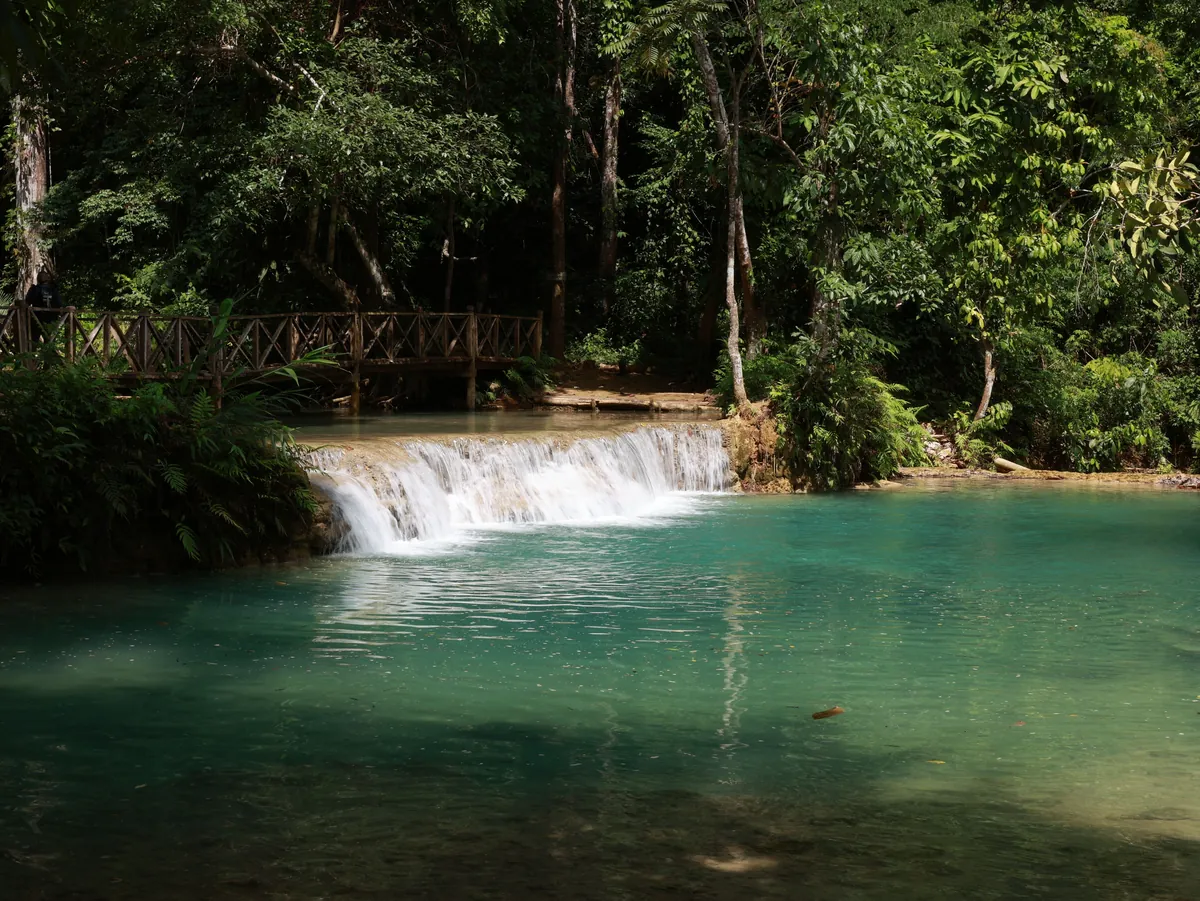
Alms-giving dawn, Kuang Si waterfall pools, Mekong sunset.
Luang Prabang, historically known as Xieng Thong, is the capital of Luang Prabang Province in north-central Laos and the base for this slow-paced trip. Its name, meaning "Royal Buddha Image," derives from the Phra Bang, a statue symbolising Lao sovereignty. Designated a UNESCO World Heritage Site in 1995, the city is recognised for blending Lao architecture, European colonial buildings, and more than thirty Buddhist temples across a protected area that covers 33 of its 58 villages — the same villages where the morning alms-giving ceremony that opens each day of this trip has continued as a daily ritual.
That alms-giving custom sits inside a city with a long dynastic history. Xieng Dong Xieng Thong, as Luang Prabang was then known, became the capital of the Lan Xang kingdom in 1353. In 1359 a Khmer king from Angkor gave the Phra Bang statue to his son-in-law, Fa Ngum, the first Lan Xang monarch, to lend Buddhist legitimacy to his rule and to help spread Theravada Buddhism through the kingdom; the capital was renamed Luangphabang after the same Buddha image. When Lan Xang split apart in 1707 following a dynastic struggle, Luang Prabang became the capital of its own Kingdom of Luang Phrabang, and once France annexed Laos it recognised the city as the royal residence, a status that held until Laos's king, Sisavang Vong, became head of state of the independent kingdom.
A half-day trip from the city reaches Kuang Si Falls, a multi-tiered waterfall about 29 kilometres south of Luang Prabang — roughly 53 minutes from the Luang Prabang Night Market by road. Water flows down in three cascades over white limestone rock into turquoise pools before reaching the main fall, which drops 60 metres. The Nam Si river that feeds the falls rises about 10 kilometres upstream at the foot of mountains once inhabited by Hmong, Lao Theung, and Khmu hill tribes, whose slash-and-burn rice farming had caused the river to run dry; after 1975 the Lao government relocated the hill tribes elsewhere to let the surrounding forest and watershed recover.
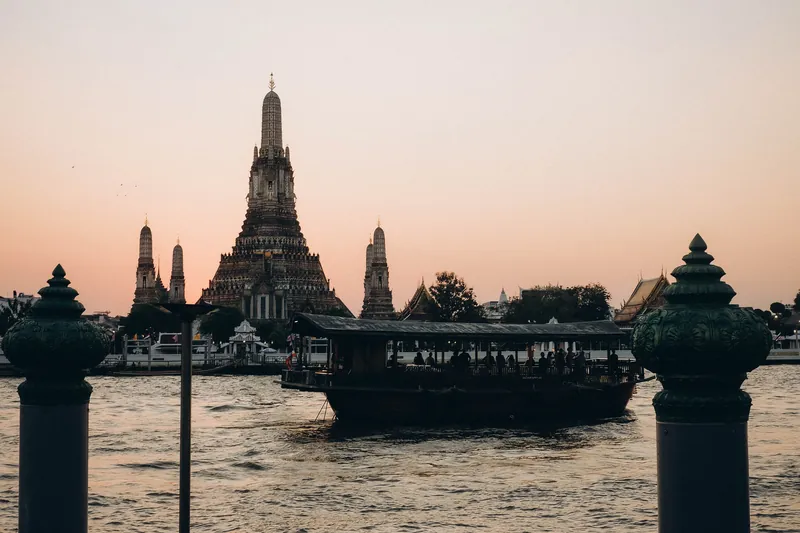
An evening on the Mekong follows, aboard the river that gives the region its shape. The Mekong is the world's twelfth-longest river and the third-longest in Asia, running an estimated 4,909 kilometres from its headwaters on the Tibetan Plateau through southwest China, Myanmar, Laos, Thailand, Cambodia, and southern Vietnam, and discharging some 475 cubic kilometres of water a year. Its extreme seasonal swings in flow, along with rapids and waterfalls along its length, have long made it difficult to navigate, even though it remains a major trade route linking Tibet to Southeast Asia — a role reflected in the river traffic still visible from a sunset cruise past Luang Prabang.
The trip closes at the Royal Palace, known officially as Haw Kham, built in 1904 during the French colonial era for King Sisavang Vong and his family; the site was chosen so that official visitors arriving by river could disembark and be received directly below it. Its architecture mixes traditional Lao motifs with French Beaux-Arts style, laid out in a double-cruciform plan with a three-headed elephant sheltered by the sacred white parasol, the symbol of the Lao monarchy, above the entrance, and steps built from Italian marble. Inside, the king's reception room holds two large gilded and lacquered Ramayana screens by the local artisan Thit Tanh beneath murals painted in 1930 by the French artist Alix de Fauntereau, while a front corner room displays the Phra Bang itself, an 83-centimetre Buddha cast in a gold, silver, and bronze alloy. After the crown prince Savang Vatthana and his family were the last to occupy the grounds, the monarchy was overthrown in 1975 and the palace was converted into the national museum visitors walk through today.
Text adapted from the linked articles under CC BY-SA 4.0; edited for length.
On documentation, this trip sits in the on-arrival visa-complexity band — treat that as a planning signal only, and verify exact, current requirements with the relevant embassy or consulate before booking. It runs 6 days, from ₹65,000 per person.
Every dimension the Taro team tags this pack with — filter by any of these on the packs page.
6 days across Laos, starting from ₹65,000 per person.
Suited to Couples and Friends, with a suitable option for families and a moderate activity level.
This trip sits in the on-arrival visa-complexity band. Always confirm exact, current requirements with the relevant embassy or consulate before booking — this is a planning signal, not a legal statement.
Share your travel month, group size, budget comfort, and must-do experiences. The Taro team will shape the right route before any payment conversation.