Abu Dhabi + Yas Island
5DFrom ₹1,05,000
A 5-day premium trip to Kuwait City, Kuwait, taking in Kuwait Towers, Grand Mosque of Kuwait, Souq Al-Mubarakiya and Al Shaheed Park.
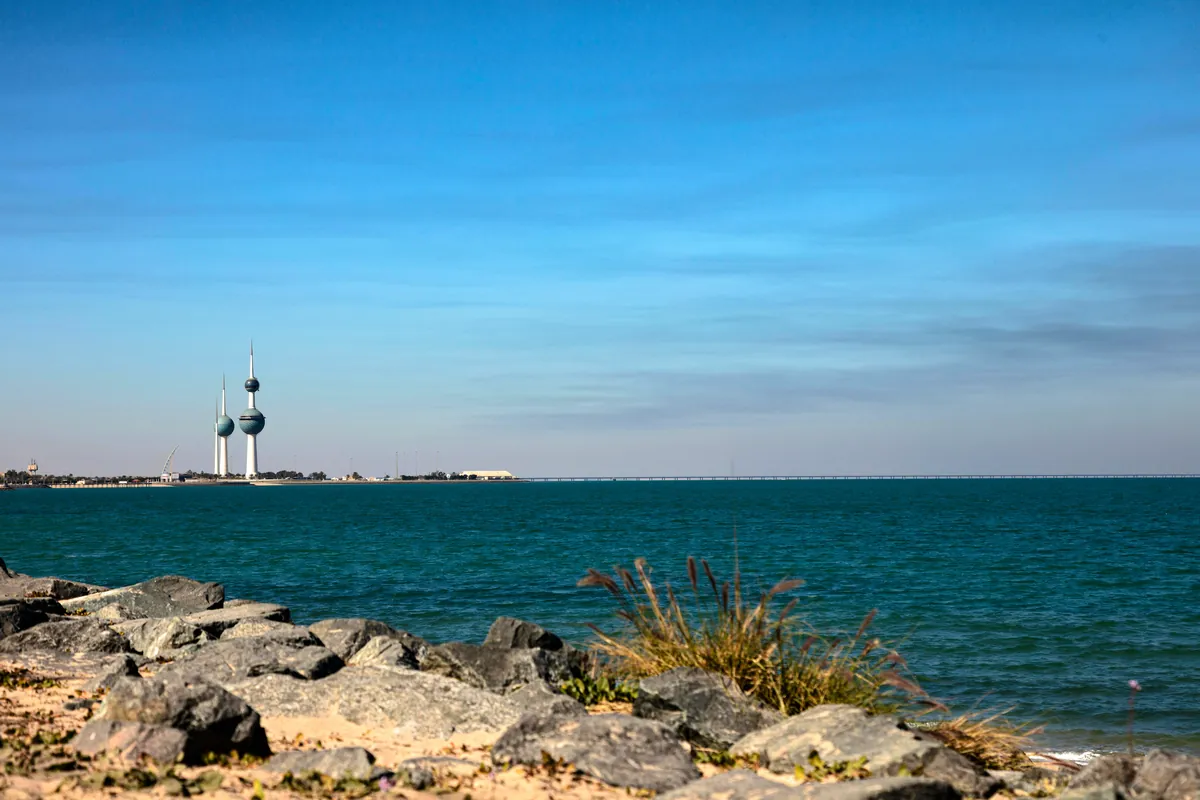
Kuwait City Skyline Break opens at the Kuwait Towers, a group of three towers on a promontory into the Persian Gulf and the last, most distinctive group in the wider Kuwait Water Towers system of 34 towers. Officially inaugurated in March 1979, the Kuwait Water Towers system — including these three — received one of the inaugural Aga Khan Awards for Architecture the following year. The 187-metre main tower carries two spheres: the lower holds a 4,500 cubic metre water tank in its base and a 90-seat restaurant, café and reception hall above, while the upper sphere, rising 123 metres above sea level, completes a full rotation every 30 minutes and houses its own café. A second, 147-metre tower serves purely as a water reservoir, and a third, unadorned tower carries the equipment that illuminates the other two at night. The towers closed for maintenance between March 2012 and March 2016, reopening with a large fireworks display, and are today regarded as the clearest symbol of modern Kuwait's skyline.
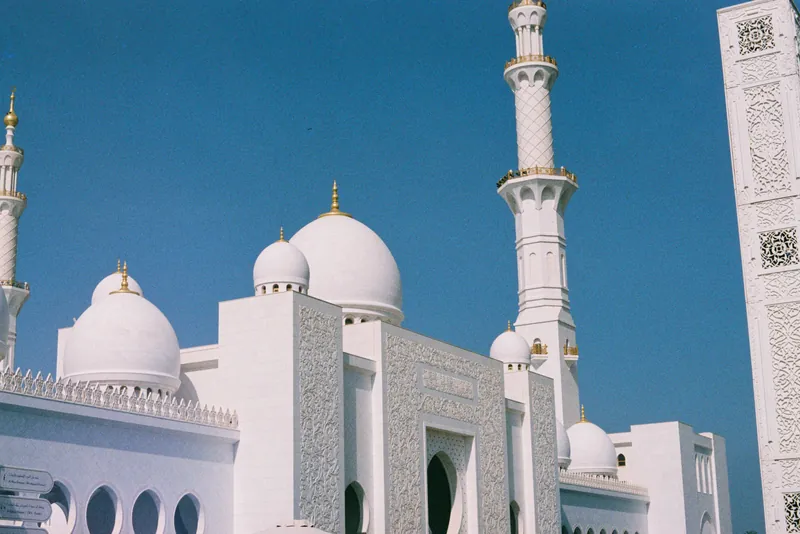
From the waterfront the route turns inland to the Grand Mosque, the largest mosque in Kuwait, covering 45,000 square metres of which the building itself occupies 20,000. Construction began in 1979 and finished in time for Eid ul-Fitr in 1407 AH (1986/87 CE). The main prayer hall spans 72 metres on each side behind teakwood doors, lit naturally through 144 windows beneath a dome 26 metres across and 43 metres high, decorated with the ninety-nine names of God. The hall accommodates up to 10,000 men, with a separate hall for as many as 950 women, and the complex also holds a 350 square metre library of Islamic reference texts and documents; its minaret, set at the north-west corner, draws on Andalusian architectural forms.
Nearby, Souq Al-Mubarakiya has stood as a centre of trade for at least two hundred years, predating the discovery of oil in Kuwait. Damaged during the Iraqi invasion of 1990, it was subsequently renovated and today its lanes sell Persian silk carpets, antiques, musk and oud perfumes, gold and silver jewellery, traditional dress, dates, honey, spices and fresh produce — a working market rather than a recreated one, set between Abdullah Al-Mubarak, Abdullah Al-Salem and Palestine streets in the old heart of the city.
The route closes at Al Shaheed Park, the largest urban park in Kuwait at around 78.5 acres and part of the Kuwait National Cultural District. Originally sketched into Kuwait's 1952 master plan, the park's development stalled after its first phase and was revived in 2013; Phase II, opened in April 2017, added a skate park, youth complex and open-air performance venue. The park holds two museums — the Remembrance Museum, built around four icons symbolising Kuwait's most significant historical battles, and the Habitat Museum, which recreates the country's natural habitats with interactive audiovisual displays — set among gardens, walkways and one of the largest over-structure green roofs anywhere.
Together the four stops trace a short loop through Kuwait City itself: the water towers on their Gulf-side promontory, the domed Grand Mosque inland, the centuries-old trading lanes of Souq Al-Mubarakiya, and the modern green space of Al Shaheed Park, all within easy reach of one another across five days.
Text adapted from the linked articles under CC BY-SA 4.0; edited for length.
Every dimension the Taro team tags this pack with — filter by any of these on the packs page.
Share your travel month, group size, budget comfort, and must-do experiences. The Taro team will shape the right route before any payment conversation.