Abu Dhabi + Yas Island
5DFrom ₹1,05,000
A 5-day premium city break in Astana with its landmark modern architecture.
Astana Steppe Capital opens at Baiterek, a 105-metre monument and observation tower commissioned in 1996 by Kazakhstan's first president, Nursultan Nazarbayev, as a symbol of the new capital created on the open steppe after the seat of government moved from Almaty in 1997. Designed by Kazakh architect Akmurza Rustembekov to Nazarbayev's own sketch — chosen over a costlier proposal from sculptor Zurab Tsereteli for a 200-metre arch topped by a golden warrior — the tower's white branch-like girders rise to a gold-mirrored sphere 22 metres across, evoking a folk tale in which the bird of happiness, Samruk, laid her egg between the branches of a mythical tree of life. Inside the sphere, at 97 metres — a height chosen to mark 1997, the year Astana became capital — a gilded imprint of Nazarbayev's right hand invites visitors to make a wish.
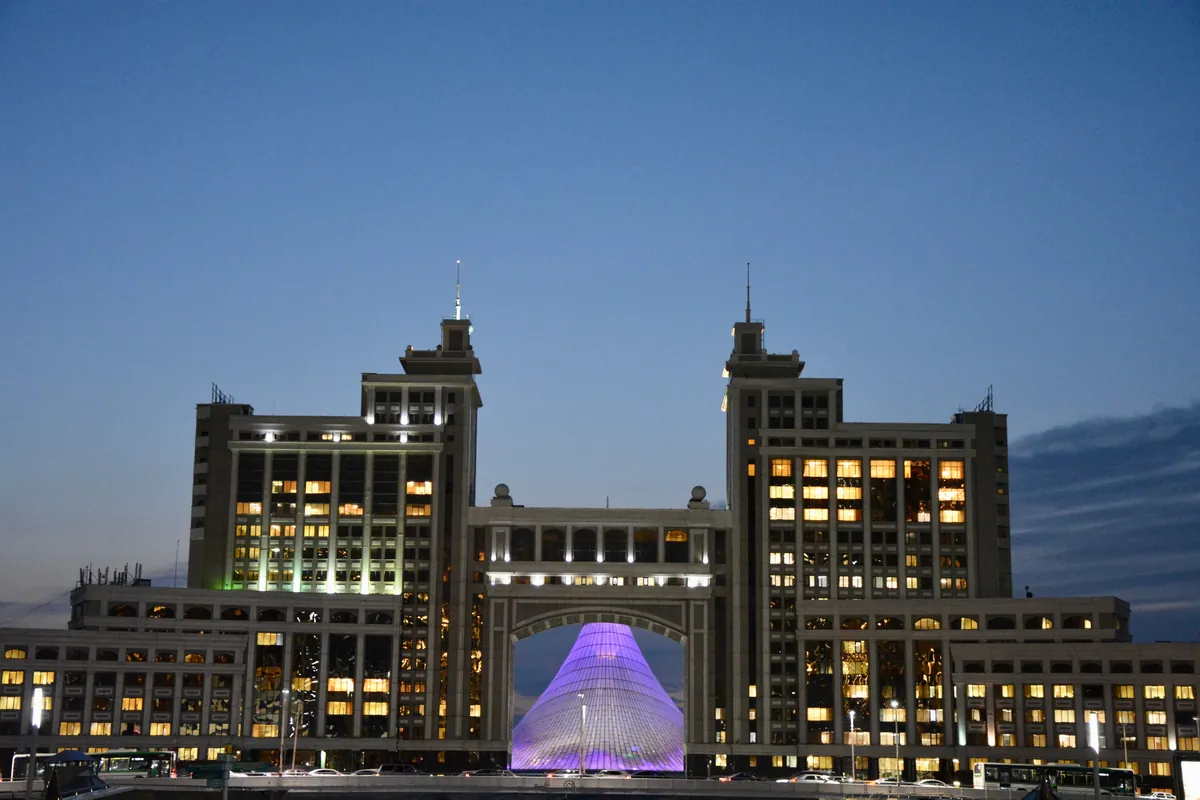
The route continues to Khan Shatyr, a transparent tent-shaped entertainment centre in a neo-futurist style whose architectural project was unveiled by President Nazarbayev on 9 December 2006, the second of Astana's national landmark projects after the Palace of Peace and Reconciliation, a glass pyramid completed that same year. Its tent rises 90 metres — 150 metres including the spire — over a 200-by-195-metre elliptical base, and beneath its ETFE-cushion roof, suspended from a central spire on a web of cables across an area larger than ten football fields, sits an urban-scale park with cobbled streets, a boating river, a shopping centre, minigolf and an indoor beach resort, all held between 15 and 30 degrees Celsius even as the outside temperature swings between minus 35 and plus 35 across the Kazakh year.
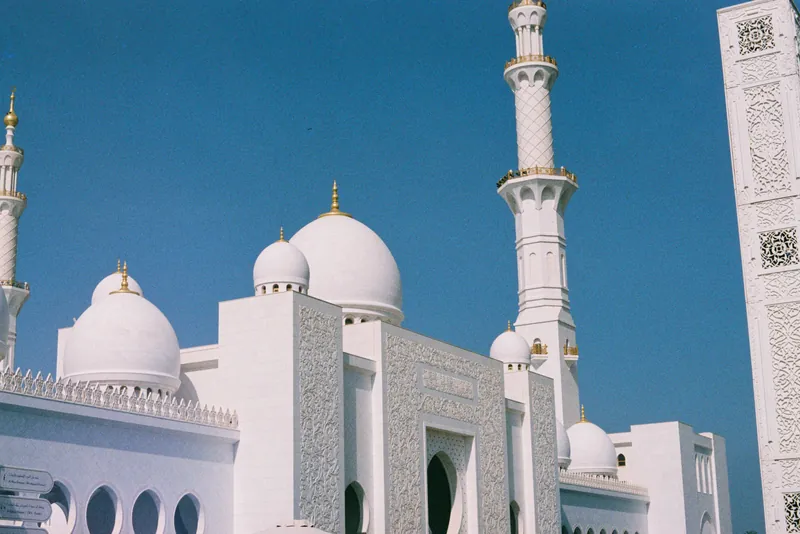
Nearby, the Nur-Astana Mosque stands on the left riverbank in Astana, the third-largest mosque in Central Asia and a gift arranged between President Nazarbayev and the Emir of Qatar, Hamad bin Khalifa; construction began in March 2005 to a design by Beirut-based architect Charles Hadife. Its main structure rises 40 metres — the age at which the Islamic prophet Muhammad is said to have received his first revelations — with minarets reaching 63 metres, the age at which he died, and the mosque can hold 5,000 worshippers inside with room for 2,000 more outside, built of glass, concrete, granite and alucobond panelling. It is counted among the largest mosques in Central Asia, a scale reflecting the same nation-building ambition behind Baiterek and Khan Shatyr nearby.
The route closes at Astana Opera, an opera house whose design was partly the work of Nazarbayev himself, built from 6 July 2010 under the direction of the Mabetex Group and opened in 2013 with a staging of the Kazakh opera Birzhan and Sara. Considered the third-largest opera house in the world, its 1,250-seat Main Hall and 250-seat Chamber Hall sit beneath a 13-metre concourse hung with a 1.6-tonne chandelier, its acoustics designed by the Italian specialists Enrico Moretti and Maria Cairoli and its decoration drawing on Ancient Greek architecture alongside frescoes of Sharyn Canyon and Burabay. Its own resident orchestra, ballet and opera troupe perform a repertoire spanning La traviata and Tosca to national works such as Abai, closing a five-day route through a capital built, in barely three decades, from open steppe.
Text adapted from the linked articles under CC BY-SA 4.0; edited for length.
Every dimension the Taro team tags this pack with — filter by any of these on the packs page.
Share your travel month, group size, budget comfort, and must-do experiences. The Taro team will shape the right route before any payment conversation.