Abu Dhabi + Yas Island
5DFrom ₹1,05,000
A 6-day premium route through Kyoto's temples and geisha district.
The nights begin in Gion, a district of Higashiyama-ku that grew up in the Sengoku period as an entertainment quarter serving pilgrims to Yasaka Shrine, and evolved over the centuries into one of Japan's best-known geisha districts. Kyoto's geisha do not use that word for themselves, preferring the local term geiko. The district in fact holds two separate hanamachi, or geisha quarters — Gion Kobu and the smaller Gion Higashi — which split from a single district in 1881; Gion Kobu, the larger of the two, contains the well-known Hanamikoji street and its old machiya townhouses, some still operating as ochaya teahouses where geiko and their apprentice maiko entertain guests with traditional music and dance. Part of Gion has been designated a national historical preservation district, and each spring its geiko perform the Miyako Odori, a public dance dating to 1872, through the month of April.
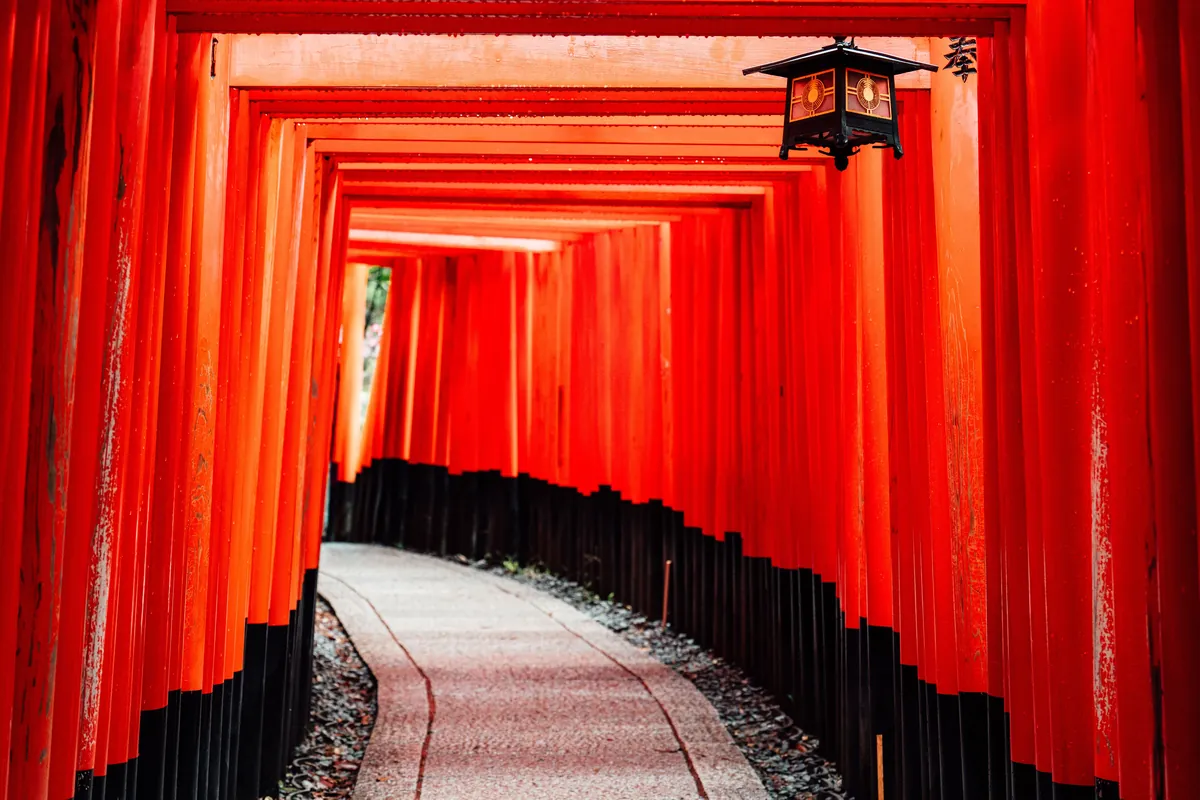
Fushimi Inari-taisha, the head shrine of the kami Inari, sits at the base of Inari mountain and was formally founded in 711 CE by the Hata clan, an influential immigrant family who according to the Shinsen Shōjiroku had migrated from the Korean peninsula bringing continental skills in irrigation, sericulture and sake brewing. Inari, originally and still primarily worshipped as the kami of rice and agriculture, is also honoured by merchants as a patron of business, which is why generations of donors since the Edo period have funded the shrine's vermilion torii gates in gratitude for granted wishes; around 800 line the main path up the mountain today, part of a network spanning four kilometres and roughly two hours to walk in full. The shrine relocated to its present site in 816 at the request of the monk Kūkai, and its main structure dates to 1499.
Kinkaku-ji, the golden pavilion, occupies the site of a villa purchased in 1397 by the shōgun Ashikaga Yoshimitsu, who transformed it into the Kinkaku-ji complex; after his death his son converted the building into a Zen temple as Yoshimitsu had wished. The pavilion itself, whose top two storeys are covered in gold leaf intended to purify negative thoughts associated with death, blends three distinct architectural styles across its three floors — the shinden style of Heian aristocratic residences, a samurai style, and a Zen style — and sits over a reflecting pond, the Kyōko-chi, that contains ten small islands within a strolling garden built on the principle of borrowed scenery, extending the view beyond the garden's own edges. The current structure is a 1955 reconstruction, the original having been destroyed in an arson attack, an event that later inspired Yukio Mishima's novel The Temple of the Golden Pavilion.
Kiyomizu-dera, whose name means Pure Water Monastery, stands in the foothills of Mount Otowa and is among the few Kyoto temples that predate the city's founding as the capital Heian-kyō. Its main hall, rebuilt in 1633, extends on a large wooden veranda supported by tall pillars using the kakezukuri method, built without a single nail, and offers views out over the city from the hillside. Beneath the hall, the Otowa waterfall divides into three channels whose water is traditionally believed to grant wishes to those who drink it, and during the Edo period visitors would jump from the 13-metre veranda in the belief that surviving the fall meant their wish would come true — a practice recorded 234 times with an 85.4 percent survival rate before it was banned in 1872.
Across the nights, the district hops between four different centuries of Kyoto's religious and cultural life: the Edo-period entertainment quarter of Gion, the eighth-century shrine of Fushimi Inari climbing its vermilion-gated mountain, the fourteenth-century shōgun's retreat turned Zen temple at Kinkaku-ji, and the still-older wooden hall of Kiyomizu-dera on its Higashiyama hillside. Each stop belongs to a different layer of the city that grew up around them.
Text adapted from the linked articles under CC BY-SA 4.0; edited for length.
Every dimension the Taro team tags this pack with — filter by any of these on the packs page.
Share your travel month, group size, budget comfort, and must-do experiences. The Taro team will shape the right route before any payment conversation.