Arctic Svalbard Polar Bears
8DFrom ₹6,85,000
Rome ruins, Florence galleries, Venice gondolas.
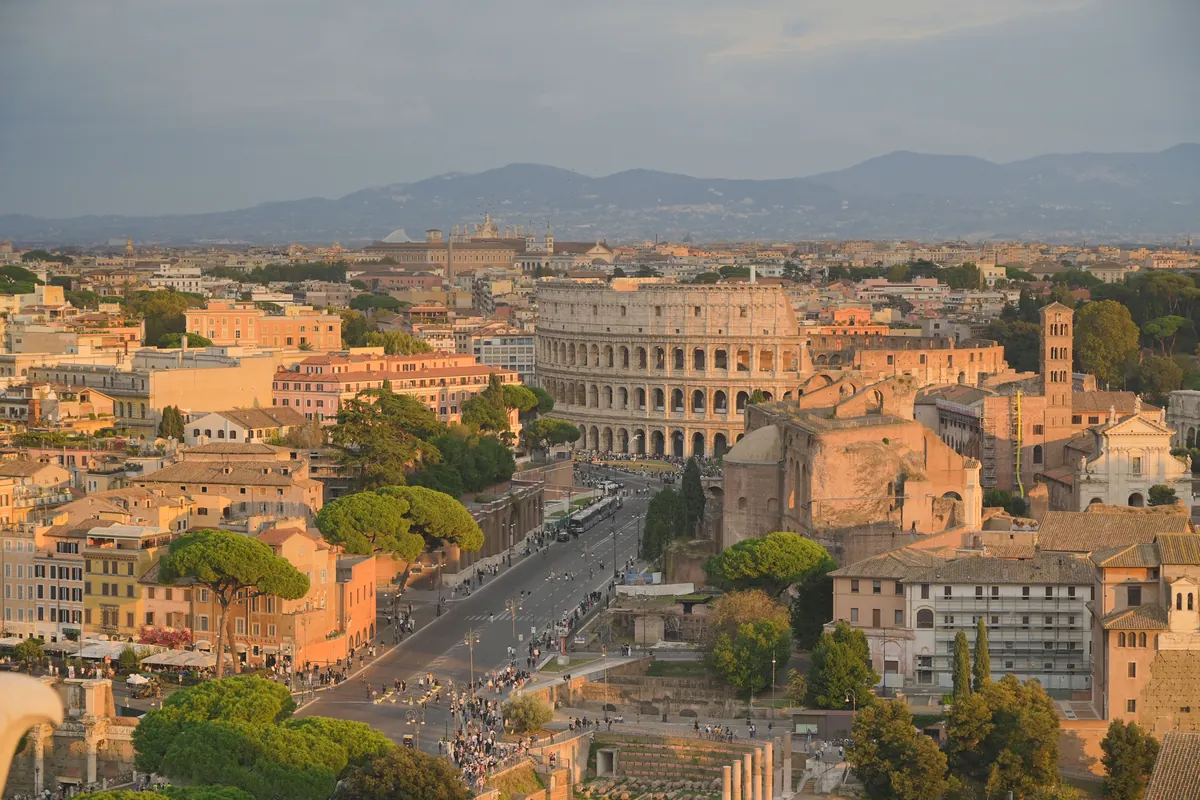
Italy Classics Triangle begins in Rome, Italy's capital and most populous comune, the administrative centre of both the Lazio region and the Metropolitan City of Rome, home to 2.7 million people across 1,287.36 square kilometres as the special comune of Roma Capitale. Ancient Roman founding myth traces the city's name to its first king, Romulus, though some scholars have long suspected the causation runs the other way, with "Romulus" actually derived from "Roma"; in antiquity the city was also known simply as Urbs, "the city," and carried the republican initialism SPQR before the emperor Commodus briefly renamed it Colonia Lucia Annia Commodiana in 192. Over 9 days the pack runs from Rome's own amphitheatre to the Vatican, north to Florence, and on to Venice.
The Colosseum, the largest amphitheatre ever built and the largest still standing anywhere in the world, sits just east of the Roman Forum on a site that was once a low valley between the Caelian, Esquiline and Palatine Hills, threaded by a canalised stream and an artificial lake before construction began under the Emperor Vespasian in AD 72. Its original Latin name was simply amphitheatrum, and although the modern name "Flavian Amphitheatre" is often used today, there is no evidence that name — referring to the Flavian dynasty's patronage — was actually used in antiquity.
The Vatican Museums, the public museums of Vatican City, display centuries of art amassed by the Catholic Church and papacy, including some of the best-known Roman sculptures and Renaissance masterpieces in the world. Their origin traces to a single marble sculpture, Laocoön and His Sons, discovered on 14 January 1506 in a vineyard near the Basilica of Santa Maria Maggiore and purchased soon after by Pope Julius II, while the museums' own picture gallery, the Pinacoteca Vaticana, moved out of the Borgia Apartment and into a dedicated building designed by Luca Beltrami, inaugurated on 27 October 1932.
Florence Cathedral, formally the Cathedral of Saint Mary of the Flower, was begun in 1296 in the Gothic style to a design by Arnolfo di Cambio and completed in 1436 with a dome engineered by Filippo Brunelleschi. It was built on the site of Florence's second cathedral, dedicated to Saint Reparata, itself a successor to the city's first bishop's seat at the Basilica of San Lorenzo, consecrated by St. Ambrose of Milan in 393 — a lineage of churches on shifting sites that finally settled into the basilica-plan cathedral, with its wide central nave of four square bays, that stands today.
The trip closes in Venice, at sunset, aboard a gondola — the traditional flat-bottomed Venetian rowing boat built for exactly the shallow, narrow conditions of the Venetian lagoon. A gondolier propels it standing at the stern, facing the bow, rowing with a forward stroke followed by a compensating backward stroke, the oar resting in a carved wooden rest called a forcola rather than being fixed to the hull; a modern gondola runs up to 11 metres long and 1.6 metres wide, built from around 280 hand-made pieces across eight different types of wood.
Text adapted from the linked articles under CC BY-SA 4.0; edited for length.
On documentation, this trip sits in the most involved, embassy visa-complexity band — treat that as a planning signal only, and verify exact, current requirements with the relevant embassy or consulate before booking. It runs 9 days, from ₹1,75,000 per person.
Every dimension the Taro team tags this pack with — filter by any of these on the packs page.
9 days across Italy, starting from ₹1,75,000 per person.
Suited to Couples and Friends, with a suitable option for families and a moderate activity level.
This trip typically needs an embassy-arranged visa ahead of travel. Always confirm exact, current requirements with the relevant embassy or consulate before booking — this is a planning signal, not a legal statement.
Share your travel month, group size, budget comfort, and must-do experiences. The Taro team will shape the right route before any payment conversation.

