Abu Dhabi + Yas Island
5DFrom ₹1,05,000
Western Wall, Holy Sepulchre, Bethlehem, Sea of Galilee.
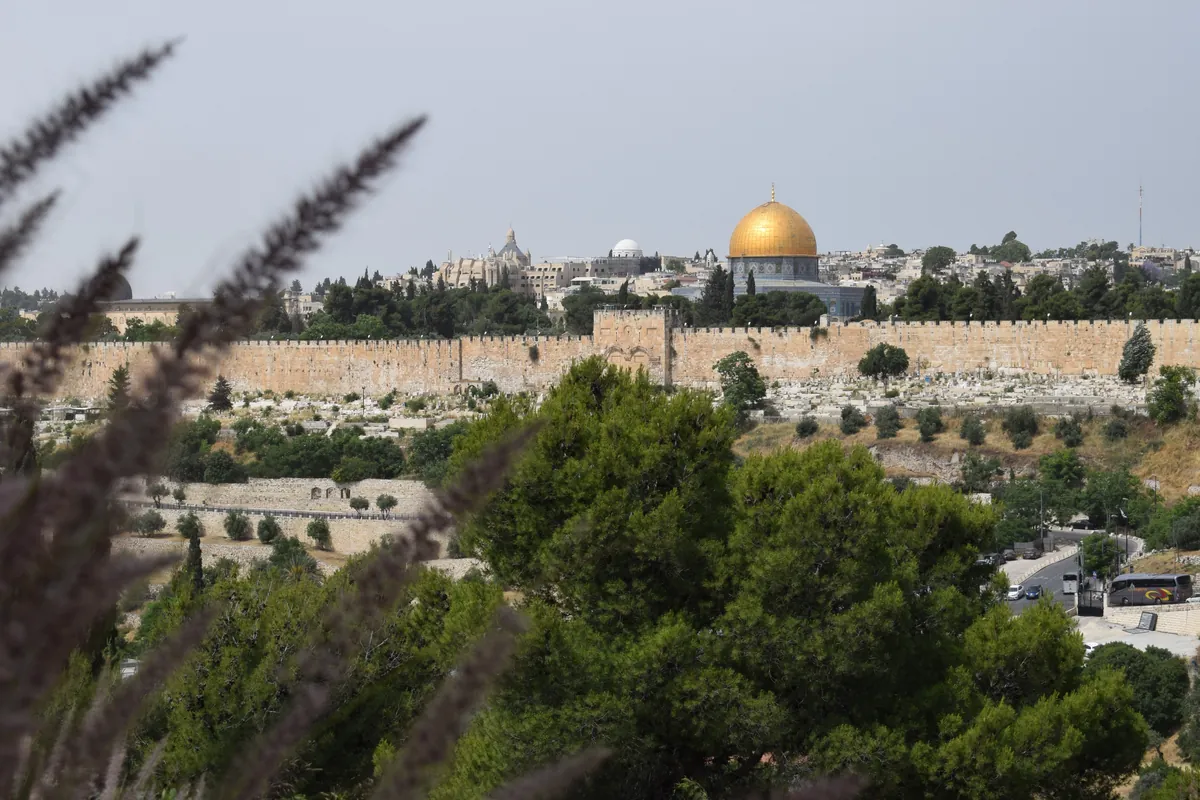
Israel Holy Land Pilgrimage is based in Jerusalem, a city on a plateau in the Judaean Mountains between the Mediterranean and the Dead Sea, one of the oldest cities in the world and holy to Judaism, Christianity and Islam alike. The name is generally traced to a Semitic root meaning "to found" or "to lay a cornerstone," giving a reading of "foundation of the god Shalem," and the city may appear even earlier than that in the Execration Texts of Egypt's Middle Kingdom, from around the 19th century BC, which refer to a city transcribed as Rušalimum or Urušalimum. Over 8 days the pilgrimage moves between a retaining wall, a fourth-century church, a lake, and a desert fortress.
The Western Wall, an ancient retaining wall of the hill known to Jews and Christians as the Temple Mount, is often shortened by Jews to the Kotel and known in the West as the Wailing Wall — a name, along with "wailing place," that entered regular English use in the 19th century, echoed by the French Mur des Lamentations and German Klagemauer, all describing the traditional Jewish practice of mourning the destroyed Temple at this spot. The stretch most visitors know by that name is specifically a 187-foot exposed section of a much longer retaining wall Herod built along the Temple Mount's western flank, and only that section is properly synonymous with "Wailing Wall"; the Arab and Islamic world has separately associated the same structure with the name Al-Buraq Wall since at least the 1860s.
The Church of the Holy Sepulchre, also called the Church of the Resurrection, is a fourth-century church in the Christian Quarter of the Old City, simultaneously serving as the seat of the Armenian, Greek Orthodox and other patriarchates of Jerusalem. Its name refers to the tomb of Jesus, the focal point of the Resurrection for Christians, on a site that had been reduced to ruins after the siege of Jerusalem in AD 70; when the Roman emperor Hadrian founded the colony of Aelia Capitolina here around AD 130, he built over the site before it was later reclaimed for the church that stands today.
The Sea of Galilee, also called Lake Tiberias, Genezareth Lake or Kinneret, is a freshwater lake in north-east Israel and the lowest freshwater lake on Earth, its elevation fluctuating between 209 and 215 metres below sea level. It sits in the Jordan Rift Valley between the Golan Heights and the Galilee region, a zone shaped by the relative motion of the African and Arabian tectonic plates and consequently prone to earthquakes, and its modern Hebrew name, Kineret, traces back to the Hebrew Bible's "sea of Kineret" in the Book of Numbers.
The trip closes at Masada, a mountain-top fortress in the Judaean Desert overlooking the western shore of the Dead Sea, built in the first century BC atop a natural plateau rising more than 400 metres above the surrounding terrain. Geologically a horst, the plateau falls away in cliffs some 400 metres to the east and 90 metres to the west, making the fortress naturally difficult to approach — almost everything historians know about the site comes from the first-century Jewish-Roman historian Josephus, whose account also appears alongside references to Masada in the Judean Desert Documents. Josephus records that the site was first fortified by the Hasmonean ruler Alexander Jannaeus in the first century BC, though no Hasmonean-period remains have actually been identified in excavations, and that Herod the Great later built the large fortress and two palaces seen on the plateau today, between 37 and 31 BC, as a refuge stocked with an effectively endless food supply in case of revolt.
Text adapted from the linked articles under CC BY-SA 4.0; edited for length.
On documentation, this trip falls into the free/no-visa complexity band for this trip — treat that as a planning signal only, and verify exact, current requirements with the relevant embassy or consulate before booking. It runs 8 days, from ₹1,75,000 per person.
Every dimension the Taro team tags this pack with — filter by any of these on the packs page.
8 days across Israel and Palestine, starting from ₹1,75,000 per person.
Suited to Couples and Friends, with a suitable option for families and a moderate activity level.
This trip is in the lowest visa-complexity band for this trip. Always confirm exact, current requirements with the relevant embassy or consulate before booking — this is a planning signal, not a legal statement.
Share your travel month, group size, budget comfort, and must-do experiences. The Taro team will shape the right route before any payment conversation.