Abu Dhabi + Yas Island
5DFrom ₹1,05,000
Persepolis, Isfahan turquoise mosques, Yazd desert architecture.
Iran Persia Heritage begins in Tehran, Iran's capital and largest city, home to around 9 million people in the city itself and 16.8 million across its metropolitan area. Archaeological remains from the ancient city of Ray suggest settlement in the Tehran area stretches back more than 6,000 years, and the linguist Zana Kamrani has suggested that "Tehran" and the related "Kehran" mean "the warm place," a counterpart to nearby "Shemiran," or "the cool place." Over 12 days the pack moves south through the empire's ceremonial capital, a royal square, a Zoroastrian fire temple, and a mosque built to catch the morning light.
Persepolis, the ceremonial capital of the Achaemenid Empire, sits in the plains of Marvdasht encircled by the southern Zagros Mountains in Fars province, one of Iran's key cultural heritage sites and a UNESCO World Heritage Site in its own right. Its name comes from the Greek Persepolis, combining Pérsēs and pólis to mean "the Persian city," though the ancient Persians themselves knew it as Pārsa; archaeological evidence dates its earliest remains to 515 BC, and while the French archaeologist André Godard, who excavated the site in the early 1930s, believed Cyrus the Great chose its location, most scholars credit its actual construction to his successors.
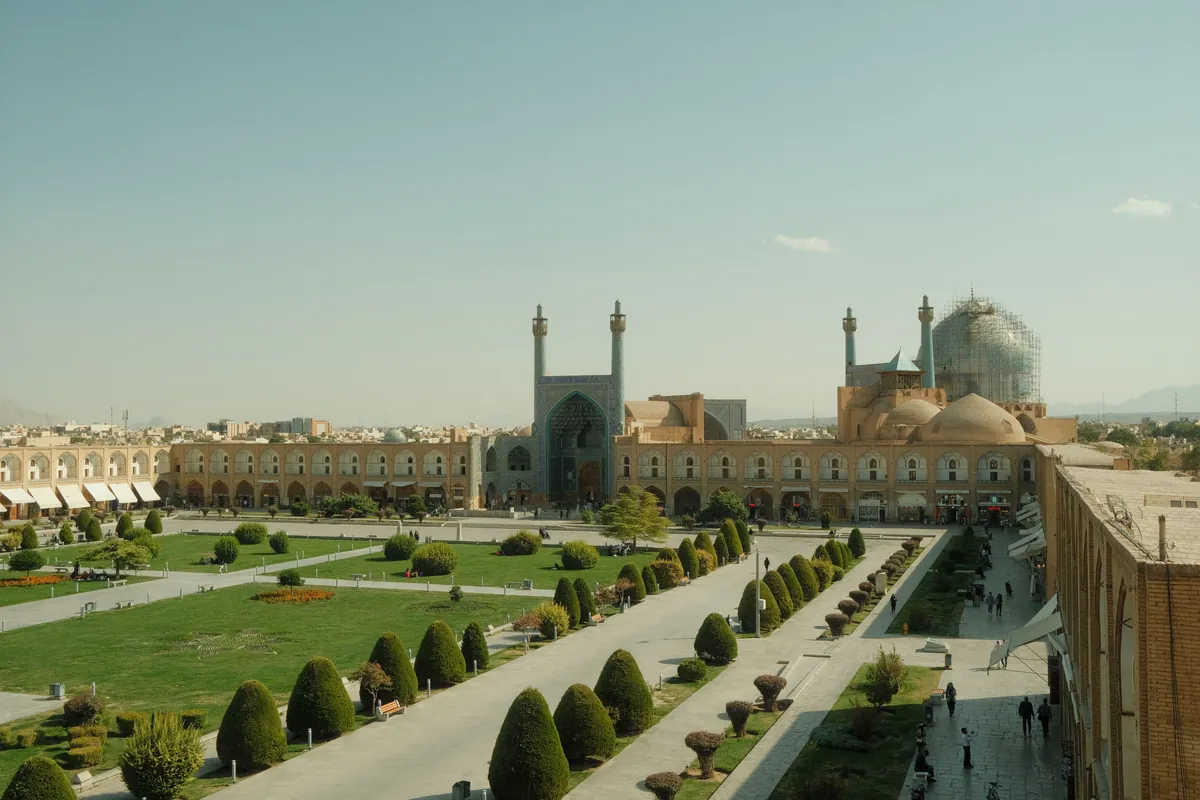
Naqsh-e Jahan Square in Isfahan, known as Shah Square before 1979 and sometimes as Imam Square, was built between 1598 and 1629 and is today a UNESCO World Heritage Site of its own. Shah Abbas the Great began the project in 1598 when he moved his empire's capital from Qazvin to Isfahan, launching what became one of the largest urban remaking programmes in Iranian history, and the square itself, known as the Maidan, once served as the meeting ground between the shah and his people — by day filled with the tents and stalls of tradesmen paying weekly rent to the government, alongside entertainers, actors and food vendors.
The Fire Temple of Yazd, also called the Yazd Atash Behram, is a Zoroastrian fire temple enshrining the Atash Behram, or "Victorious Fire," a flame dated to 470 AD and one of only nine Atash Behrams — the highest grade of sacred fire — in Iran. Located in the desert province of Yazd, east of Shiraz, where Zoroastrians have practised their religion since around 400 BC, the temple building itself dates only to 1934, funded by the Association of Parsi Zoroastrians of India and built under their guidance.
The trip closes at the Nasir-ol-Molk Mosque in Shiraz, widely known as the Pink Mosque, built between 1876 and 1888 in the Qajar style under the patronage of Mirza Hasan Ali Nasir ol-Molk, an aristocratic lord of Shiraz. Its design came from the Persian architect Mohammad Hasan-e-Memār, who had earlier built the noted Eram Garden, working alongside Mohammad Hosseini Shirazi and Mohammad Rezā Kāshi-Sāz-e-Širāzi — a mosque in the Gowd-e Araban district, next to the Shāh Chérāgh Mosque, that closes out the pack's run through more than two millennia of Persian architecture.
Text adapted from the linked articles under CC BY-SA 4.0; edited for length.
On documentation, this trip falls into the embassy band, the most involved of the four — treat that as a planning signal only, and verify exact, current requirements with the relevant embassy or consulate before booking. It runs 12 days, from ₹1,65,000 per person.
Every dimension the Taro team tags this pack with — filter by any of these on the packs page.
12 days across Iran, starting from ₹1,65,000 per person.
Suited to Couples and Friends, with a suitable option for families and a moderate activity level.
This trip falls into the embassy band, the most involved of the four. Always confirm exact, current requirements with the relevant embassy or consulate before booking — this is a planning signal, not a legal statement.
Share your travel month, group size, budget comfort, and must-do experiences. The Taro team will shape the right route before any payment conversation.