Arctic Svalbard Polar Bears
8DFrom ₹6,85,000
Northern Lights, Vatnajökull glacier, Blue Lagoon, Golden Circle.
Iceland Ring Road + Aurora is based in Reykjavík, Iceland's capital and largest city, on the southern shore of Faxaflói bay at a latitude of 64°08′ N that makes it the world's northernmost capital of a sovereign state, home to around 140,000 people. According to the Book of Settlement, the first permanent Norse settlement in Iceland was established here around AD 870 by Ingólfr Arnarson, who is said to have chosen the site using a traditional Norse method of casting his high-seat pillars into the sea and settling wherever they washed ashore; the city's name itself comes from the Old Norse reykr, "smoke," and vík, "bay," inspired by steam rising from the region's hot springs. Over 10 days the pack circles the island chasing the northern lights, a glacier, a geothermal spa and a beach littered with ice.
The aurora the pack hunts for is a natural light display in Earth's upper atmosphere, produced when charged particles from the Sun collide with atmospheric oxygen and nitrogen, exciting them into emitting green, red or purple light. The term "aurora borealis" first appeared in a 1649 account by Pierre Gassendi describing a 1621 display seen across France, borrowing language Galileo Galilei had used in his own writing on the phenomenon three decades earlier, and the display is most reliably seen within the "auroral zone," a band roughly 6 degrees of latitude wide centred on 67° north and south.
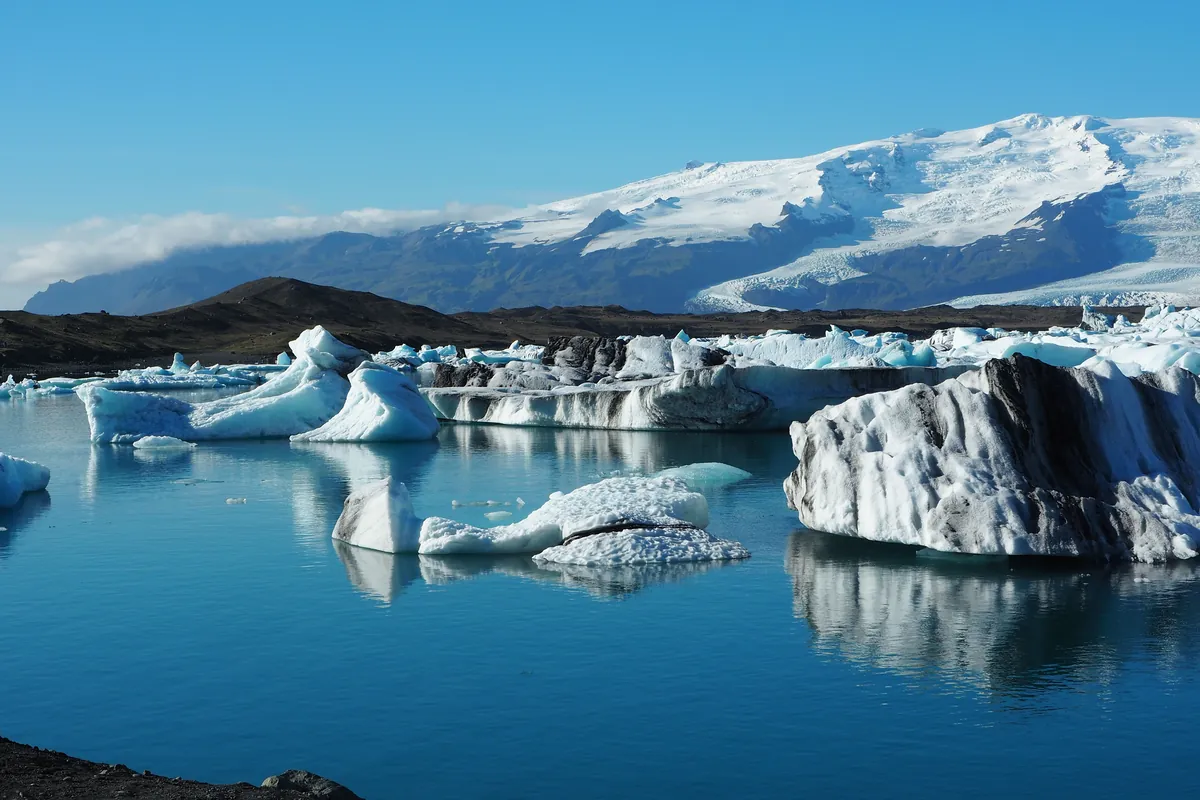
Vatnajökull, Iceland's largest and most voluminous ice cap, covers roughly 8% of the country's land area — 7,700 square kilometres — in the island's south-east, making it the second-largest ice cap in Europe by both area and volume, after the Severny Island ice cap in Russia's Novaya Zemlya. Its southern reaches carry the Hrútsfjallstindar, a series of four peaks between 1,756 and 1,875 metres high rising between the Svínafellsjökull and Skaftafellsjökull outlet glaciers, and the ice cap sits, unusually, directly over the boundary of two tectonic plates, with the centre of a mantle plume lying beneath its north-western area — a combination of ice and volcanism that also gave rise to the glacier's older Icelandic name, Klofajökull, or "Cleft Glacier," recorded in 18th-century sources.
The Blue Lagoon, the pack's geothermal spa, sits in a lava field five kilometres from Grindavík on the Reykjanes Peninsula, its milky-blue water — coloured by a high silica content that forms the soft white mud bathers rub on themselves — actually a byproduct of the nearby Svartsengi geothermal power plant. Superheated water vented from underground near a lava flow is used there to drive turbines and generate electricity, with the used water then pooling to form the lagoon rather than being discharged as simple waste.
Diamond Beach sits at the mouth of Jökulsárlón, the largest and most active glacial lake in Iceland, formed at the head of the Breiðamerkurjökull glacier after it began retreating in the late 19th century. Icebergs calving from that glacier drift toward the river mouth, driven by tidal currents and wind, before running aground and eventually washing up as the ice fragments that give the beach its name — a final stop that closes the loop back from the ice cap the pack visited earlier in the trip.
Text adapted from the linked articles under CC BY-SA 4.0; edited for length.
On documentation, this trip typically involves an online e-visa arranged ahead of travel — treat that as a planning signal only, and verify exact, current requirements with the relevant embassy or consulate before booking. Autumn or Winter tends to be the best window. It runs 10 days, from ₹2,85,000 per person.
Every dimension the Taro team tags this pack with — filter by any of these on the packs page.
10 days across Iceland, starting from ₹2,85,000 per person.
Suited to Couples, Friends, and Luxury Travellers, with a suitable option for families and a moderate activity level.
Autumn or Winter tends to be the best window for this trip, based on its tagged travel season.
This trip typically involves an online e-visa arranged ahead of travel. Always confirm exact, current requirements with the relevant embassy or consulate before booking — this is a planning signal, not a legal statement.
Share your travel month, group size, budget comfort, and must-do experiences. The Taro team will shape the right route before any payment conversation.

