Arctic Svalbard Polar Bears
8DFrom ₹6,85,000
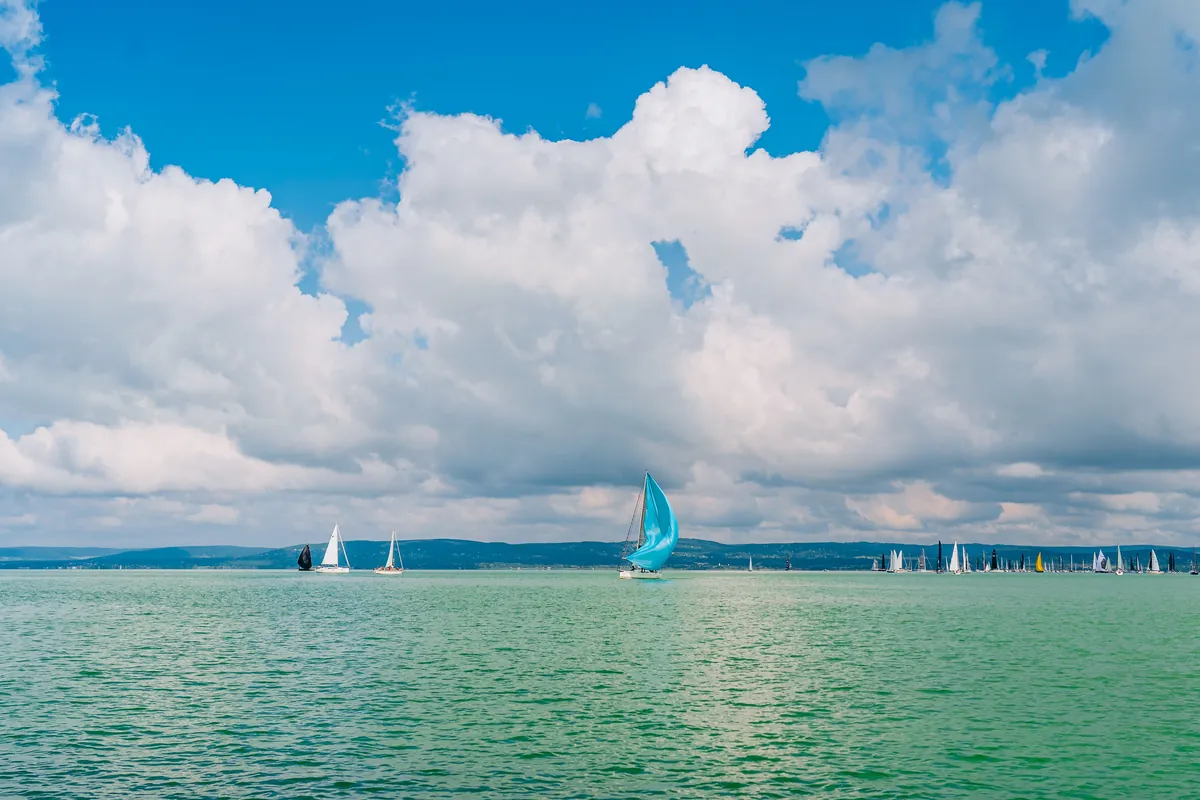
A 5-day premium route around Lake Balaton's wine towns from Balatonfüred.
Lake Balaton Wine Country opens on the shore of Lake Balaton, the largest lake in Central Europe and a freshwater rift lake in Hungary's Transdanubian region, fed chiefly by the Zala River and drained only by the canalised Sió; uniquely among Hungarian lakes it takes a definite article in its own language, "a Balaton," and was known to the Romans as Lacus Pelso. Its northern shore, mountainous and volcanic in soil, has been a wine-growing region since Roman times some 2,000 years ago, while the flatter southern shore built its reputation on resort towns that grew from the late 19th century, after Phylloxera ruined many vineyard owners and pushed them to rent out summer homes to the country's expanding middle class; Balatonfüred and Hévíz, by contrast, had already served as resorts for the Hungarian aristocracy for generations, and railways built in 1861 and 1909 later carried the growing middle-class crowds still further.
The route continues onto the Tihany Peninsula, a protected historical district whose village of Tihany centres on the Benedictine Tihany Abbey, founded in 1055 by King András I, who is buried in its crypt; the abbey's founding charter survives as the earliest extant record of written Hungarian. Rebuilt in Baroque style in 1754, the still-functioning abbey commands what is often described as the finest view over Lake Balaton and briefly held the last Habsburg emperor, Charles I, after his second attempt to reclaim the Hungarian throne, before his exile to Madeira; the peninsula is also known for an echo, recorded since the 18th century and celebrated in Hungarian poetry, though changes to the landscape have since muted it.
West along the shore, Badacsony gives its name to a mountain, a town and a wine region on Lake Balaton's north side, its basalt peaks — geological relics of volcanic activity that predate the Pannonian basin itself — sheltering rare plants and animals. The poet Sándor Kisfaludy lived on the mountain and met his wife, Róza Szegedy, here, an encounter now marked by a small house-museum, while his own former residence has since become a restaurant; a passenger ferry still links Badacsony to Fonyód on the lake's southern shore.
The route closes in the Balaton Uplands National Park, established in 1997 by joining six previously separate protected landscape areas across 56,997 hectares of the lake's northern hinterland, headquartered in Veszprém. Within it, the Tihany Peninsula became Hungary's first protected landscape area in 1952, the Káli Basin followed in 1984, and the volcanic quarries once cut into the hills around Badacsony and the Tapolca Basin — closed for good only in 1964 after decades of campaigning by conservationists and writers who considered the area Hungary's most beautiful landscape — have left the neighbouring Szentgyörgy and Csobánc hills largely untouched; the wetland of Kis-Balaton, drained from 1922 but never fully lost, was recognised in 1979 as a Wetland of International Importance, closing a five-day route across the lake's volcanic wine country.
Text adapted from the linked articles under CC BY-SA 4.0; edited for length.
Every dimension the Taro team tags this pack with — filter by any of these on the packs page.
Share your travel month, group size, budget comfort, and must-do experiences. The Taro team will shape the right route before any payment conversation.

