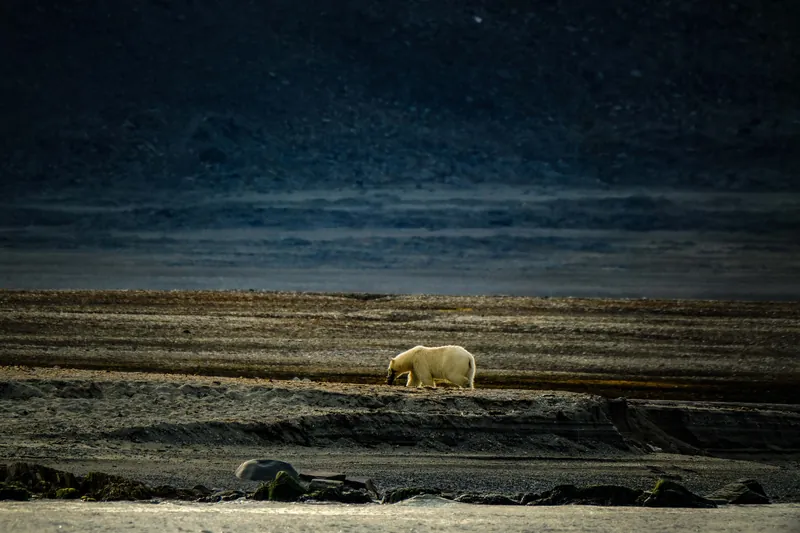
Arctic Svalbard Polar Bears
8DFrom ₹6,85,000
A 6-day premium route through Crete's Minoan ruins and old-town harbours.
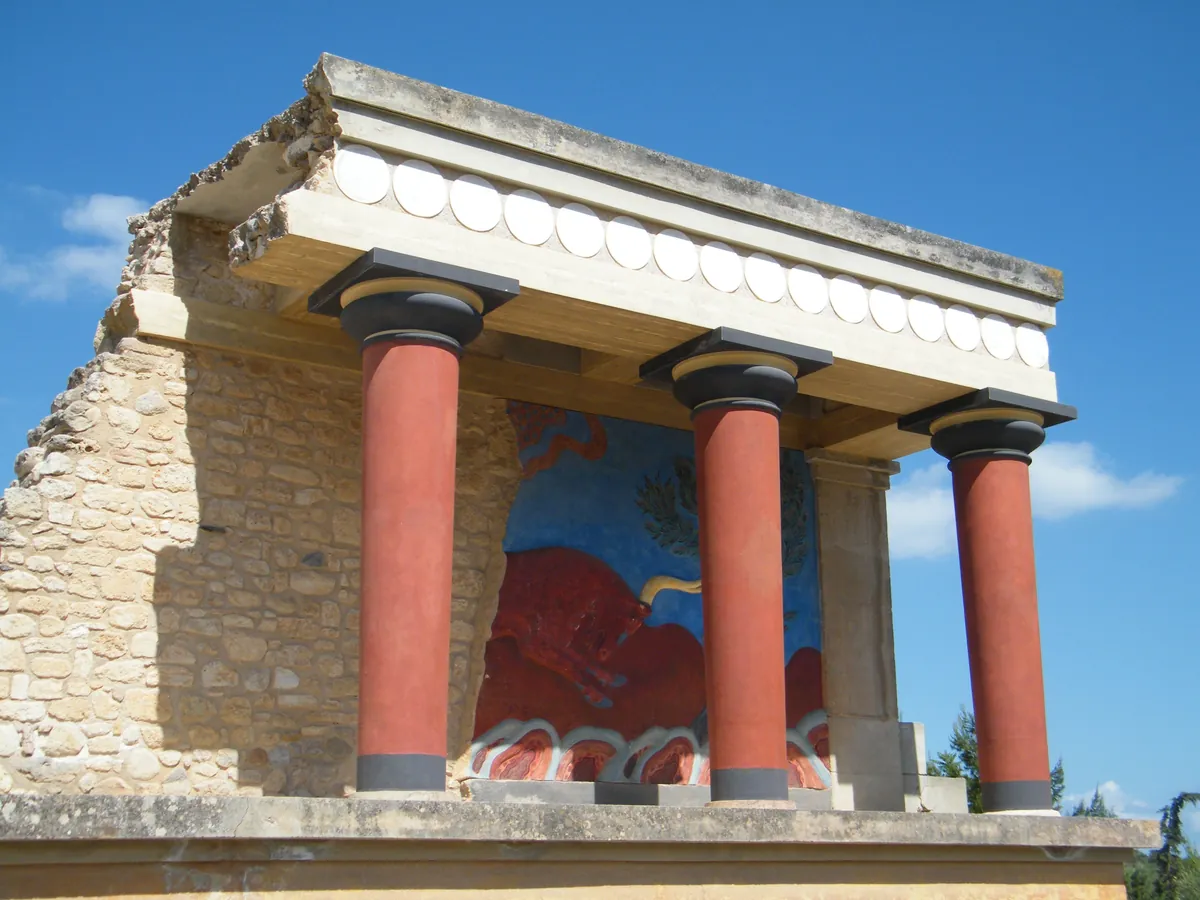
The route begins at the Palace of Knossos, an archaeological site just south of Heraklion first settled around 7000 BC, making it one of the earliest permanent settlements anywhere in the Aegean. The first palace was built around 1900 BC and served as a centre of administration, storage and ritual before an earthquake destroyed it around 1700 BC; it was rebuilt on a still larger scale during the Second Palace period that followed, reaching its height as the largest known centre of Minoan civilisation before a fire destroyed it around 1350 BC. Its excavation began informally in 1878 under the Cretan antiquarian Minos Kalokairinos, but the palace as visitors see it today is largely the work of the British archaeologist Arthur Evans, who began large-scale excavation in 1900, coined the term 'Minoan' after the legendary King Minos, and reconstructed sections of the palace including its tapering columns and gypsum Throne Room. Knossos is also the source of thousands of Linear B tablets, whose decipherment by Michael Ventris and John Chadwick proved the Mycenaeans who later occupied the site wrote an early form of Greek; the site was inscribed on the UNESCO World Heritage List in 2025 as part of a group of six Minoan palatial centres.
The route continues to the Samaria Gorge, a national park since 1962 in southwest Crete's Chania region and a UNESCO Biosphere Reserve, carved by a small river running 16 kilometres between the White Mountains and Mount Volakias down to the village of Agia Roumeli. The park is open only from May to October, and strict rules prohibit camping, overnight stays, open fires or swimming in its streams to protect the gorge environment.
Off the coast near Kissamos lie the Gramvousa islands, the larger of which, Imeri Gramvousa, holds the ruins of a Venetian fortress built between 1579 and 1584 to defend Crete against Ottoman forces. The fort remained in Venetian hands even after the rest of Crete surrendered to the Ottomans in 1669, was betrayed to Ottoman forces during the Morean War of 1691, and was recaptured in 1825 by a disguised group of Cretan fighters during the Greek War of Independence, becoming a base that helped revive the Cretan insurgency of that period. Between the island and the Cretan coast lies the Balos lagoon, overlooked by ruins of the small ancient Roman settlement of Agnion at nearby Cape Korykon.
Elafonisi, meaning Deer Island, sits off Crete's southwestern corner within the municipality of Kissamos and is reachable on foot through shallow water in good weather; it is protected as a nature reserve, known for pink-tinted sand created by pigmented microorganisms living among the native seaweed. A plaque on its highest point commemorates a tragic episode from the Greek War of Independence, when several hundred Cretans, mostly women and children, sheltering on the island while awaiting rescue by ship were discovered and killed by Ottoman troops on Easter Sunday, 1824. A wooden cross elsewhere on the island marks the 1907 wreck of the steamer Imperatrix, after which a lighthouse was built on the island's hilltop; that lighthouse was later destroyed by occupying German forces during the Second World War.
Across the route, the journey moves through nearly nine thousand years of Cretan history: the Bronze Age palace of Knossos at the origin of European urban life, the wild gorge cut through the White Mountains, the Venetian-built fortress islands that changed hands between empires, and the small island beaches that carry the memory of Crete's fight for independence. Each stop belongs to a different chapter of the same island's long and layered past.
Text adapted from the linked articles under CC BY-SA 4.0; edited for length.
Every dimension the Taro team tags this pack with — filter by any of these on the packs page.
Share your travel month, group size, budget comfort, and must-do experiences. The Taro team will shape the right route before any payment conversation.

