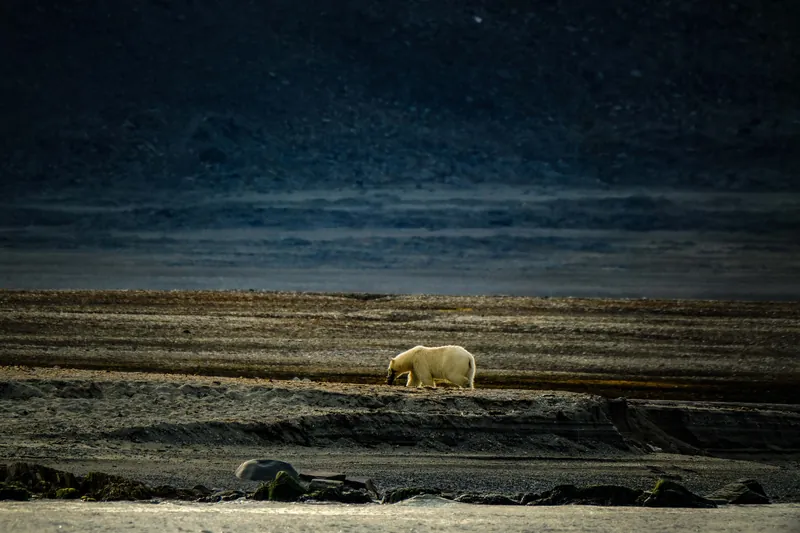
Arctic Svalbard Polar Bears
8DFrom ₹6,85,000
Berlin Wall, Neuschwanstein castle, Oktoberfest in Munich.
Berlin is the capital and largest city of Germany, with 3.7 million inhabitants, giving it the highest population within its city limits of any city in the European Union. It is also one of the states of Germany, the third-smallest by area, surrounded by the state of Brandenburg and bordering Brandenburg's own capital, Potsdam, to the southwest. The wider urban area holds 4.5 million people, the second most populous in Germany after the Ruhr, and the Berlin-Brandenburg capital region as a whole has around 6.2 million inhabitants, making it Germany's second-largest metropolitan region after Rhine-Ruhr and the fifth-biggest metropolitan region by GDP in the European Union. This eight-day pack spends its first stretch inside that capital before heading south into Bavaria, a north-to-south route that moves from Germany's largest city to a much smaller Alpine setting by the time the week is out.
In Berlin, the pack traces the line of the Berlin Wall, the guarded concrete barrier that encircled West Berlin from 1961 to 1989, separating it from East Berlin and the rest of the German Democratic Republic. Construction began under the GDR government on 13 August 1961 and eventually included guard towers along the concrete sections, backed by a wide buffer zone containing anti-vehicle trenches, beds of nails, and other defenses. Its primary purpose was to stop East German citizens from fleeing to the West, a function that shaped daily life in the city, and on this itinerary's first stop, for nearly three decades.
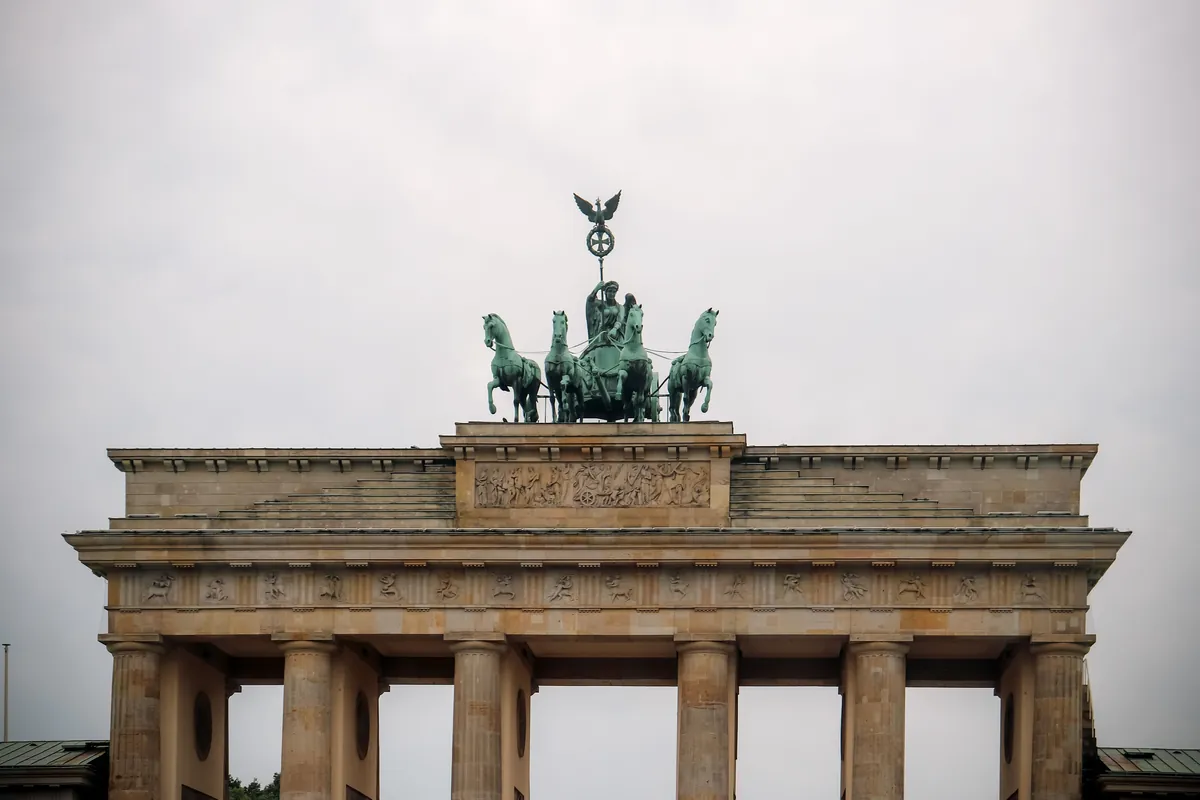
Close by stands the Brandenburg Gate, an 18th-century neoclassical monument and one of the best-known landmarks in Germany. It was built on the site of an older city gate that had marked the start of the road from Berlin to Brandenburg an der Havel, once the capital of the Margraviate of Brandenburg. The current structure went up between 1788 and 1791 on the orders of King Frederick William II of Prussia, to designs by the royal architect Carl Gotthard Langhans, and it is topped by a bronze quadriga sculpture made by Johann Gottfried Schadow, the same decades-spanning layering of history and rebuilding that defines the Wall the pack has just walked. Standing at the gate, only a short distance from where the Wall itself once ran, sets an 18th-century monument against a 20th-century one within a single afternoon's walk.
Traveling south into Bavaria, the pack reaches Neuschwanstein Castle, a 19th-century historicist palace set on a rugged hill in the foothills of the Alps, close to the Austrian border, in the Swabia region of Bavaria, in the municipality of Schwangau above the village of Hohenschwangau, itself home to Hohenschwangau Castle. The castle stands over the narrow gorge of the Pöllat stream, east of the Alpsee and Schwansee lakes, near where the Lech river feeds into Lake Forggensee, with Füssen as the closest larger town. Since 2025 it has been part of the UNESCO World Heritage Site covering the Palaces of King Ludwig II of Bavaria, and according to Guinness World Records, at 65 metres, it is the tallest castle in the world.
The pack finishes in Munich at Marienplatz, the central square in the city's historic centre, which has served as Munich's main square since 1158. Standing in a square with roots that predate the Berlin Wall by roughly eight centuries closes the pack's arc across German history in reverse, moving from a 20th-century Cold War border, back through 18th-century Prussian monument-building and a 19th-century royal fantasy castle, to a medieval marketplace still functioning as the heart of a modern city.
Text adapted from the linked articles under CC BY-SA 4.0; edited for length.
On documentation, this trip sits in the e-visa complexity band — usually arranged online ahead of travel — treat that as a planning signal only, and verify exact, current requirements with the relevant embassy or consulate before booking. It runs 8 days, from ₹1,45,000 per person.
Every dimension the Taro team tags this pack with — filter by any of these on the packs page.
8 days across Germany, starting from ₹1,45,000 per person.
Suited to Couples and Friends, with a suitable option for families and a moderate activity level.
This trip is in the e-visa band, generally sorted online before travel. Always confirm exact, current requirements with the relevant embassy or consulate before booking — this is a planning signal, not a legal statement.
Share your travel month, group size, budget comfort, and must-do experiences. The Taro team will shape the right route before any payment conversation.

