Arctic Svalbard Polar Bears
8DFrom ₹6,85,000
A 6-day premium driving route through the Loire Valley's château towns from Tours.
Loire Valley Château Trail opens at the Château de Chambord, the largest château in the Loire Valley, commissioned by Francis I of France as a hunting lodge and built between 1519 and 1547 in a distinctive Renaissance style attributed to the Tuscan architect Domenico da Cortona, with Leonardo da Vinci — a guest of Francis nearby at Clos Lucé — widely credited with the design of its central double-spiral staircase. The château holds 440 rooms, 282 fireplaces and 84 staircases around a central keep with four corner towers, its walls and moat purely decorative rather than defensive; sold off and partially stripped of its timber and panelling after the French Revolution, it later served as a field hospital during the Franco-Prussian War and sheltered artworks evacuated from the Louvre during the Second World War.
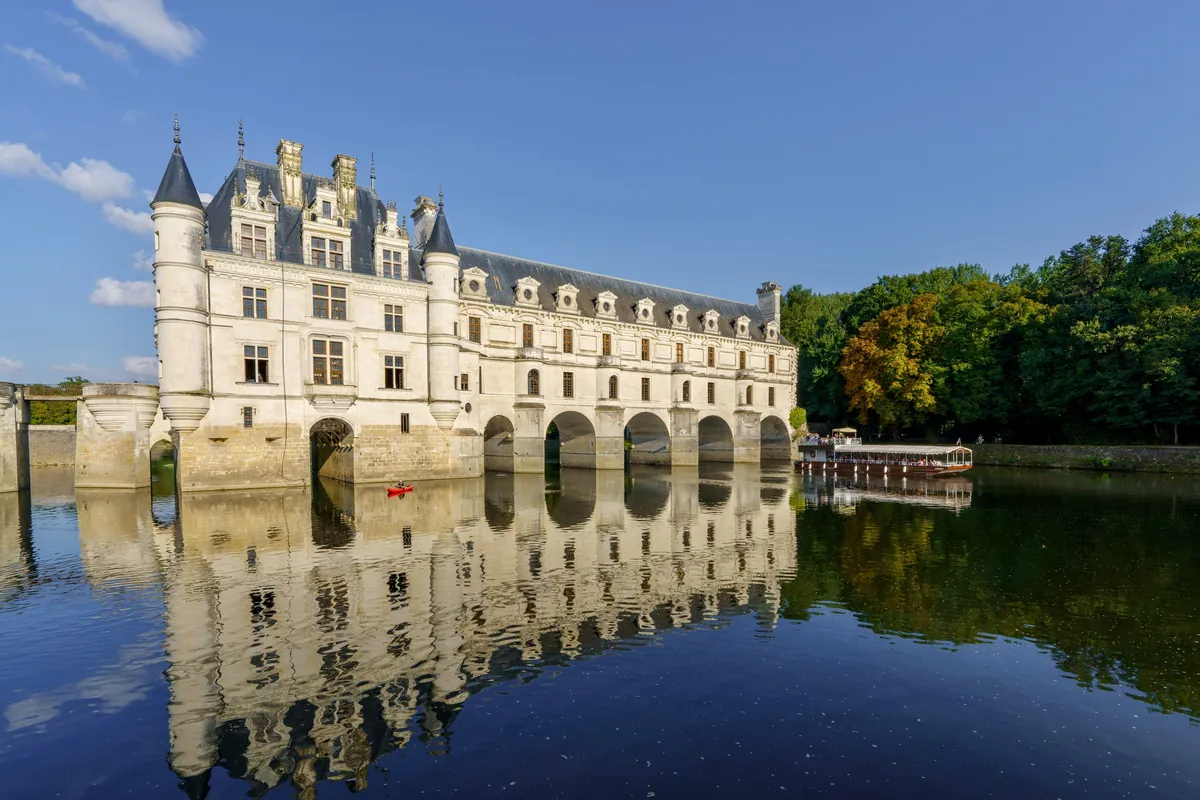
The route continues to the Château de Chenonceau, built between 1514 and 1522 on the foundations of an old mill and later extended across the river Cher on an arched bridge commissioned in 1555 by Diane de Poitiers, mistress of King Henry II, who had been given the château as a gift after Francis I's death. When Henry II died in 1559 his widow, Catherine de' Medici, forced Diane to trade Chenonceau for the Château de Chaumont and made it her own favourite residence, adding the grand gallery across the bridge, completed in 1577, and hosting France's first fireworks display there in 1560; after Catherine's death the château passed to her daughter-in-law Louise of Lorraine, who spent eleven years wandering its corridors in mourning after her husband's assassination in 1589. Second only to Versailles among France's most visited châteaux, Chenonceau received around 800,000 visitors in 2007 alone.
At the Château de Villandry, a country house built in the early 16th century by Jean Le Breton, France's Controller-General for War under Francis I, around the surviving 14th-century keep where King Philip II of France once met Richard I of England to discuss peace. Passed through the Le Breton family for more than two centuries and later confiscated during the French Revolution, the estate was bought in 1906 by Joachim Carvallo, whose wife Ann Coleman's inheritance funded the restoration that created its celebrated Renaissance gardens — water gardens, ornamental flower beds and vegetable plots laid out in formal patterns of clipped box hedges — still tended today by the Carvallo family, who opened the château and its gardens to the roughly 330,000 visitors it received in 2007.
The trail ends at Amboise, a market town on the Loire 27 kilometres east of Tours that was once home to the French royal court and where Leonardo da Vinci spent his final years, from 1516 to his death in 1519, at the nearby Château du Clos Lucé before being buried in a crypt near the Château d'Amboise. Mary, Queen of Scots, was raised at the château as a child at the court of Henry II after arriving from Scotland in 1548, and the Edict of Amboise, signed there in 1563, granted Protestants the free exercise of worship; just outside town stands the Pagode de Chanteloup, a 44-metre, seven-tiered Chinese pagoda built in 1775 by the Duke of Choiseul, closing a six-day route strung between four of the Loire's most storied châteaux.
Text adapted from the linked articles under CC BY-SA 4.0; edited for length.
Every dimension the Taro team tags this pack with — filter by any of these on the packs page.
Share your travel month, group size, budget comfort, and must-do experiences. The Taro team will shape the right route before any payment conversation.