Argentina Buenos Aires + Patagonia
11DFrom ₹2,45,000
A 5-day premium route through Foz do Iguacu, featuring Iguazu Falls, Itaipu Dam, Parque das Aves and Devil's Throat viewpoint.
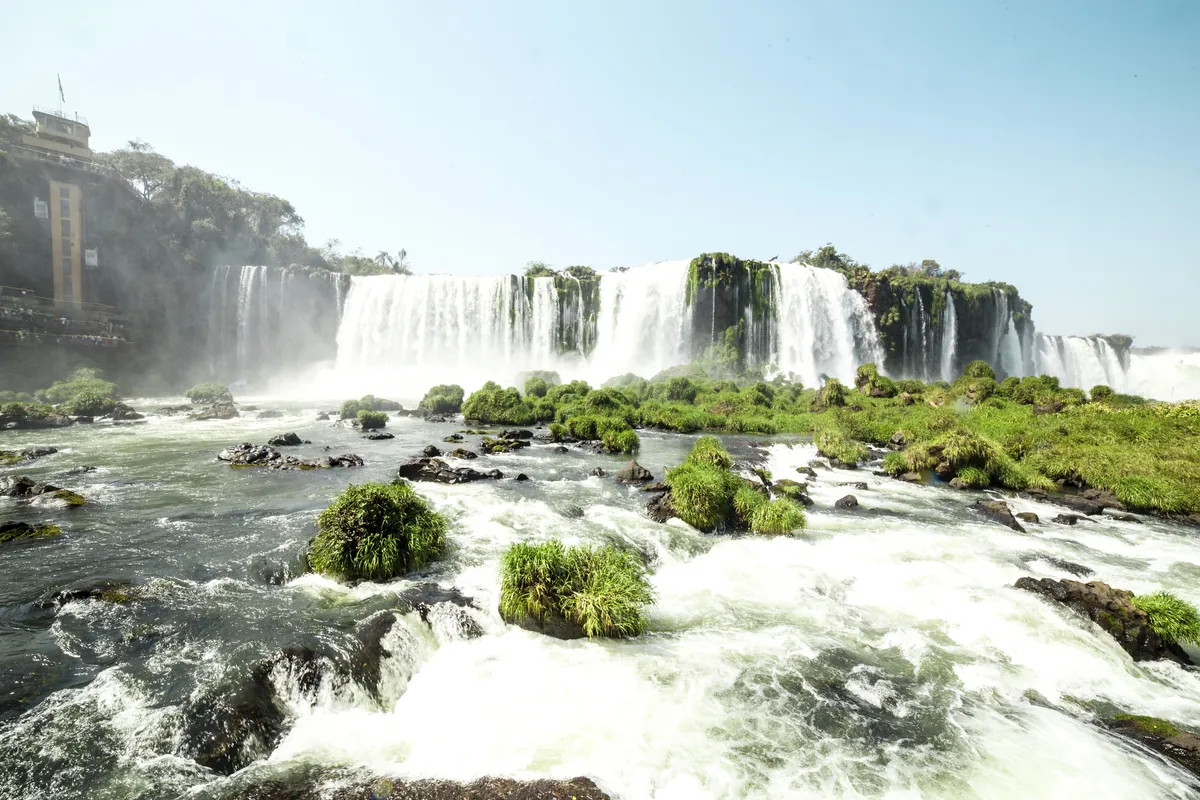
The break opens at Iguazu Falls, waterfalls of the Iguazu River on the border between the Argentine province of Misiones and the Brazilian state of Parana that together form the largest waterfall system in the world. Numerous islands along their 2.7-kilometre edge split the falls into as many as 150 to 300 separate cascades depending on water level, formed as a two-step staircase over three layers of basalt from the ancient Serra Geral rock formation. The name comes from the Guarani words for "big water," and legend attributes the falls' creation to a deity enraged after the mortal Tarobá fled with his love Naipí by canoe. US First Lady Eleanor Roosevelt reportedly exclaimed "Poor Niagara!" on seeing them, and the falls are often compared with Victoria Falls in southern Africa — Iguazu wider and split into hundreds of individual drops, Victoria a single unbroken curtain of water. The falls are shared by Argentina's Iguazu National Park and Brazil's Iguacu National Park, both UNESCO World Heritage Sites since the mid-1980s, and reachable from the twin cities of Foz do Iguacu and Puerto Iguazu on either bank.
A short distance away, the Itaipu Dam spans the Parana River on the border between Brazil and Paraguay, the third-largest hydroelectric dam in the world by energy produced and, as of 2020, the second-largest single electricity producer of any hydroelectric plant, behind only China's Three Gorges Dam. Its name, Guarani for "the sounding stone," comes from an island that once stood near the construction site. The project followed the 1966 Ata do Iguacu declaration between Brazil and Paraguay and the 1973 Itaipu Treaty that formalised their joint hydroelectric development of the river; construction began in 1975, and on 14 October 1978 engineers rerouted the Parana River itself to dry the riverbed where the dam would rise, with the plant completed in 1984 as a binational undertaking run jointly by both countries.
The route continues to Parque das Aves, a bird sanctuary and shelter set within 16 hectares of forest near Iguazu Falls in Foz do Iguacu, Parana State, opened in 1994. Its exhibits centre on birds alongside other animals and butterflies housed across the wooded grounds.
The break closes at the Devil's Throat, a U-shaped chasm on the Iguazu River straddling the Brazil–Argentina border about 23 kilometres upstream of the river's confluence with the Parana. Standing 82 metres high, 150 metres wide and extending 700 metres in length, it receives roughly half of the Iguazu River's entire flow and is shared by both national parks, reachable via the Rainforest Ecological Train to its Garganta station.
Over five days the itinerary follows the Parana and Iguazu river system across the Brazil-Argentina-Paraguay triple frontier: from the layered basalt cascades of Iguazu Falls, to the binational hydroelectric works of Itaipu Dam, through the forest sanctuary of Parque das Aves, and back to the falls' single largest chasm at the Devil's Throat. Each stop draws on the same river network, from its waterfalls upstream to the dam and forest built around them.
Text adapted from the linked articles under CC BY-SA 4.0; edited for length.
Every dimension the Taro team tags this pack with — filter by any of these on the packs page.
Share your travel month, group size, budget comfort, and must-do experiences. The Taro team will shape the right route before any payment conversation.