Argentina Buenos Aires + Patagonia
11DFrom ₹2,45,000
An 8-day luxury small-ship cruise through the Galápagos Islands from Puerto Ayora.
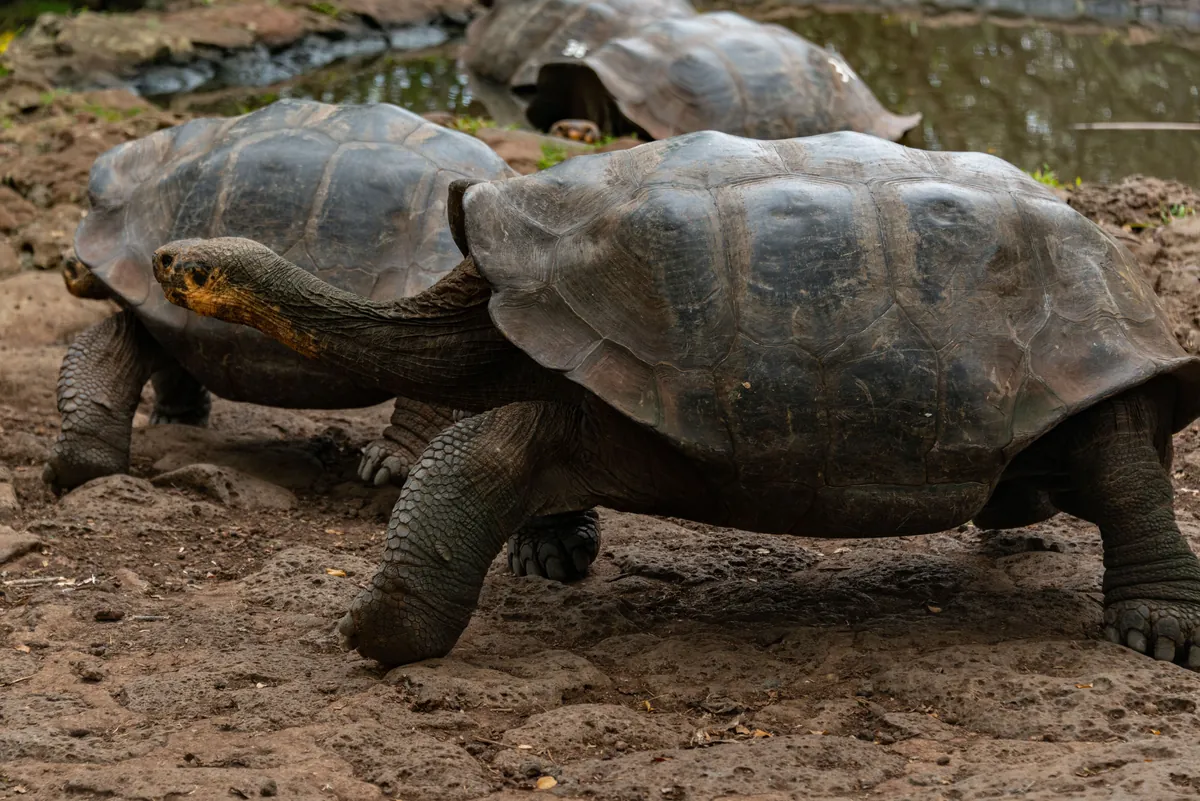
Galápagos Wildlife Cruise opens with the Galápagos tortoise, the largest living tortoise species, native to seven of the Galápagos Islands and capable of reaching 417 kilograms and lifespans of more than a hundred years in the wild — one captive individual, Harriet, lived at least 175 years. Spanish explorers who reached the islands in the 16th century named them after the Spanish word for tortoise, galápago, and Charles Darwin's observations in 1835 of how shell shape differs between islands — domed shells and short necks on humid islands with abundant low vegetation, "saddleback" shells and long necks on drier islands — fed directly into his developing theory of evolution. Numbers fell from more than 250,000 in the 16th century to a low point in the 20th before conservation efforts began recovering several of the surviving twelve subspecies, though the Pinta Island subspecies was declared extinct when its last known individual, Lonesome George, died in captivity on 24 June 2012.
The route continues with the blue-footed booby, a marine bird found along the eastern Pacific coast from California to Peru, with about half of all breeding pairs nesting on the Galápagos Islands. Its bright blue, sexually selected feet — a colour created by carotenoid pigments from its fish diet, arranged within collagen structures in the skin — form the centrepiece of an elaborate courtship display in which males lift and show off their feet while strutting before a female; the colour also signals a bird's current condition, fading within 48 hours if a booby goes without food, which is thought to be why females favour brighter-footed, generally younger males as mates.
In Puerto Ayora on Santa Cruz Island, the cruise calls at the Charles Darwin Research Station, established in 1959 and dedicated in 1964 on the shore of Academy Bay as the headquarters of the Charles Darwin Foundation, founded under the auspices of UNESCO and the World Conservation Union. Staffed by more than a hundred scientists, educators and volunteers from around the world, the station works alongside the Galápagos National Park Directorate on research and conservation of the islands' ecosystems, runs a natural history interpretation centre, and supports the field work of outside researchers visiting the archipelago.
The cruise closes at Bartolomé Island, an uninhabited 1.2-square-kilometre volcanic islet in Sullivan Bay off Santiago Island, named for the naturalist Sir Bartholomew James Sulivan, a lieutenant aboard HMS Beagle. Its landscape is dominated by Pinnacle Rock, a volcanic plug of thin basalt layers rising from the bay, and its waters and shoreline hold masked and blue-footed boobies, Galápagos penguins breeding in a cave behind the rock, sea lions, spotted eagle rays, blacktip and whitetip reef sharks, and green sea turtles that nest on its northern beach — a 600-metre trail to the island's 114-metre peak gives views back over the same volcanic seascape this eight-day cruise has traced from tortoise highlands to booby colonies to research station.
Text adapted from the linked articles under CC BY-SA 4.0; edited for length.
Every dimension the Taro team tags this pack with — filter by any of these on the packs page.
Share your travel month, group size, budget comfort, and must-do experiences. The Taro team will shape the right route before any payment conversation.