Argentina Buenos Aires + Patagonia
11DFrom ₹2,45,000
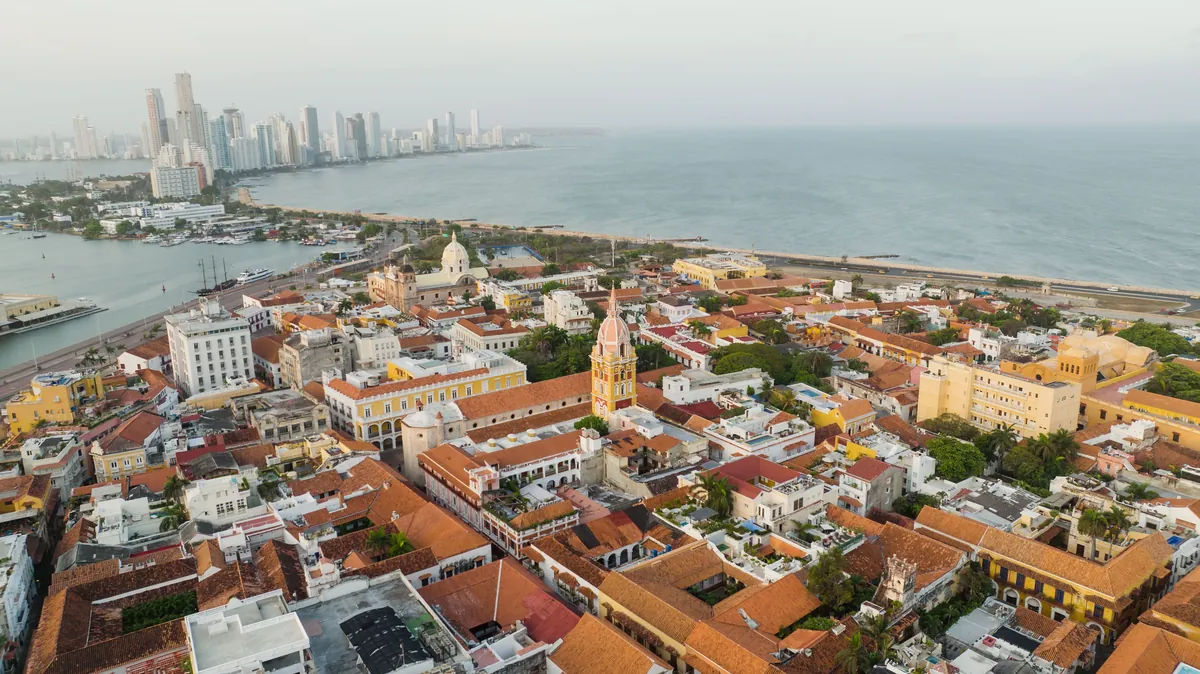
Cartagena walled city, coffee farm stay, Cocora Valley palms.
Colombia Cartagena + Coffee Triangle opens in Cartagena, known since the imperial era as Cartagena de Indias, a major port on Colombia's Caribbean coast whose historical value comes largely from its past role as a link on the route to the West Indies. The Puerto Hormiga Culture, founded in what is now the Bolívar Department between the Sinú River Delta and Cartagena Bay, is considered the first documented human community in present-day Colombia, and the first Europeans reached the area between 1500 and 1533, when Rodrigo de Bastidas explored the Pearl Coast and the Gulf of Urabá and, in 1510, Juan de la Cosa died there alongside 300 of Alonso de Ojeda's men after a confrontation with the indigenous population. The city itself was founded under contract to Queen Joanna of Castile when Pedro de Heredia entered the Bay of Cartagena with three ships, a lighter, 150 men and 22 horses on 14 January 1533, finding the village of Calamari already abandoned; in the following century, once Spain's Carrera de Indias convoys were discontinued, Cartagena's position within the new Viceroyalty of New Granada turned it into a fortified "gateway" city amid recurring Anglo-Spanish conflict. Over 9 days the pack moves from that walled colonial port inland to coffee country and back out to a protected stretch of Caribbean coast.
From Cartagena the route reaches the Coffee Axis, the coffee-growing region spanning the departments of Caldas, Risaralda and Quindío along with parts of Tolima, Valle del Cauca and Antioquia. Coffee was first grown commercially in Colombia at Salazar de las Palmas, north of Santander, before becoming the country's primary export over the course of the 20th century, and the region's specific mix of temperatures between 8 and 24°C, Andean rainforest geography and volcanic soil is what its farmers credit for the short harvest periods and high quality of the beans grown there. Eighteen urban settlements across six sites within the axis, extending south into Valle del Cauca, were inscribed on the UNESCO World Heritage List in 2011 as the Coffee Cultural Landscape, and the region has since built visitor attractions around that industry, including the Colombian National Coffee Park in Montenegro, Quindío, and a museum tracing the process from bean to cup.
The Cocora Valley, on the upper reaches of the Quindío River at an altitude between 1,800 and 2,400 metres, sits in the Central Cordillera of the Andes about 24 kilometres north-east of the departmental capital, Armenia. Its name comes from Cocora, a Quimbayan princess and daughter of the local chief Acaime, and means "star of water"; concern over the exploitation of the valley's wax palm, threatened in part by Palm Sunday celebrations, led the government of President Belisario Betancur to propose the wildlife sanctuary that protects both the palm and the valley today.
The trip closes at Tayrona National Natural Park, a protected area in Colombia's northern Caribbean region within the jurisdiction of Santa Marta, 34 kilometres from the city centre, holding biodiversity endemic to the Sierra Nevada de Santa Marta mountain range. It was created under the 191st Law of the Colombian Institute for Agrarian Reform specifically to protect the region and preserve its ecological environment, and covers 150 square kilometres of Magdalena Department along the Caribbean coast, with the fishing village of Taganga marking its southernmost point.
Text adapted from the linked articles under CC BY-SA 4.0; edited for length.
On documentation, this trip sits in the e-visa complexity band — usually arranged online ahead of travel — treat that as a planning signal only, and verify exact, current requirements with the relevant embassy or consulate before booking. It runs 9 days, from ₹1,75,000 per person.
Every dimension the Taro team tags this pack with — filter by any of these on the packs page.
9 days across Colombia, starting from ₹1,75,000 per person.
Suited to Couples and Friends, with a suitable option for families and a moderate activity level.
This trip is in the e-visa band, generally sorted online before travel. Always confirm exact, current requirements with the relevant embassy or consulate before booking — this is a planning signal, not a legal statement.
Share your travel month, group size, budget comfort, and must-do experiences. The Taro team will shape the right route before any payment conversation.